In the world of live music, there are performances that dazzle—and then there are moments that transcend performance altogether. What happened when Queen took the stage the day after John Lennon was killed belongs firmly to the latter.
It was a time of shock. Lennon’s death on December 8, 1980, sent waves of grief across the globe. Fans gathered in silence, radios played his songs on repeat, and the music world seemed to pause. For artists, the loss was not just professional—it was deeply personal. Lennon wasn’t only a legend; he was a voice that had shaped an entire generation.
When Queen stepped onto the stage the following day, expectations were uncertain. Known for their theatrical shows, powerful sound, and commanding presence, they were one of the biggest bands in the world. But that night, something was different.
The lights didn’t blaze. The usual spectacle faded into the background.
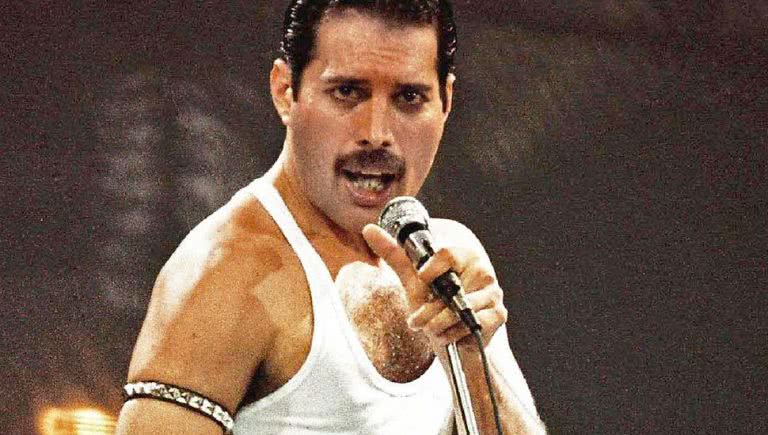
Instead, Freddie Mercury walked quietly to the piano.
There was no dramatic introduction, no attempt to energize the crowd. Just a pause—a moment that seemed to acknowledge what everyone in the stadium was feeling but couldn’t quite express. Then came the first notes of Imagine.
It’s a song already steeped in emotion, known for its simplicity and its message of unity. But in that setting, it took on an entirely new meaning. Mercury didn’t over-perform it. He didn’t try to make it his own. Instead, he approached it with restraint, letting the song speak for itself.
The effect was immediate.
A crowd that might normally cheer, sing along, or sway to the rhythm instead fell into near silence. Thousands of people, each carrying their own grief, became part of a shared experience. It wasn’t about spectacle anymore. It was about connection.
In that moment, Mercury wasn’t just a performer—he was a bridge. Between artist and audience. Between loss and expression. Between one legend and another.
There’s something powerful about simplicity in times of sorrow. No elaborate arrangements, no visual effects—just a piano, a voice, and a song that already meant so much. It created space for emotion, allowing the audience not just to listen, but to feel.
For Queen, it was a departure from their usual identity. But perhaps that’s what made it so unforgettable. They stepped away from their roles as rock icons and stood alongside their audience as fellow mourners.
And that’s what has kept the memory of that night alive.
Not because it was the biggest show or the most technically impressive performance—but because it was real. It captured something fleeting and fragile: the moment when music becomes more than entertainment, when it becomes a way to process loss, to honor memory, and to find unity in silence.
For those who were there, it wasn’t just a concert. It was a farewell. A shared breath. A quiet acknowledgment that even in grief, music endures.
And sometimes, it speaks loudest when no one else does.