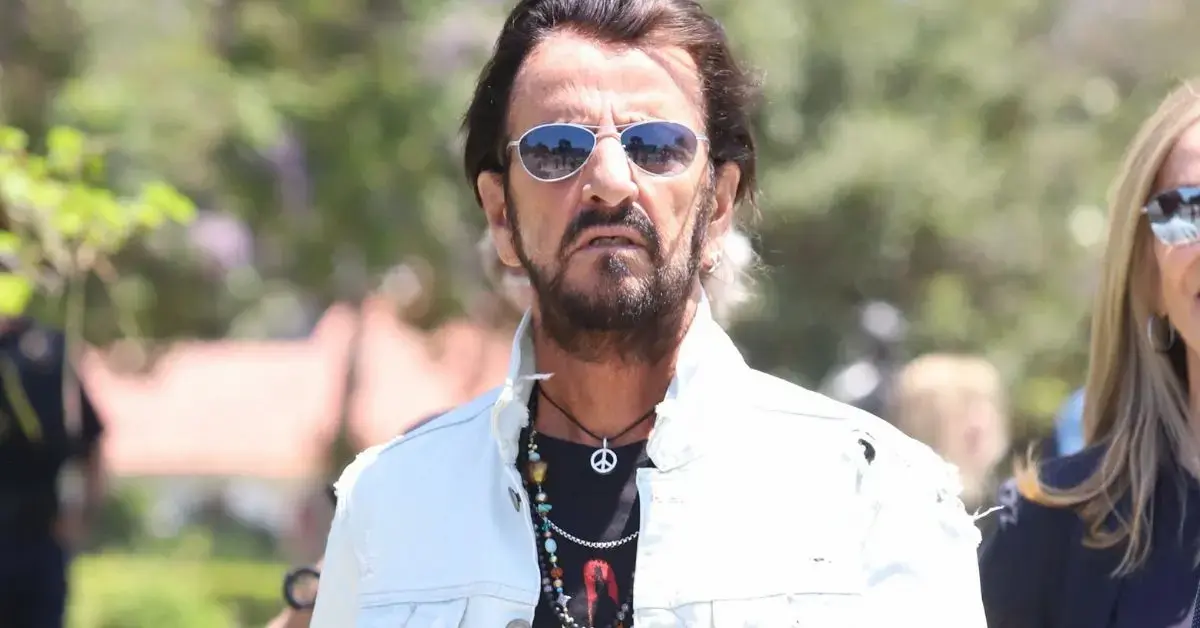
“John, Paul, George… and Ringo.” It’s a sequence so familiar that it almost feels automatic — like a rhythm the world has learned by heart. But for Ringo Starr himself, that final name once carried a hint of uncertainty.
Long before he became part of The Beatles, he was Richard Starkey — a young man navigating ordinary life, far removed from the cultural phenomenon he would eventually help create. The name “Ringo Starr” didn’t come from nowhere. It was carefully chosen, shaped by his personality and image: the rings he liked to wear and the idea of a name that could shine on a marquee.
But even with that reinvention, fitting into a band alongside John Lennon, Paul McCartney, and George Harrison wasn’t always seamless — at least not in his own mind.
:max_bytes(150000):strip_icc():focal(705x261:707x263):format(webp)/the-beatles-Ringo-Starr-John-Lennon-Paul-McCartney-George-Harrison-012225-81f56f12afc04e309bda71acefa3b892.jpg)
In later reflections, Starr has shared that his name felt different. The others sounded straightforward, almost conventional. “Ringo,” by comparison, stood out. There was humor in it, but also a quiet question: did he truly belong in that lineup?
The early days didn’t necessarily ease those doubts. Like any musician finding his place, Starr experimented — including trying his hand at songwriting. Some of those attempts didn’t go as planned. He’s recalled moments when Lennon and McCartney couldn’t help but laugh, especially when he unknowingly echoed existing songs. It could have been discouraging.
But what Starr brought to the group wasn’t something that could be measured by lyrical output alone. It was feel — timing, restraint, and an intuitive understanding of what each song needed. His drumming didn’t demand attention; it anchored everything else. In a band filled with strong personalities and groundbreaking ideas, that steadiness became invaluable.
Over time, the name that once felt “funny” became iconic. “Ringo” wasn’t just accepted — it was essential. It completed the rhythm of the group, both literally and symbolically.
:max_bytes(150000):strip_icc():focal(749x0:751x2):format(webp)/ringo-starr-012225-f0abcea123f04d6780a88c5846b74e0d.jpg)
Decades later, the weight of that history is even more apparent. When Starr and Paul McCartney share a stage, as they have in recent years, it resonates far beyond the music itself. These are the last two members of a band that reshaped popular culture, standing together not just as performers, but as living connections to a shared past.
Those moments carry a quiet emotional depth. They aren’t about recreating Beatlemania or reliving the 1960s. Instead, they reflect endurance — friendships that have weathered time, loss, and transformation.
What makes Starr’s story particularly compelling is how human it feels. Even within one of the most celebrated bands in history, there were moments of doubt, of feeling slightly out of sync. And yet, those moments didn’t define him. What did was his persistence, his individuality, and the role he carved out for himself.
Today, “John, Paul, George… and Ringo” doesn’t sound unusual at all. It sounds complete.
:max_bytes(150000):strip_icc():focal(749x0:751x2):format(webp)/ringo-starr-t-bone-burnett-rodney-crowell-012225-6b4124068fc64abe85dc6d58a6197d89.jpg)
And perhaps that’s the most powerful part of the story — not just how a name became famous, but how someone who once questioned his place became an irreplaceable piece of something timeless.