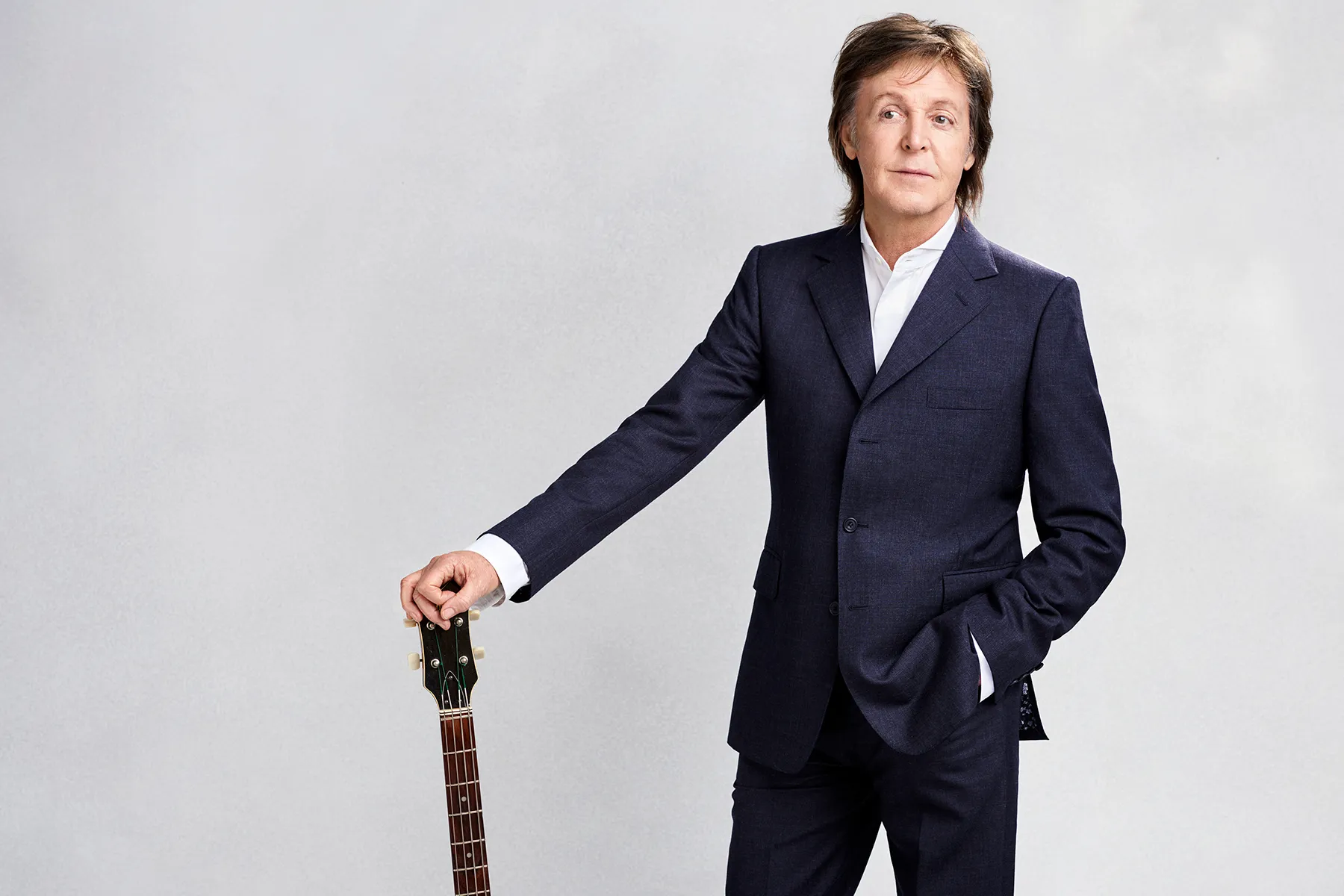
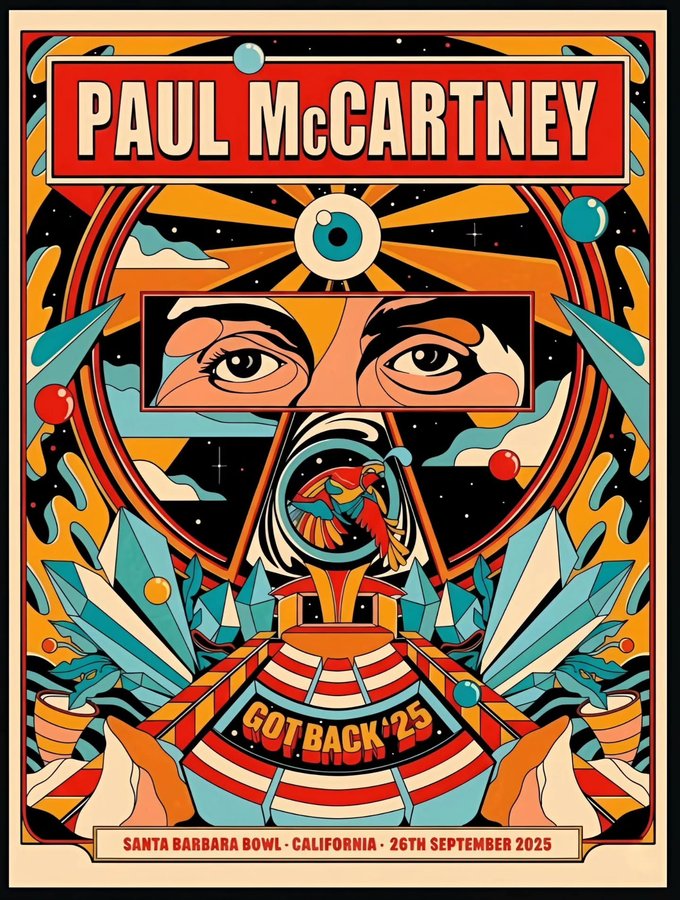
There are concerts you remember for the setlist, and then there are nights that linger for something harder to define — a feeling, a shared moment, a sense that time briefly folded in on itself. When Paul McCartney stepped onto the stage at the Santa Barbara Bowl, it became clear early on that this would be the latter.
The setting helped. Nestled among canyon hills under an open sky, the venue already carries a kind of quiet intimacy. But what unfolded that night went beyond atmosphere. It was about connection — not just between artist and audience, but between eras.
When the opening chords of Help! rang out, the reaction wasn’t explosive in the usual sense. It was something more layered. Recognition came first, followed by a wave of emotion that seemed to ripple across the crowd. For a moment, it wasn’t just a song from 1965. It was a thread pulling together decades of memory.
McCartney, now in his eighties, didn’t try to recreate the past exactly as it was. That would have felt artificial. Instead, he leaned into where he stands now — an artist shaped by time, loss, and experience. His voice carried those years, but it also carried something else: clarity, intention, and an understanding of what these songs mean today.
That shift was especially noticeable in “Help!” Originally written during a period of intense fame and personal pressure, the song once carried a youthful urgency — almost a cry for grounding in the chaos of Beatlemania. Performed now, it feels different. Slower in spirit, even if not in tempo. Reflective. Acknowledging everything that came after.
The absence of phones in the crowd only deepened the experience. Without screens rising into the air, there was nothing to filter the moment. People watched directly. They listened more closely. Reactions weren’t delayed by recording or sharing — they were immediate and unfiltered. In a world where concerts are often mediated through devices, that shift made the performance feel unusually present.
Throughout the night, McCartney moved effortlessly between chapters of his career. Songs from Wings brought energy and contrast, while quieter moments carried emotional weight. Tributes to John Lennon added another layer, reminding the audience that these songs are part of a shared history shaped by collaboration and loss.
By the time “Help!” arrived in full, it no longer felt like a centerpiece chosen for nostalgia. It felt inevitable — a moment the entire evening had been building toward. And when it landed, it didn’t just revisit the past. It reframed it.
What made the performance stand out wasn’t perfection or spectacle. It was perspective. McCartney wasn’t trying to prove anything or relive former glory. He was engaging with his own legacy in real time, allowing it to evolve while still honoring where it began.
For the audience, many of whom have carried these songs through different stages of their own lives, that made the experience deeply personal. The music didn’t belong to one moment anymore. It belonged to all of them.
And that’s why the performance resonated. Not because it brought people back, but because it brought everything forward — memory, emotion, and music — into a single, shared space that felt, even if only briefly, outside of time.