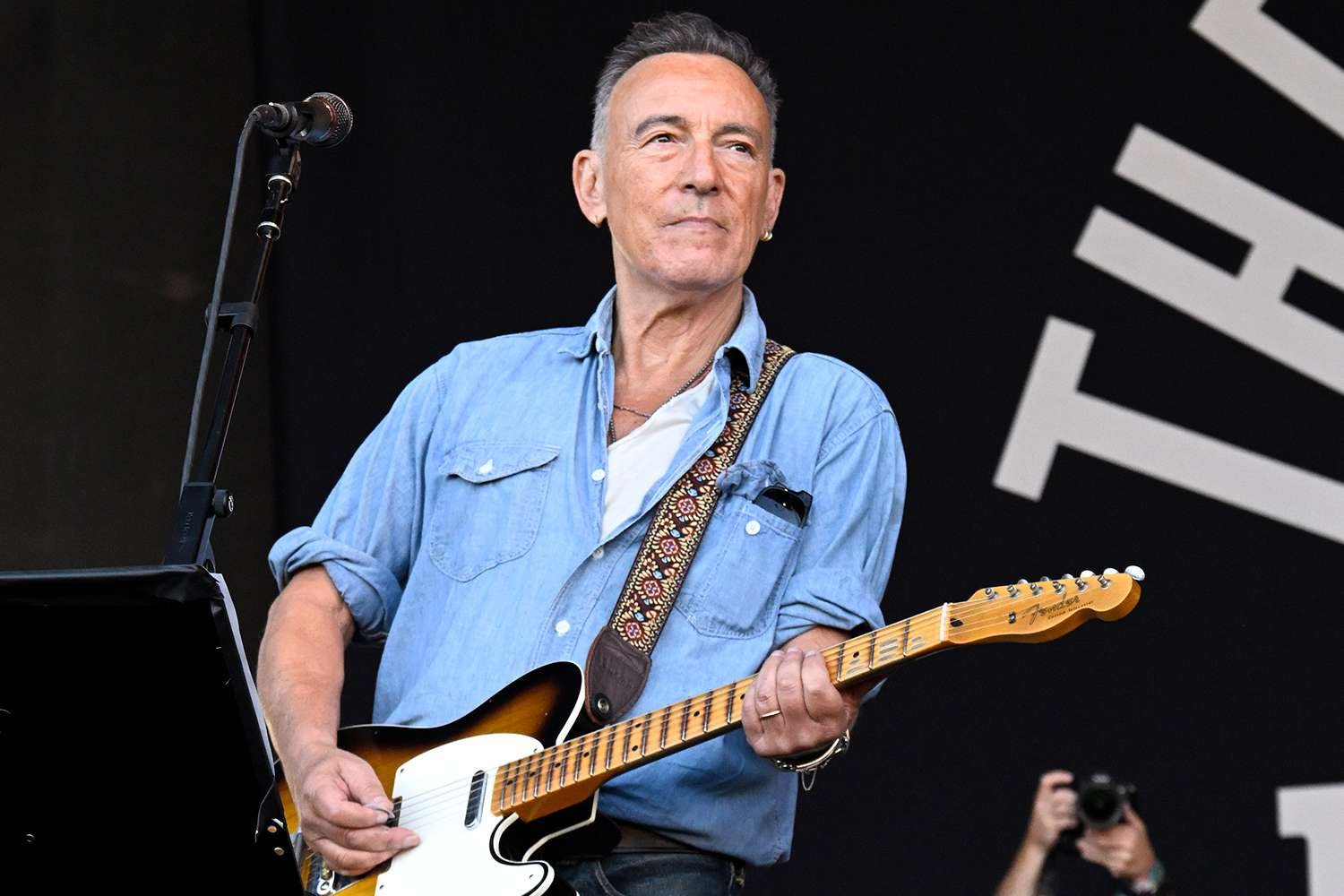
There are times when a concert becomes something more than music—when the stage turns into a platform, and the artist steps into a different kind of spotlight. That’s what happened when Bruce Springsteen addressed a live audience with remarks that quickly echoed far beyond the venue walls.
Known for decades as “The Boss,” Springsteen has built his legacy on chronicling the lives of everyday Americans. His songs have long explored themes of hardship, resilience, and hope, often reflecting the struggles and aspirations of the working class. But on this particular night, the message shifted from storytelling to direct commentary.

Speaking candidly, Springsteen offered a sharp critique of the current political climate, using language that underscored his deep concern. His remarks were not framed as abstract ideas or distant observations—they were immediate, pointed, and grounded in a sense of urgency. For an artist who has always woven social awareness into his music, this moment felt like a natural, if intensified, extension of that tradition.
The reaction was swift. For some in the audience, his words reinforced long-held concerns and served as a powerful affirmation. For others, the directness of the statement came as a surprise, highlighting how unusual it can feel when a performer steps so clearly into the realm of political discourse during a live event.
Yet Springsteen’s history suggests that this moment didn’t emerge out of nowhere. From songs like “Born in the U.S.A.” to “The Rising,” his work has consistently engaged with the American experience in all its complexity. What made this instance different was not the presence of a message, but the absence of metaphor. Instead of letting lyrics carry the weight, he chose to speak plainly.
Moments like these often spark broader conversations about the role of artists in public life. Should musicians remain within the boundaries of their craft, or is the stage a valid space for civic expression? Springsteen has long answered that question in his own way—by refusing to separate the two entirely. For him, music and message have always been intertwined, even when the delivery varies.

What stood out most was the sense of conviction behind his words. There was no attempt to soften the message or make it universally comfortable. Instead, it reflected a belief that certain moments call for clarity, even at the risk of division. In doing so, Springsteen reminded audiences that art doesn’t exist in a vacuum—it lives within the same social and political realities as everything else.
For fans, the moment may be remembered not just for what was said, but for how it was said: directly, urgently, and without hesitation. It was a reminder that behind the guitar and the familiar voice is someone deeply engaged with the world around him.
As the night continued and the music resumed, the atmosphere carried a different weight. The songs still connected, but now they were framed by something more immediate—a sense that the performance had crossed into a broader conversation.

In the end, Springsteen didn’t just entertain. He challenged, questioned, and prompted reflection. And whether one agrees or disagrees, that willingness to speak out is part of what has kept his voice relevant for so many years.