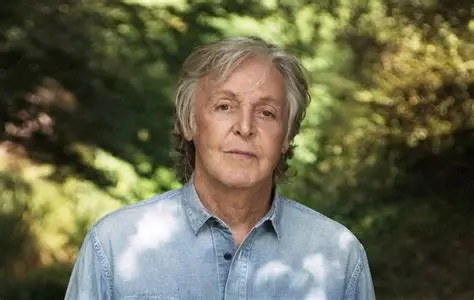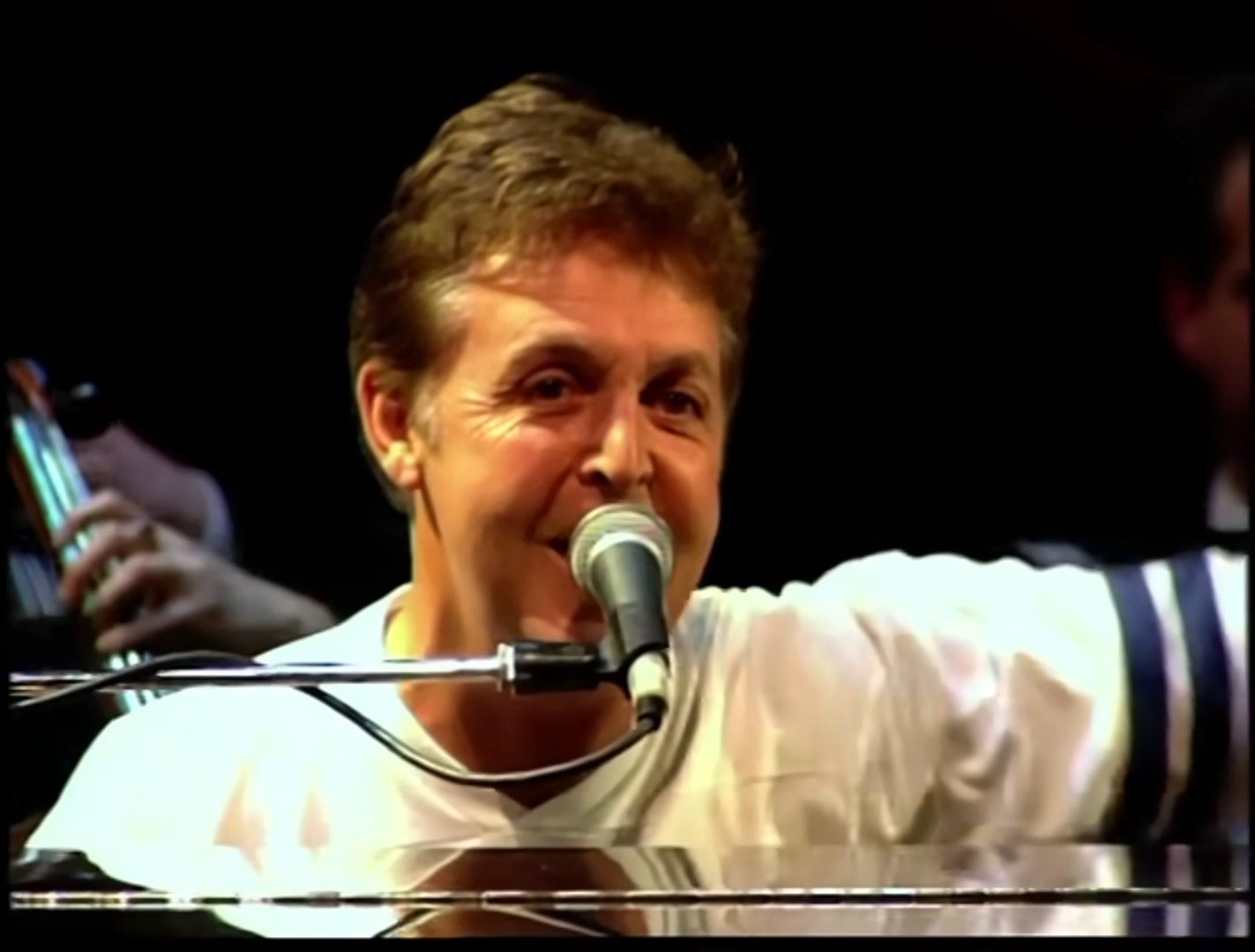
In a career filled with unforgettable performances, it’s often the smallest, quietest moments that leave the deepest impression. That was certainly the case when Paul McCartney recently paused mid-song during a live performance of Maybe I’m Amazed, transforming a concert into something far more personal.
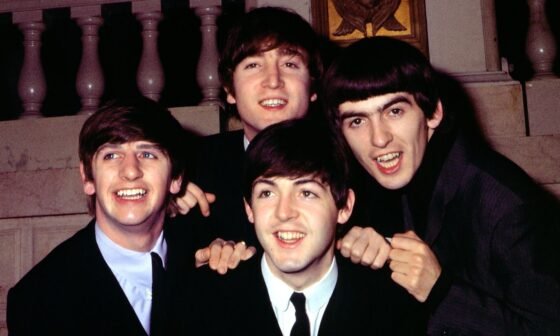
The venue was full—thousands of fans gathered to hear one of music’s most enduring voices. The evening had followed a familiar rhythm: classic songs, warm energy, and the shared nostalgia that surrounds McCartney’s work. But as he sat at the piano and began “Maybe I’m Amazed,” the atmosphere subtly shifted. The song has always carried emotional weight, written during the final days of The Beatles as his life and career were undergoing profound change.
Partway through the performance, McCartney stopped.
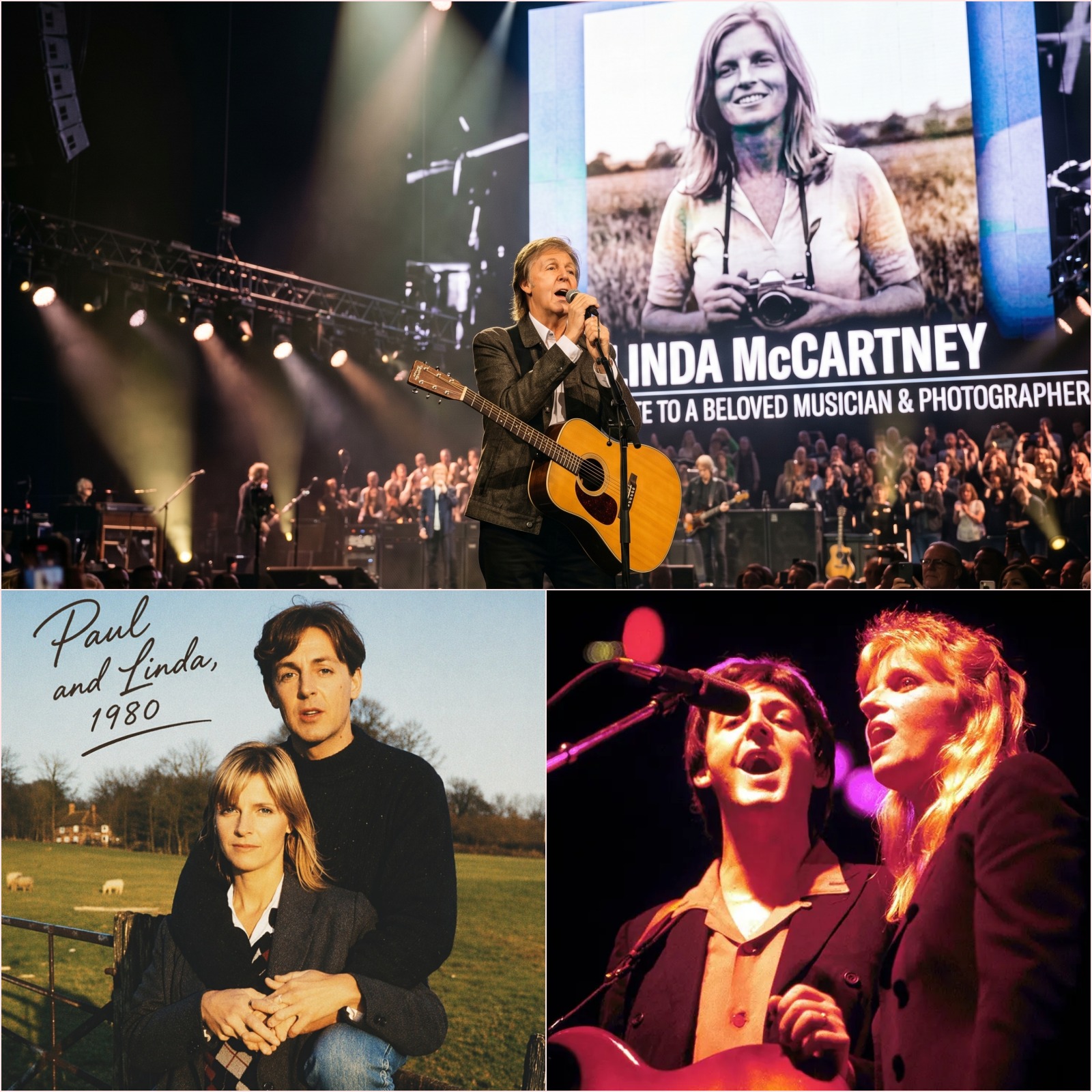
There was no dramatic gesture, no cue from the band. His hands simply rested on the keys as the music faded into silence. The crowd followed instinctively, the usual concert noise replaced by stillness. In that pause, the scale of the moment became clear—it was no longer just a performance, but a reflection.
Looking out at the audience, McCartney spoke about Linda McCartney, his late wife. His words were simple, but carried weight earned over decades: she had been his partner in every sense—someone who saw beyond the public image and understood the person behind it.
For longtime fans, the connection between Linda and “Maybe I’m Amazed” is well known. The song was written as a tribute to her support during one of the most uncertain periods of his life. As The Beatles were coming apart, Linda became a source of grounding and clarity. She wasn’t drawn to the mythology surrounding him; she related to him as a person navigating change, doubt, and reinvention.
That history lingered in the room as he spoke. It gave new context to the lyrics, turning familiar lines into something more immediate. When he returned to the piano, the performance felt quieter, more deliberate. It was as if the song had been stripped back to its original purpose—not just an expression of love, but of gratitude.
What stood out most wasn’t the pause itself, but what it revealed. Even after all these years, the connection between McCartney and Linda remains present in his music. It’s not preserved in a distant, untouchable way, but carried forward through moments like this—brief, unplanned, and deeply human.
As the final notes faded, there was no dramatic conclusion. McCartney stood, acknowledged the crowd, and left the stage without returning for another encore. It wasn’t abrupt, but it felt complete, as though the performance had reached its natural end.
For those in attendance, it was a reminder that behind the legacy, the awards, and the global recognition, there is still a person shaped by love and loss. And sometimes, even in front of thousands, that truth finds its way to the surface—not through spectacle, but through silence.
In that silence, the song said everything it needed to.