When Joe Cocker Gave a Beatles Classic a New Voice—and Earned Paul McCartney’s Respect

Paul McCartney

Some songs arrive perfectly formed, tied forever to the voices that first brought them into the world. Others, however, find new life when reimagined—revealing layers that even their creators may not have fully explored. That was the case when Joe Cocker took on With a Little Help from My Friends, a track originally performed by The Beatles.

Written by Paul McCartney and John Lennon, the song first appeared on the band’s 1967 album Sgt. Pepper’s Lonely Hearts Club Band. In its original form, it carried a sense of warmth and charm, delivered through Ringo Starr’s distinctive, understated vocal style. It was friendly, melodic, and unmistakably part of the Beatles’ carefully crafted world.

Then, just a year later, Joe Cocker approached it from an entirely different angle.

His version slowed the tempo, stripped away the lightness, and replaced it with something more intense. Backed by a powerful arrangement and his unmistakable raspy voice, Cocker transformed the song into an emotional outpouring. What had once felt like a gentle reassurance among friends became something closer to a plea—urgent, vulnerable, and deeply human.

It wasn’t just a reinterpretation; it was a reinvention.

For listeners at the time, the contrast was striking. For the song’s creators, it was something else entirely. Paul McCartney, in particular, has often spoken about the impact of hearing Cocker’s version. Rather than seeing it as a departure from the original, he recognized it as a powerful extension of the song’s meaning—proof that a well-written piece of music can live multiple lives.

That reaction speaks to something essential about songwriting. Once a song is released into the world, it no longer belongs solely to its creators. It becomes part of a larger conversation, open to interpretation, reshaping, and rediscovery. Joe Cocker understood that instinctively. He didn’t try to imitate the Beatles; he made the song his own.

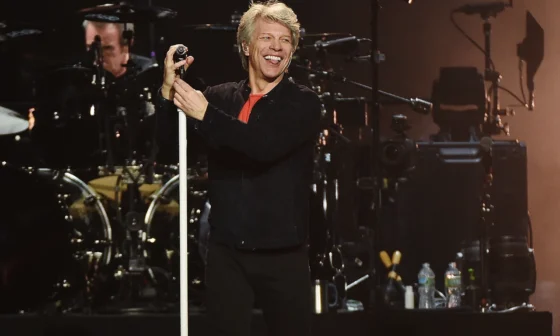
Pop Stars On Stage Performing At "party At The Palace", A Unique Pop Concert Held In The Grounds Of Buckingham Palace For 12,500 Guests. Left To...

His performance at the Woodstock Festival further cemented that transformation. In front of a massive crowd, his version of “With a Little Help from My Friends” became one of the defining moments of the event—raw, unfiltered, and unforgettable. It introduced the song to a new audience in a completely different emotional register.

Over time, both versions have continued to coexist, each offering something unique. The Beatles’ original remains a symbol of camaraderie and musical innovation, while Cocker’s rendition stands as a testament to the power of reinterpretation. Together, they show how a single composition can evolve, shaped by different voices and perspectives.

What makes this story endure is not just the performance itself, but the respect it inspired. In an industry often defined by competition and comparison, moments like this stand out—where one artist’s reinterpretation is embraced by another as something meaningful and valid.

For Paul McCartney, it wasn’t about ownership. It was about recognition—seeing that a song he helped create had found a new depth through someone else’s experience.

Story pin image

And that may be the highest form of tribute any songwriter can receive: not imitation, but transformation.

0 Shares:
Leave a Reply

Your email address will not be published. Required fields are marked *

You May Also Like
Tom
Read More

“Netflix SHOCKER: Sir Tom Jones Uncensored — The Untold Story Netflix just crossed the line. The official trailer for “Sir Tom Jones: The Fire Inside” has dropped—and it’s not asking for your attention, it’s commanding it. This raw, no-holds-barred documentary dives deep into the journey behind the music legend, exposing the working-class struggle, the personal losses, and the relentless stamina that shaped one of the most powerful voices in music history.” Sir Tom Jones: ‘I might be old but my voice is still young’ – BBC News Netflix has ignited intense conversation with the release of the official trailer for Sir Tom Jones: The Fire Inside—a documentary that doesn’t ask for attention so much as demand it. From its opening seconds, the film signals that this will not be a polished celebration or a carefully managed tribute. Instead, it positions itself as a raw, uncompromising portrait of one of music’s most enduring and powerful voices. The trailer suggests a story that goes far beyond fame. Born into a working-class life, Tom Jones rose from modest beginnings to international superstardom, carrying with him both the weight of his origins and the cost of leaving them behind. The Fire Inside appears determined to explore that tension—how grit, ambition, and survival shaped not only his voice, but his identity. What sets this documentary apart is its refusal to soften the edges. The film reportedly delves into personal losses that defined Jones offstage, including moments of isolation that followed global success. Rather than framing endurance as glamour, the narrative leans into stamina—emotional, physical, and creative—as the true engine behind his longevity. Industry observers note that this approach marks a shift from traditional legacy documentaries. Instead of focusing solely on accolades and iconic performances, The Fire Inside appears to ask harder questions: What does it take to last? What is sacrificed along the way? And how does a performer keep burning when the spotlight never fully fades? Equally striking is the documentary’s emphasis on voice—not just as an instrument, but as a form of resistance. The trailer hints at behind-the-scenes footage and candid reflections that reveal how Jones fought to remain relevant without compromising his core sound. In an industry obsessed with reinvention, his defiance may be one of his greatest achievements. Netflix’s decision to present an uncensored narrative has already divided opinion. Some viewers praise the platform for honoring truth over myth, while others question whether such intimacy risks crossing personal boundaries. But that tension may be precisely the point. The Fire Inside seems less concerned with comfort than with honesty. If the full documentary delivers on the promise of its trailer, it will stand not just as a biography, but as a meditation on endurance, class, grief, and the cost of greatness. This is not a farewell. It is an excavation. And for audiences accustomed to seeing Sir Tom Jones as an icon frozen in time, The Fire Inside may be the most revealing performance of his career—one delivered without a microphone, and without compromise.

Netflix has ignited intense conversation with the release of the official trailer for Sir Tom Jones: The Fire…
Marty Robbins
Read More

HE WASN’T JUST A “SON OF A LEGEND” — HE WAS AN ARTIST BRAVE ENOUGH TO CARRY THE LEGACY FORWARD. In the quiet years after Marty Robbins’ voice left the radio waves, one name kept drifting back into the music world: Ronny Robbins. Not as a replacement. Not as an echo. But as a man trying to decide what it means to be born into a songbook that already felt complete. Ronny grew up hearing El Paso not as a hit, but as a bedtime story. The stage lights that once framed his father became something heavier—almost sacred. When he finally stepped forward with his own music, it wasn’t to revive Marty’s sound. It was to answer it. Every note he sang carried two lives: the legend the world remembered, and the father he knew at home. Audiences expected history. Ronny offered something riskier—continuation. Some heard tribute. Others heard quiet defiance. Was he preserving a legacy… or proving he could survive outside of it? The truth sits somewhere in between—where love, pressure, and identity collide. And just like his father’s ballads, the real meaning isn’t in the chorus. It’s in the courage to sing at all.

HE WASN’T JUST A “SON OF A LEGEND” — HE WAS A MAN TRYING TO SING HIS OWN…