When the Past Meets the Present: Inside Paul McCartney and Ringo Starr’s Unexpected Studio Struggle

For decades, the musical partnership between Paul McCartney and Ringo Starr has been held up as part of the enduring magic of The Beatles—a connection that seemed almost immune to time. So when the two reunited in the studio for a new recording session, expectations were naturally high. Fans imagined an effortless chemistry, a continuation of something that had defined an era.

But the reality inside the studio told a more complicated story.
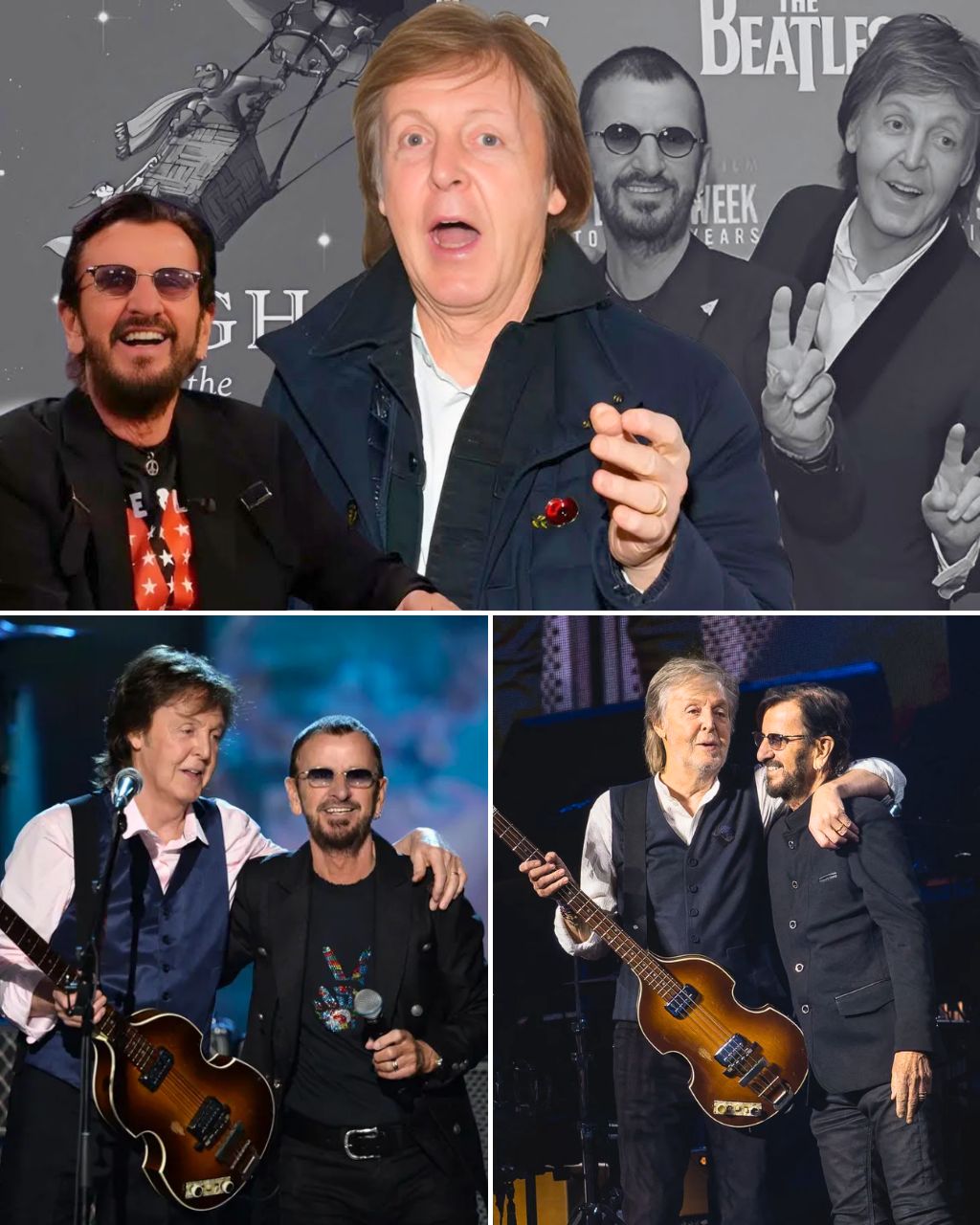
What began as a simple plan—Ringo laying down drums for one of Paul’s tracks—quickly became a lesson in how much both artists had evolved. McCartney, known for his meticulous approach in later years, arrived with a clear structure in mind. Starr, by contrast, has always relied on feel and instinct, the loose, groove-driven style that helped shape the Beatles’ sound in the first place.

At first, the differences were subtle. A take would end, followed by a quiet suggestion. Another attempt, another pause. Engineers watched as small adjustments turned into longer discussions. The energy in the room shifted from relaxed nostalgia to something more uncertain.

Then came the moment that defined the session.

“This isn’t what we talked about,” Ringo said, cutting through the polite studio chatter. It wasn’t confrontational, but it was honest—and it hung in the air. For a brief stretch, the weight of their shared history seemed less like a foundation and more like pressure. Two musicians who once moved in near-perfect sync were now navigating different creative instincts.

It’s easy to forget that the Beatles themselves often thrived on tension. Some of their most iconic work emerged from disagreement and contrast. But back then, they were a band finding their identity. Now, McCartney and Starr were legends, each carrying decades of experience and expectation.

The turning point came not from refining the process, but from abandoning it altogether.

In a move that surprised everyone in the room, they decided to strip everything back. The engineers stepped out. The click track—so often the backbone of modern recording—was turned off. Sheet music and structured notes were set aside. What remained was just two musicians, their instruments, and the shared language they’d built over a lifetime.

What followed wasn’t perfect in the traditional sense. It wasn’t polished or meticulously layered. But it had something else—something harder to define. The rhythm loosened, the playing breathed, and for the first time that day, both men seemed fully present in the music rather than trying to shape it.

It echoed the spirit of their earliest days in Liverpool, long before global fame and studio precision became part of the equation. Back then, they didn’t rely on technical frameworks—they relied on listening to each other.

The final track that emerged from the session may not match the expectations of those hoping for a pristine, modern production. Instead, it stands as a reminder that even the most legendary partnerships require adaptation—and sometimes, letting go.

For McCartney and Starr, the session wasn’t just about recording a song. It was about rediscovering how to play together again—not as icons, but as musicians.

0 Shares:
Leave a Reply

Your email address will not be published. Required fields are marked *

You May Also Like
Beatles
Read More

The sons of The Beatles have just reunited in one song — and the title is giving fans goosebumps. 🎶👀 Not a cover. Not cheap nostalgia. Just five of the most famous names in music history… standing together in one space, singing about what remains after the legend. It sounds gentle — but the lyrics are like an unfinished conversation between generations. And the most talked-about thing: who initiated this collaboration… and why now?

WHEN THE CHILDREN OF LEGENDS SING TOGETHER — A New Chapter Beyond The Beatles WHEN THE CHILDREN OF…
John Lennon
Read More

“At Glastonbury, Sir Paul McCartney—a man who has held the world in his hands—suddenly seemed incredibly small. He clutched his signature bass, but this time, he didn’t strike the first note immediately. On the colossal LED screen behind him, John Lennon appeared—youthful and defiant, captured in the glory of the 60s. Paul smiled—a smile that was equal parts joy and heartbreak. Cutting-edge technology had resurrected John’s voice from the past. Two men—one aging in the present, the other frozen in time—harmonized together on “I’ve Got a Feeling.” Paul turned to the screen, his gaze fixed not on a video, but as if he were seeing John in the flesh once more. As the final note faded, Paul whispered something into the microphone that only those listening closely to the recording could hear…”

The mud of Glastonbury has seen history before. It has seen Bowie in his prime, the Rolling Stones…
Reba
Read More

MIDNIGHT CAUGHT FIRE — REBA McENTIRE CLOSED 2025 AND WELCOMED 2026 WITH A PERFORMANCE THAT SHOOK THE ROOM The countdown clocks were glowing, the crowd buzzing with anticipation, when the lights suddenly dropped to red and gold. As the final seconds of 2025 slipped away, Reba McEntire stepped into the spotlight — fierce, unflinching, and fully in command. The opening line of I Can’t cut through the night like a spark, and just like that, the new year arrived in flames. Reba didn’t ease into the moment — she claimed it. Her voice was powerful, razor-sharp, and alive with decades of grit and grace. Every lyric landed like a declaration, echoing through the arena as fans shouted back the words. As midnight hit, fireworks erupted behind the stage, but no spectacle could compete with the fire in her delivery. “That’s how you enter a new year,” one musician backstage was overheard saying. Reba simply smiled, eyes blazing, and kept singing. The crowd was on its feet from the first chorus. Tears mixed with cheers. Strangers hugged. Phones shook as fans tried to capture what felt like a once-in-a-lifetime crossover between endings and beginnings. Online, reactions poured in within minutes. “Reba just reminded everyone who runs country music,” one fan wrote. Another post went viral: “Closing one year and opening the next with THAT song? Icon behavior.” As the final note rang out and Reba lifted her hand to the crowd, the message was unmistakable: strength doesn’t fade with time — it sharpens. 2025 may have ended, but 2026 arrived with Reba McEntire standing tall at the center of it all.

Reba McEntire Closes out the 2024 ACM Awards With Blazing Performance of ‘I Can’t’ The country star also…