The Pulse Behind the Legends: Why Ringo Starr Still Matters in 2026

beatle

There’s a certain kind of silence that only exists between drumbeats—the space where timing, feeling, and instinct meet. It’s in that space where Ringo Starr built his legacy. While the spotlight often leaned toward the songwriting brilliance of his bandmates in The Beatles, Ringo’s contribution lived in something less obvious but no less essential: feel.

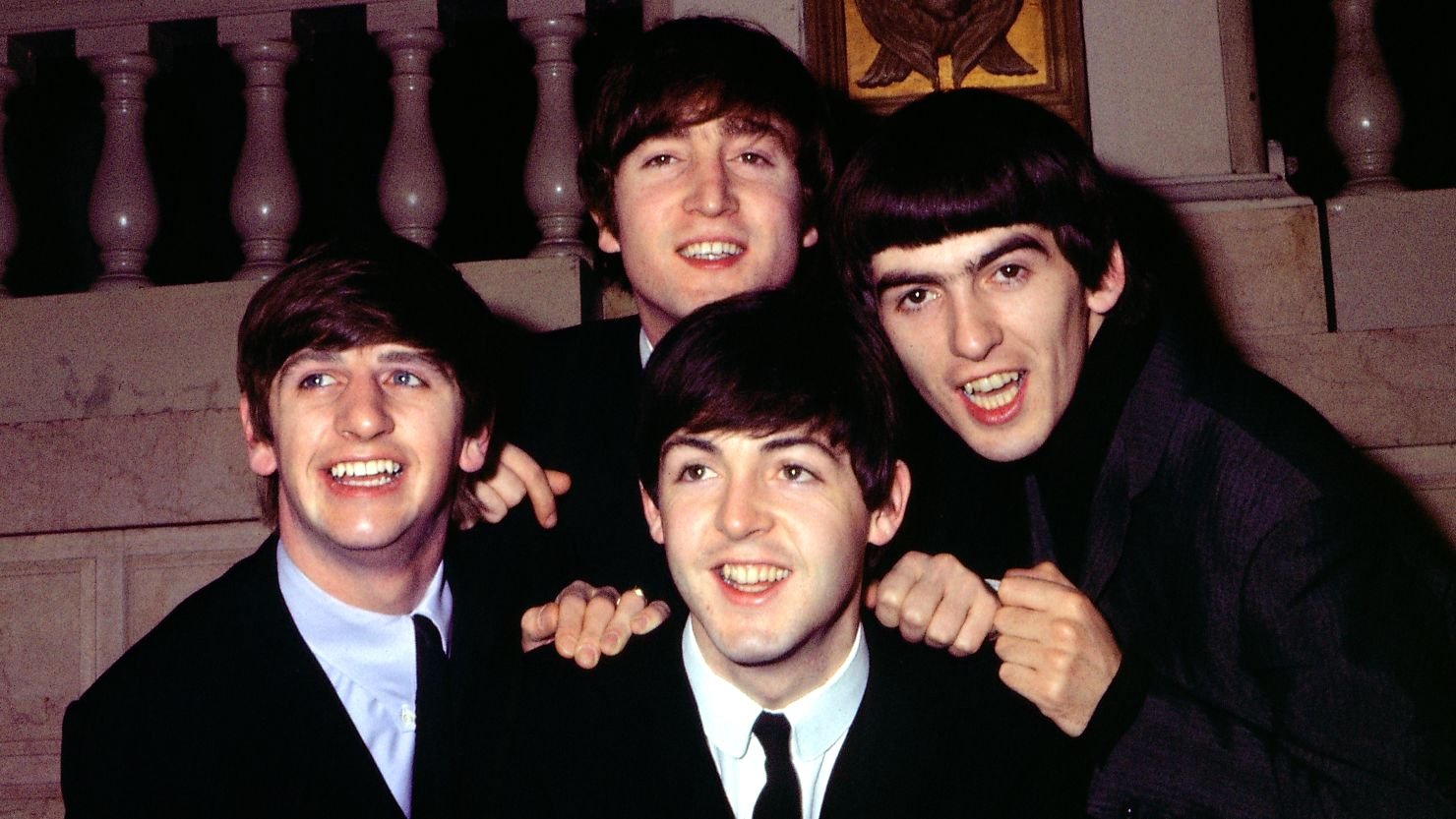
Back in the late 1960s, photographs captured him as an understated presence—mustachioed, composed, and rarely competing for attention. Yet behind that calm exterior was a drummer whose choices shaped some of the most recognizable songs in modern music. He didn’t play to impress; he played to serve the song. And that difference is exactly why his work continues to resonate.

For years, the narrative surrounding Ringo leaned unfairly toward luck rather than skill. He was labeled “the lucky Beatle,” the one who happened to be in the right place at the right time. But time has a way of correcting shallow assumptions. Musicians, critics, and fans alike have since taken a closer listen—and what they’ve found is a drummer with remarkable musical intuition.

Có thể là hình ảnh về nhạc cụ và văn bản cho biết 'WHO'S STILL LISTENING ΤΟ ΤΗΕ BEATLES IN 2026?'

Ringo’s style was never about technical flash. Instead, it was about choices. His fills often moved in unexpected directions, sometimes described as “backwards,” yet they always landed exactly where they needed to. Songs like “Come Together” or “Ticket to Ride” don’t just feature drums—they rely on them. His playing gave those tracks their identity.

Fast forward to 2026, and something interesting is happening. Young drummers, raised in a world of hyper-polished production and digital precision, are circling back to Ringo’s work. On social media and in music schools, his grooves are being studied not for their complexity, but for their honesty. There’s a growing appreciation for the idea that simplicity, when done right, is anything but easy.

Paul McCartney & Ringo Starr Score Beatles Chart 1st With Dolly Parton

Part of that renewed interest also ties into something bigger than technique. Ringo has long been associated with a message that extends beyond music: “Peace and Love.” It’s a phrase he’s repeated for decades, sometimes playfully, sometimes earnestly—but always consistently. In an industry that often shifts with trends, that kind of steady message stands out.

His influence today isn’t just heard in drum patterns—it’s felt in attitude. Musicians talk about restraint, about listening, about playing for the collective rather than the individual. Those ideas trace back, in many ways, to Ringo’s approach. He wasn’t trying to dominate the sound; he was shaping it from within.
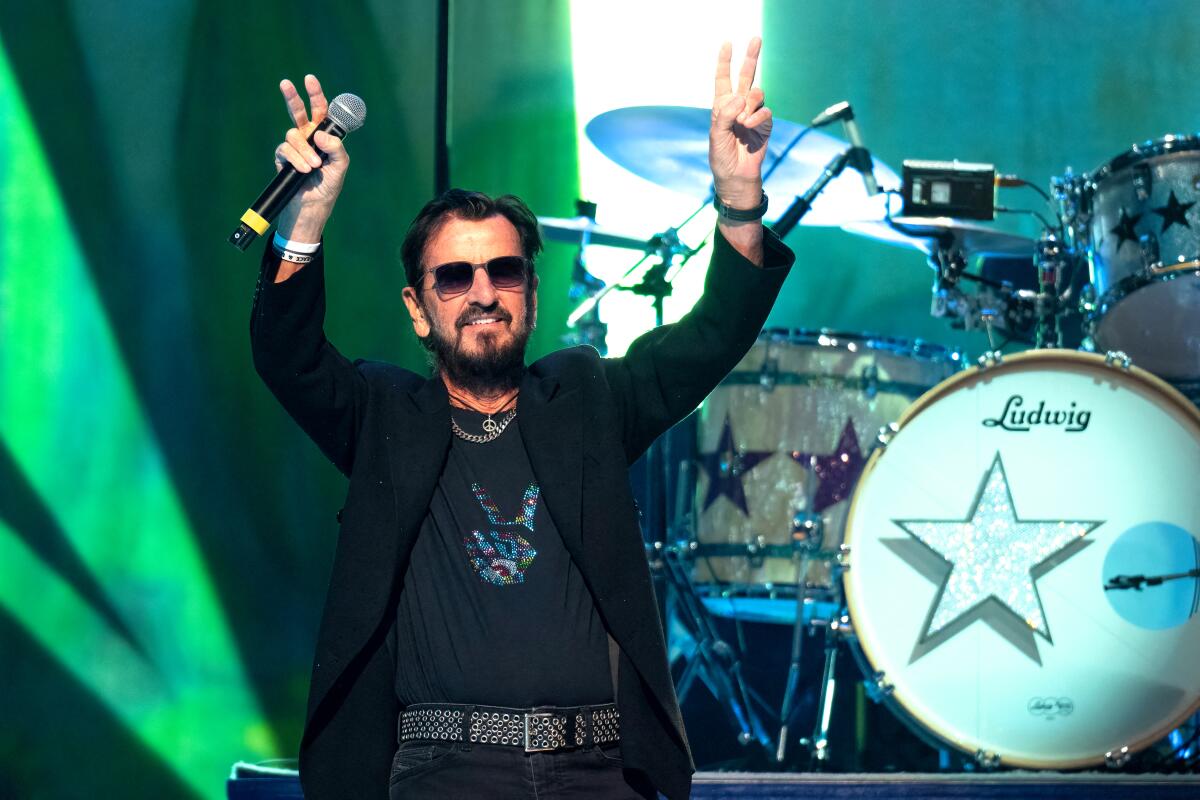
Ringo Starr on the All-Starr Band and why he likes being the boss - Los Angeles Times

And maybe that’s why his legacy feels so relevant right now. In a time where music can be generated, edited, and perfected by machines, there’s something grounding about a drummer who leaned into imperfection—the slight swing, the human touch, the unspoken understanding between bandmates.

Ringo Starr didn’t just keep time for The Beatles. He gave their music a heartbeat. And decades later, that heartbeat hasn’t faded. If anything, it’s being rediscovered—one groove at a time.

0 Shares:
Leave a Reply

Your email address will not be published. Required fields are marked *

You May Also Like
paul-mccartney
Read More

PAUL McCARTNEY IS REWINDING TIME — BACK TO THE MOMENT EVERYTHING COULD HAVE FALLEN APART. With Paul McCartney: Man on the Run, the legendary Paul McCartney takes audiences deep into one of the most defining — and fragile — chapters of his post-Beatles life, when the world was watching, expectations were crushing, and the future was anything but certain. More than a documentary, this is a raw journey through reinvention, resilience, and the fight to move forward after the greatest band in history came to an end. 🎬 The full story behind the film is unfolding now. ⬇️ID 185785973 © Fabio Diena | Dreamstime.com Paul McCartney is taking audiences back to one of the most pivotal chapters of his post-Beatles career with Paul McCartney: Man on the Run, a new feature documentary that shines a spotlight on the rise of Wings and the creation of the landmark album Band on the Run. The film, directed by Academy Award winner Morgan Neville, examines McCartney’s creative rebirth in the early 1970s as he rebuilt his musical identity following the breakup of The Beatles. Rather than focusing on stadium performances or later career retrospectives, Man on the Run zeroes in on a period of uncertainty, experimentation, and eventual triumph that reshaped McCartney’s legacy. A Limited Theatrical Run Paul McCartney: Man on the Run premiered at the Telluride Film Festival in August 2025 before rolling out as a limited theatrical release. The decision to bring the documentary to cinemas ahead of its streaming debut reflects the growing trend of positioning major music documentaries as theatrical events, particularly those tied to culturally significant albums and artists. For fans, the theatrical run offers a rare opportunity to experience McCartney’s story and music on the big screen, with restored archival footage and immersive sound that emphasizes the scale of Wings’ ambition during the era. From Wings’ Formation to a Breakthrough Album The documentary traces McCartney’s journey from the immediate aftermath of The Beatles’ dissolution to the formation of Wings, a band that initially struggled for acceptance but ultimately became one of the most successful acts of the decade. Central to the film is the story behind Band on the Run, recorded under difficult and often chaotic circumstances. The album went on to become a global success and is widely regarded as McCartney’s definitive post-Beatles statement. Through interviews and rare footage, Man on the Run explores how the album’s themes of escape, reinvention, and resilience mirrored McCartney’s own state of mind at the time. A Personal Portrait of Reinvention Abbey Road’ – dấu ấn cuối cùng của huyền thoại The Beatles – Báo VnExpress Giải trí Rather than presenting a conventional career overview, Man on the Run offers a deeply personal look at McCartney’s emotional and creative struggles during the 1970s. The film includes reflections on his relationship with John Lennon, the pressure of living up to his Beatles legacy, and the doubts that accompanied his early years with Wings. The documentary also highlights the role of family and collaboration in McCartney’s recovery as an artist, portraying Wings not just as a band but as a vehicle for experimentation and freedom. Streaming Release to Follow Tại sao đến giờ ca khúc “Now and Then” của The Beatles mới được ra mắt? Following its theatrical engagement, Paul McCartney: Man on the Run is scheduled to debut globally on Amazon Prime Video in late February 2026. The release coincides with a broader celebration of McCartney’s Wings era, including books and archival projects that revisit one of the most creatively fertile periods of his career. For longtime fans and newcomers alike, the theatrical release of Man on the Run positions Band on the Run not just as a classic album, but as the turning point that redefined Paul McCartney’s place in rock history.

Paul McCartney is taking audiences back to one of the most pivotal chapters of his post-Beatles career with Paul McCartney:…
Bob dylan
Read More

“When Legends Collide and History Listens” — Bob Dylan’s rare, almost accidental union with George Harrison, Jeff Lynne, Tom Petty, and Roy Orbison didn’t just create a supergroup, it created a living chapter of music history that still breathes decades later, and when paired with Dylan’s hushed, deeply personal tribute to Woody Guthrie, it reveals how collaboration, influence, and artistic inheritance can turn fleeting moments into songs that refuse to age, refuse to fade, and keep traveling across generations long after the stage lights go out.

When Legends Unite: Traveling Wilburys Magic and Dylan’s Quiet Nod to Guthrie From supergroup alchemy to a hushed…
Beatles
Read More

ON THIS NIGHT IN 1967, The Beatles DELIBERATELY BROKE EVERY ORCHESTRAL RULE TO CREATE 24 BARS THAT CHANGED MUSIC HISTORY. Paul McCartney stood in EMI Studio One conducting a 40-piece orchestra instructed not to play together, not to listen to each other, sliding from the lowest possible notes to the highest in rising chaos, recorded repeatedly until it sounded like 200 musicians, while fake noses, paper glasses and rolling cameras turned a formal session into something dangerously unrepeatable. And almost no one outside that room was ever meant to see how close it came to going completely off the rails.

This date in 1967: Paul conducting the 40-piece orchestra for the 24-bar instrumental passage on ‘A Day in…
Olly Pearson
Read More

“We never imagined that one moment would turn our son’s life upside down!” Olly Pearson’s parents exclaimed in amazement. The 11-year-old boy, who just wanted to play guitar on the streets of Paris, suddenly became a global phenomenon when his Bohemian Rhapsody concert surpassed 190 million views. This out-of-control explosion sent the family into a whirlwind of surprise, as the spotlight shone on their otherwise idyllic childhood. Simon Pearson, his still-overwhelmed father, confessed that pride and anxiety were simultaneously engulfing them. From an impromptu performance, Olly now stood on the threshold of immense fame, with the whole world watching the journey of an “unwilling child star”.

It’s been just over a week since 11-year-old guitar prodigy Olly Pearson stole the spotlight during the massive…