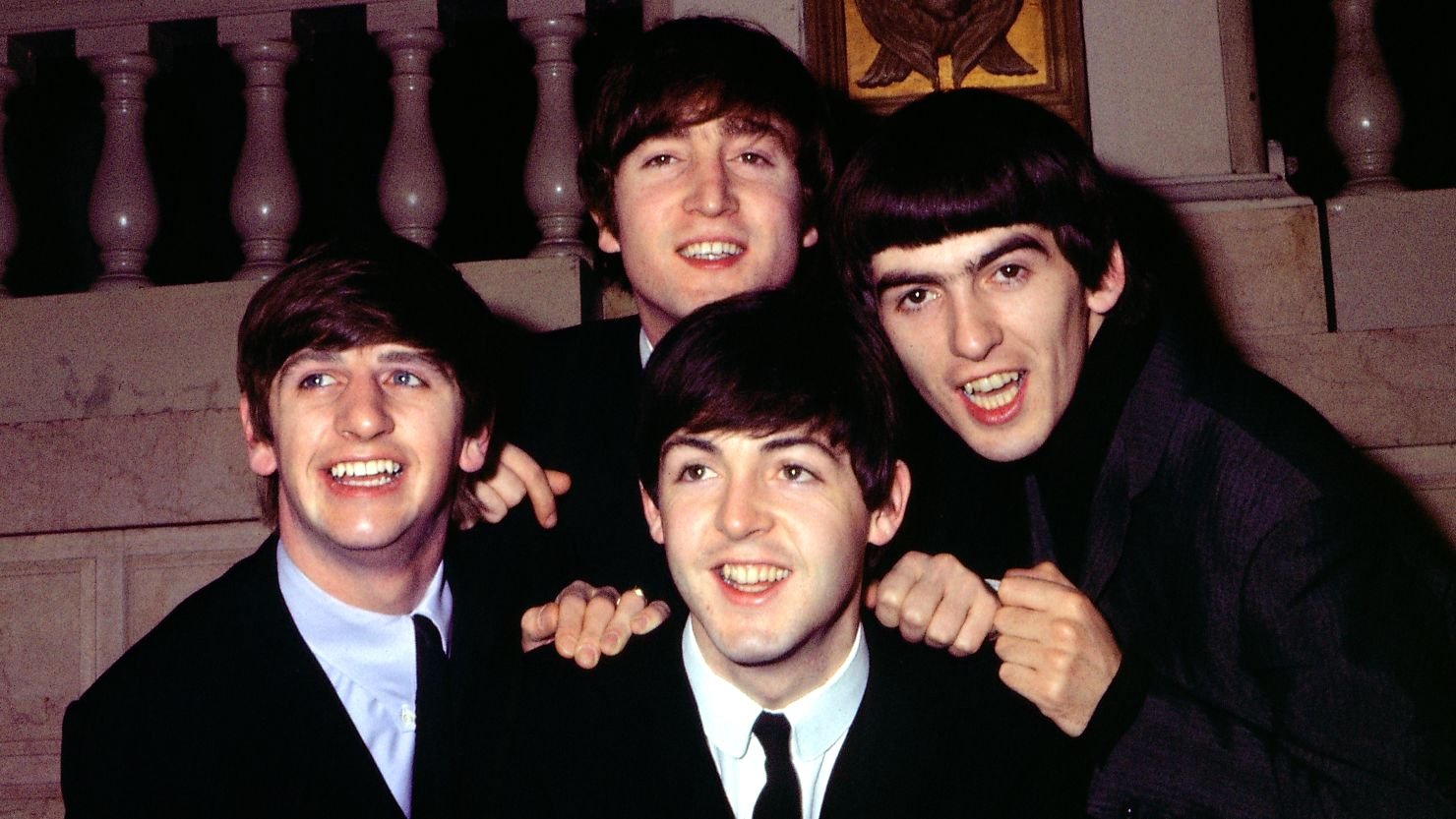
There’s a certain kind of silence that only exists between drumbeats—the space where timing, feeling, and instinct meet. It’s in that space where Ringo Starr built his legacy. While the spotlight often leaned toward the songwriting brilliance of his bandmates in The Beatles, Ringo’s contribution lived in something less obvious but no less essential: feel.
Back in the late 1960s, photographs captured him as an understated presence—mustachioed, composed, and rarely competing for attention. Yet behind that calm exterior was a drummer whose choices shaped some of the most recognizable songs in modern music. He didn’t play to impress; he played to serve the song. And that difference is exactly why his work continues to resonate.
For years, the narrative surrounding Ringo leaned unfairly toward luck rather than skill. He was labeled “the lucky Beatle,” the one who happened to be in the right place at the right time. But time has a way of correcting shallow assumptions. Musicians, critics, and fans alike have since taken a closer listen—and what they’ve found is a drummer with remarkable musical intuition.

Ringo’s style was never about technical flash. Instead, it was about choices. His fills often moved in unexpected directions, sometimes described as “backwards,” yet they always landed exactly where they needed to. Songs like “Come Together” or “Ticket to Ride” don’t just feature drums—they rely on them. His playing gave those tracks their identity.
Fast forward to 2026, and something interesting is happening. Young drummers, raised in a world of hyper-polished production and digital precision, are circling back to Ringo’s work. On social media and in music schools, his grooves are being studied not for their complexity, but for their honesty. There’s a growing appreciation for the idea that simplicity, when done right, is anything but easy.

Part of that renewed interest also ties into something bigger than technique. Ringo has long been associated with a message that extends beyond music: “Peace and Love.” It’s a phrase he’s repeated for decades, sometimes playfully, sometimes earnestly—but always consistently. In an industry that often shifts with trends, that kind of steady message stands out.
His influence today isn’t just heard in drum patterns—it’s felt in attitude. Musicians talk about restraint, about listening, about playing for the collective rather than the individual. Those ideas trace back, in many ways, to Ringo’s approach. He wasn’t trying to dominate the sound; he was shaping it from within.
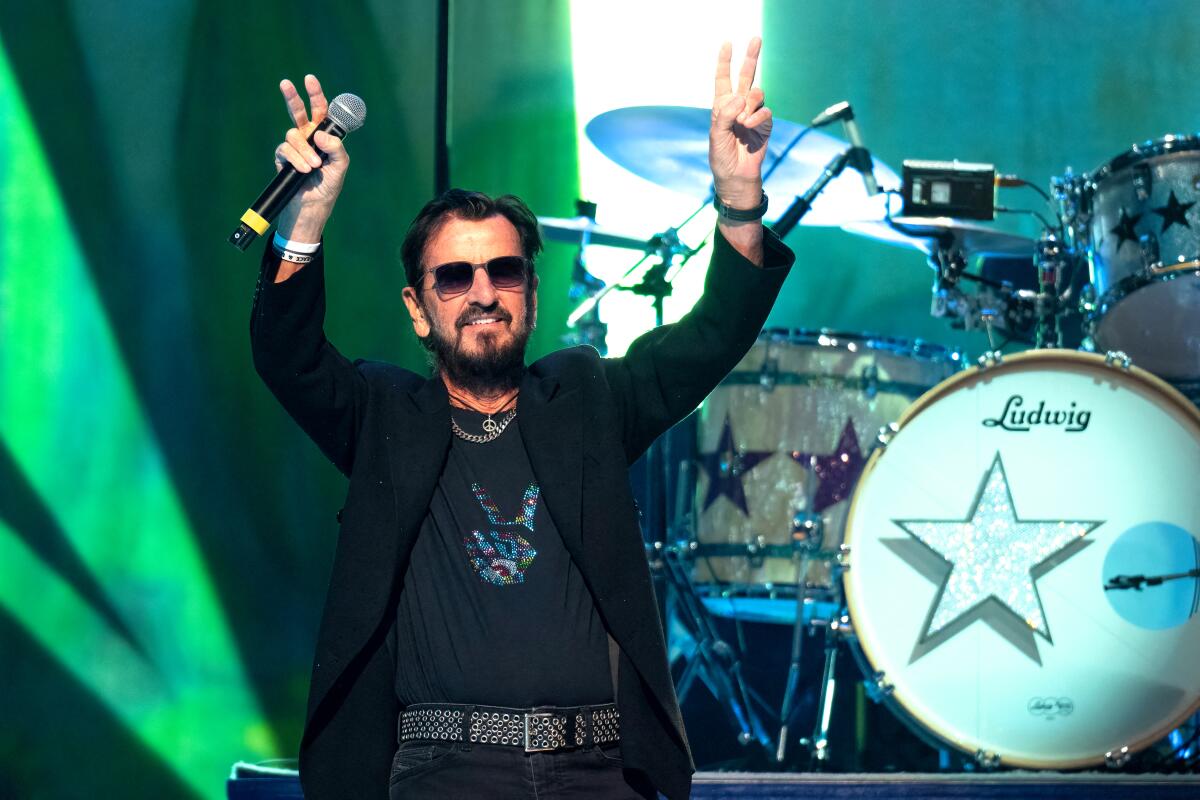
And maybe that’s why his legacy feels so relevant right now. In a time where music can be generated, edited, and perfected by machines, there’s something grounding about a drummer who leaned into imperfection—the slight swing, the human touch, the unspoken understanding between bandmates.
Ringo Starr didn’t just keep time for The Beatles. He gave their music a heartbeat. And decades later, that heartbeat hasn’t faded. If anything, it’s being rediscovered—one groove at a time.