The Night the Legends Returned: How Il Volo and Plácido Domingo Reclaimed History

Il Volo

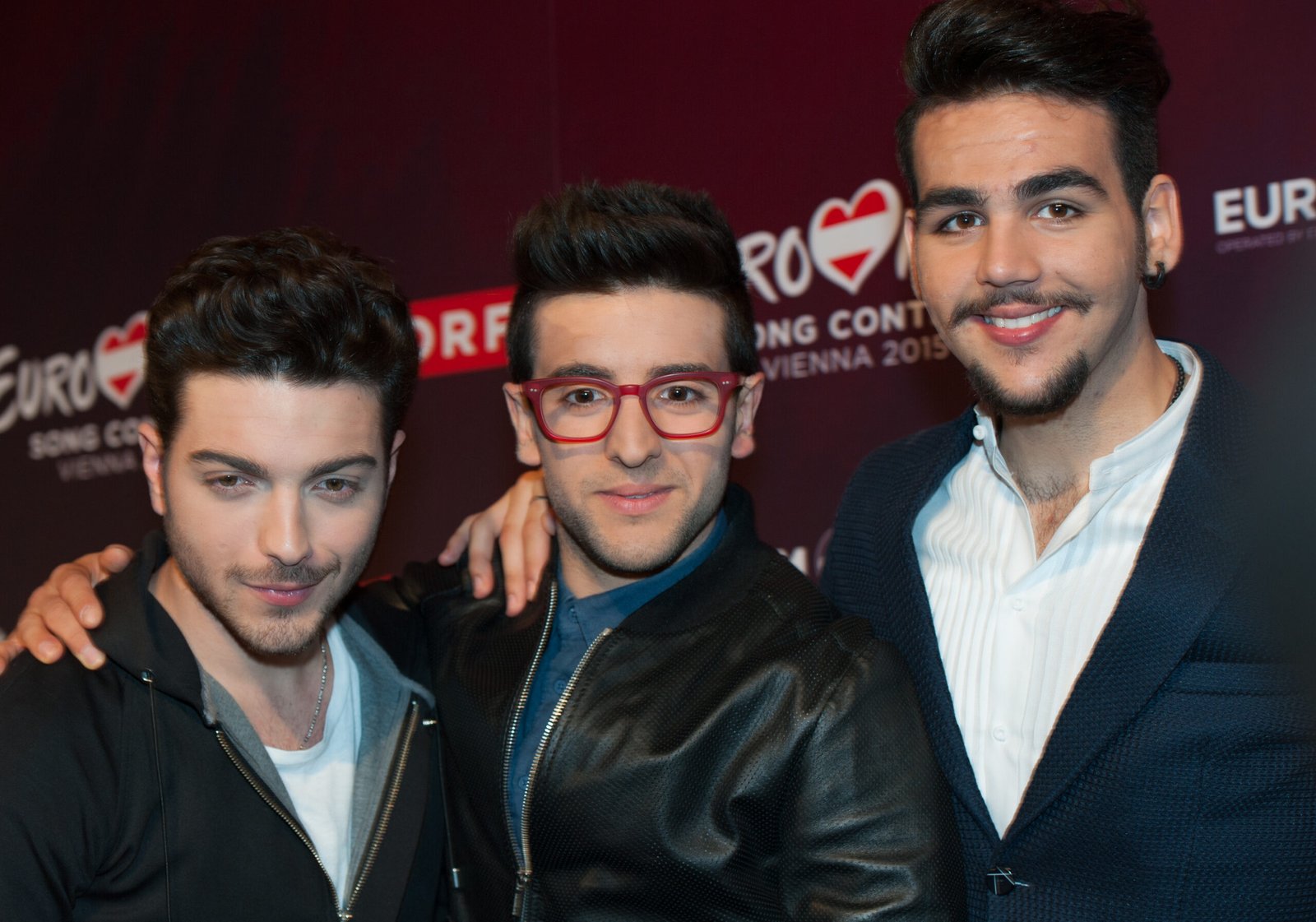
In 1990, the world of classical music experienced a seismic shift. When José Carreras, Plácido Domingo, and Luciano Pavarotti stood together at the Baths of Caracalla, they didn’t just sing; they humanized opera for a global audience. Fast forward to a warm evening in Florence’s Piazza Santa Croce, and that same lightning-in-a-bottle energy returned. This time, however, it was being carried by three young men who grew up with those legends as their North Star: the powerhouse trio Il Volo.

The concert, titled “Notte Magica,” was designed as a tribute to the original Three Tenors, but it quickly evolved into something much deeper than a cover performance. Accompanied by the prestigious Teatro Massimo di Palermo orchestra, Piero Barone, Ignazio Boschetto, and Gianluca Ginoble took on a repertoire that would intimidate the most seasoned veterans. From “Nessun Dorma” to “Granada,” the boys poured their souls into every phrase, aware that they were standing in the footprint of giants.
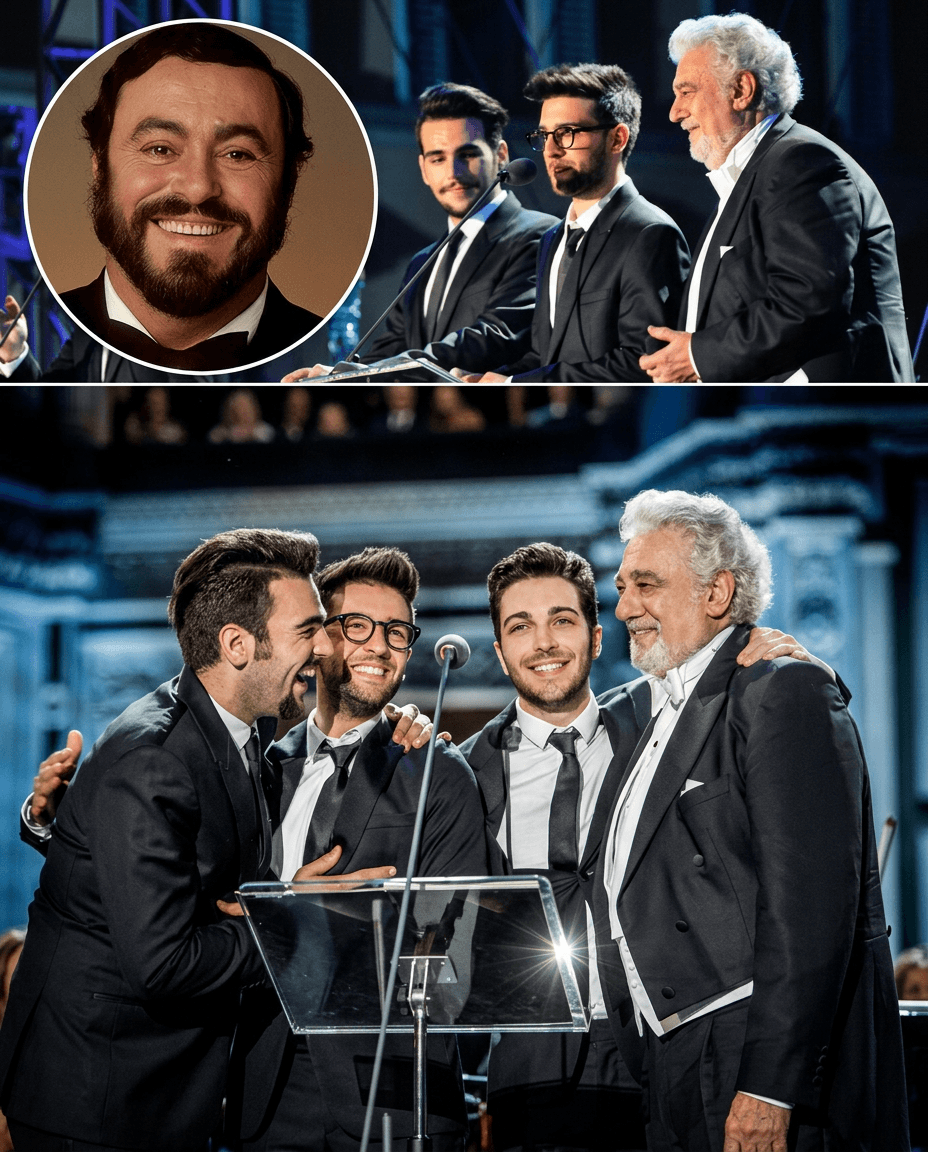
But the true magic of the night was draped in the presence of one man. When Plácido Domingo emerged from the wings, the roar of the Florentine crowd was deafening. He didn’t just appear as a guest of honor; he took the baton, conducting the orchestra for nearly half the program and guiding Il Volo with the steady hand of a mentor.

The atmosphere shifted from reverence to pure electricity during the performance of “Non ti scordar di me.” As the opening bars swelled through the piazza, Domingo set down the baton and stepped toward the microphones to join the young trio. For a few sacred minutes, the gap between generations disappeared. You had the seasoned, honeyed resonance of a living legend merging with the fresh, soaring power of the next generation.

The duet was a masterclass in vocal chemistry. Those in the front rows noted that Domingo didn’t just sing alongside the boys; he watched them with a look of paternal pride, often nodding in approval as they navigated the difficult Neapolitan crescendos. It was more than a song; it was a verification. By singing “Forget Me Not” together, they were ensuring that the tradition of the great Italian tenor would not only be remembered but would continue to thrive.

“To stand there with him, knowing he was one of the reasons we started singing, is a dream we still haven’t woken up from,” Ignazio shared after the final bow.

As the last notes of the encore echoed off the ancient stone buildings of Florence, the audience remained standing. It wasn’t just applause for a well-sung concert; it was a collective realization that they had witnessed a rare “passing of the flame.” The Three Tenors had changed music forever in 1990, and in 2016, Il Volo and Plácido Domingo proved that some nights are so iconic, they never truly have to end. They simply wait for the right voices to bring them back to life.

0 Shares:
Leave a Reply

Your email address will not be published. Required fields are marked *

You May Also Like
paul
Read More

George Harrison didn’t just write a song—he loaded it like a weapon and aimed it straight at Paul McCartney. By the time The Beatles were nearing their breaking point, the tension wasn’t just behind the scenes—it was in every note, every lyric, every glare exchanged in the studio. What once felt like brotherhood had turned into a battlefield, and the music that used to bring them together was now tearing them apart. Harrison, long overshadowed and quietly simmering with frustration, finally let his anger spill into his work. His song wasn’t just music—it was a message, a sharp jab at McCartney that fans and bandmates alike couldn’t ignore. What had started as harmony had now become open fire, and Harrison wasn’t afraid to pull the trigger.

By the time The Beatles reached their final years, the tension within the band was impossible to overlook.…
Long-Lost Conway Twitty Performance
Read More

“THE GREATEST MALE LOVE SINGER IN COUNTRY MUSIC” On June 5, 1993, country music lost the man many called “the greatest male love singer.” Conway Twitty was just 59 when complications from surgery suddenly ended a career that showed no sign of slowing down. He wasn’t retired. He wasn’t fading away. He was still on the road, still filling halls, still singing about heartbreak as if it were happening that very night. When the news broke, it traveled faster than any hit song. Country radio stations fell silent for a brief moment—then answered with his voice. “Hello Darlin’.” “It’s Only Make Believe.” “Tight Fittin’ Jeans.” Some say those songs didn’t sound like memories anymore. Was that love song meant to be his final goodbye?

“THE GREATEST MALE LOVE SINGER IN COUNTRY MUSIC” A Voice That Never Learned How to Say Goodbye On…
paul
Read More

Many once said that the wave of the British Invasion led by The Beatles had “buried” the career of Neil Sedaka. By 1964, as British music swept across the American market, Sedaka had virtually disappeared from the charts. For the next 13 years, he endured a quiet period: little radio presence, no major performances, and a career that seemed all but forgotten. However, the story does not end there. Sedaka once stated that he could write songs in the style of Paul McCartney. He moved to London, performed in small clubs, and gradually rebuilt his name. Notably, Sedaka also recorded a classical composition with the London Symphony Orchestra — an achievement previously associated with McCartney and Billy Joel. Recently, an intriguing development has circulated within music circles. Just hours after news of Sedaka’s passing was announced, McCartney reportedly canceled all of his scheduled engagements for the day. There was no official statement, no social media post — only silence. According to a source close to him, he spent the evening alone at his piano, playing a melody described as “belonging to neither man entirely, yet somehow carrying the spirit of both.” The man once said to have unintentionally overshadowed Sedaka’s career may have just composed a private farewell. For now, however, the public has yet to hear it. ▶️ Listen to the song mentioned in the first comment below.

The Rumor After the Silence: Neil Sedaka, Paul McCartney, and the Song No One Has Heard People love…
Sting’s Soul-Stirring
Read More

“The lights dimmed into gold. The crowd leaned forward as if pulled by a single breath. And then Sting stepped out of the shadows, bass in hand, ready to stand beside Celine Dion – a woman the world had waited years to hear again.”** What followed was not simply a duet — it was a moment suspended in time, a collision of two legends, and a gift to the audience who witnessed it.

The theatre was already trembling with anticipation. It was a rare, intimate show in London — a night…