The Night the Music Came to Aviano: How Il Volo Turned a Canteen into a Sanctuary

Il Volo

The military canteen at Aviano Air Base is a place of function, not finery. It is a room characterized by the clatter of plastic trays, the hum of industrial fans, and the weary conversations of men and women far from home. But recently, those utilitarian walls bore witness to a transformation so profound that it has become the talk of military installations worldwide.

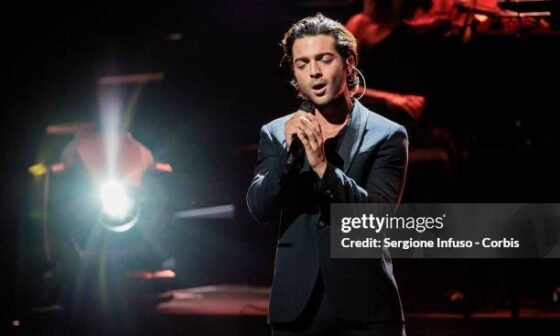
Without the usual fanfare of a stadium tour, Gianluca Ginoble, Piero Barone, and Ignazio Boschetto—collectively known as Il Volo—stepped into the dim light of the base’s mess hall. They were miles away from the glittering stages of Verona or Los Angeles, standing on a makeshift platform barely large enough to hold their presence.

When the first notes of their set began to rise, the room fell into a silence so heavy it felt tangible. These were not just songs; they were memories. For 500 soldiers, the operatic pop melodies served as a bridge back to the Italian countryside, to small towns in America, and to the families they had left behind. The trio’s voices, famous for their “Grande Amore,” filled the space with a warmth that seemed to thaw the professional guard of everyone in the room.
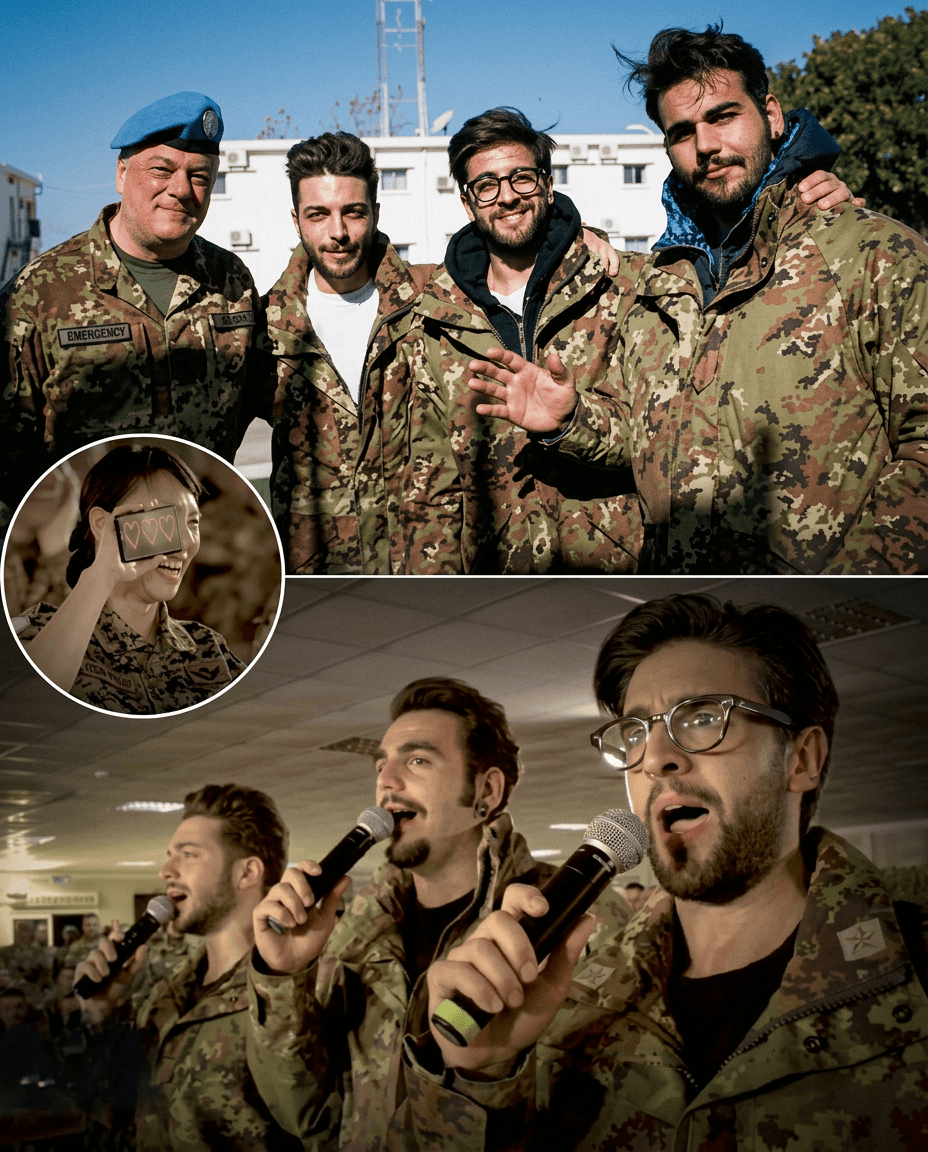
However, the evening moved from a concert to a core memory during the midpoint of the performance. Ignazio, noticing a young soldier in the front row whose eyes were fixed on a phone screen, stepped off the stage. The soldier was on a video call with his family thousands of miles away, trying to share a piece of the magic with them.

In a move that defined the spirit of the night, Ignazio handed the young man the microphone. With shaking hands and a voice initially wavering with nerves, the soldier began to sing the opening lines of “O Sole Mio.”

As Gianluca and Piero joined in with soft, supportive harmonies, the young man’s voice grew stronger. It wasn’t just a performance; it was a message home. The sight of a fellow soldier pouring his heart out, backed by three of the greatest voices in the world, shattered the room’s collective composure. Grown men, seasoned by the rigors of service, were seen wiping their eyes with their sleeves, no longer soldiers in that moment, but sons and brothers.

The trio themselves were visibly moved. Piero stood with a hand pressed to his heart, while Gianluca looked toward the rafters, visibly fighting back his own emotion. For a few sacred minutes, the canteen wasn’t a military facility; it was a piece of home.

As the final, soaring note faded, the young soldier leaned into the microphone and whispered a few words to his family that have since gone viral among the military community. “I’m coming home soon,” he said, “and I’m bringing this song with me.”

The performance at Aviano was a reminder that while soldiers are trained for strength, they are sustained by the soul. Il Volo didn’t just give a concert that night; they gave a room full of heroes the permission to feel, to remember, and to hope. It was a night when music proved to be the most powerful bridge of all.

0 Shares:
Leave a Reply

Your email address will not be published. Required fields are marked *

You May Also Like
Read More

A Tour That Feels Like Time Travel: Why Paul McCartney’s 2026 Return Means More Than EverWhen the announcement broke that Paul McCartney would be touring in 2026, it didn’t arrive with the usual buzz of concert news. There was no sense of routine excitement or predictable anticipation. Instead, it landed quietly but deeply, like a familiar melody drifting back into your life after years away. For many fans, McCartney’s music has never belonged to just one moment. It has stretched across decades, threading itself through personal histories in ways that are hard to put into words. These are not just songs people remember — they are songs people lived through. They played during long drives with no destination, in bedrooms filled with late-night thoughts, and in fleeting moments when life seemed to pause just long enough to be understood. That’s why this tour feels different. It’s not simply about seeing a legendary artist perform again. It’s about reconnecting with something that has quietly shaped who we are. The chords, the lyrics, the unmistakable voice — they carry echoes of younger selves, of people we used to be and moments we thought were long behind us. There’s something uniquely powerful about hearing music live that has already lived inside you for years. It’s almost like reopening a chapter of your life, except this time, you’re reading it with the perspective of everything that came after. The songs haven’t changed, but you have — and that changes everything. And then there’s the weight of time itself. McCartney isn’t just another artist on tour; he’s one of the last living bridges to a musical era that reshaped culture forever. Seeing him perform now feels less like attending a concert and more like witnessing history still in motion. It’s a reminder that the past isn’t as distant as it sometimes feels — that it can still step onto a stage, pick up a guitar, and sing. But perhaps what makes the 2026 tour feel so significant is the quiet awareness that moments like this don’t come around endlessly. There’s a sense, unspoken but understood, that this is something to be cherished. Not out of nostalgia alone, but out of appreciation for what it represents — longevity, artistry, and the rare ability of music to remain meaningful across generations. Fans aren’t just preparing to attend a show. They’re preparing to revisit parts of their own lives. To stand in a crowd of strangers who somehow share the same memories, the same emotional connections to songs that have traveled through time alongside them. In the end, this tour isn’t just about Paul McCartney returning to the stage. It’s about the way music endures — how it holds onto moments, carries them forward, and gives them back when we least expect it. And in 2026, for a few hours under stage lights, those moments will feel alive again.

When the announcement broke that Paul McCartney would be touring in 2026, it didn’t arrive with the usual…
Paul McCartney
Read More

In a Hollywood moment no one saw coming, the Academy paused its century-old tradition to honor Paul McCartney not for music or movies, but for a lifetime of unseen kindness — and as the 83-year-old Beatle stepped onto the Dolby Theatre stage, the room rose with the stunned reverence of a city realizing it had underestimated the quietest part of his legacy, a revelation so raw and human that even the A-list audience couldn’t stop their tears.

HISTORIC BREAKING NEWS: PAUL MCCARTNEY JUST RECEIVED AN ACADEMY AWARD FOR KINDNESS — AND THE DOLBY THEATRE COULDN’T…