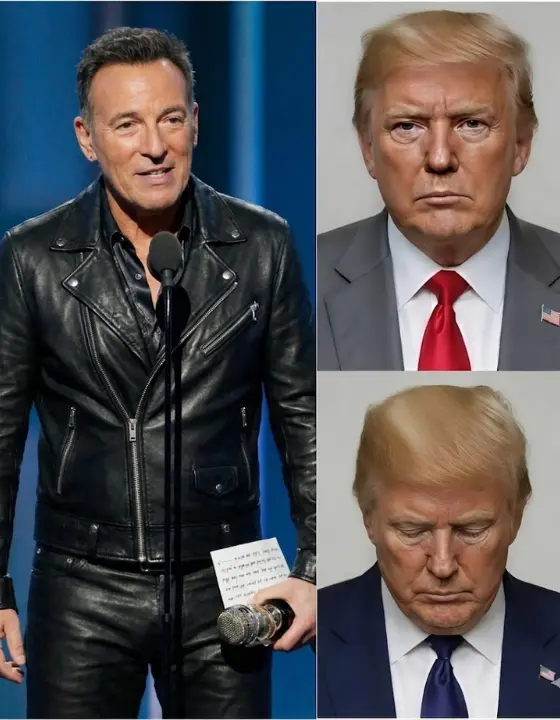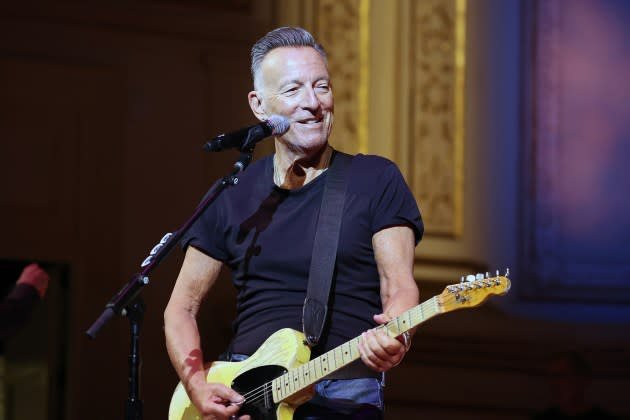
When Bruce Springsteen appeared on live television, many viewers expected the familiar version of the legendary performer: reflective stories, thoughtful humor, and perhaps a few comments about touring, songwriting, or American life. Instead, audiences witnessed a far more intense moment — one that quickly spread across television clips, social media, and political discussions nationwide.
The atmosphere reportedly shifted the instant the cameras went live.
Springsteen entered the interview without visible notes or carefully rehearsed talking points. There was no attempt to ease viewers into the conversation with jokes or nostalgic stories from his decades-long career. Instead, he appeared focused, serious, and determined to address something weighing heavily on him.
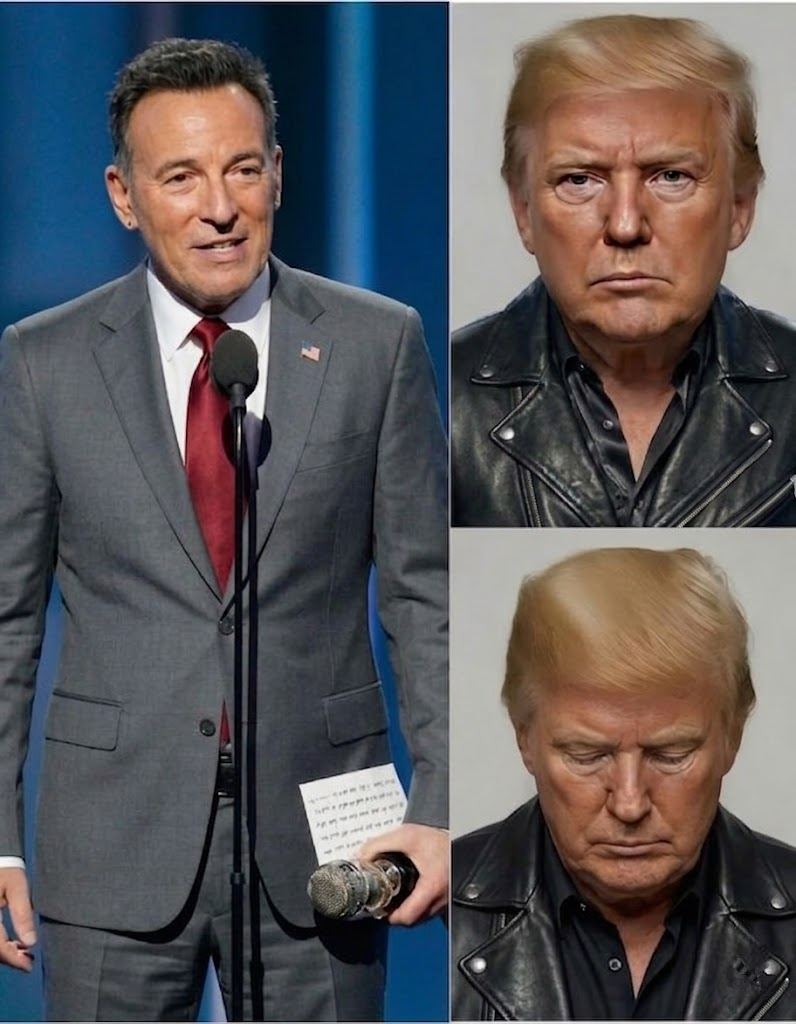
The discussion turned toward politics and the growing controversy surrounding interpretations of “Born in the U.S.A.,” one of Springsteen’s most famous songs. Over the years, the anthem has often been used in political settings despite the song’s more complicated message about working-class struggle, war, and American disillusionment. That tension resurfaced again during the conversation, eventually leading to comments about Donald Trump.
Then came the line that immediately dominated headlines.
Springsteen referred to Trump as “a vicious old man draining America’s soul,” delivering the statement calmly rather than theatrically. According to viewers, the room fell noticeably quieter after he spoke. The comment was direct, emotional, and impossible to misunderstand.
For supporters of Springsteen, the moment represented honesty from an artist who has long written about the struggles, frustrations, and hopes of ordinary Americans. Many fans argued that his music has always contained political and social commentary, making the remarks feel consistent with the themes he has explored throughout his career. Online reactions praised him for refusing to dilute his opinions simply to avoid controversy.
Others viewed the moment very differently.
Critics accused Springsteen of escalating political division by making inflammatory comments during a nationally televised appearance. Some argued that entertainers should avoid direct political attacks altogether, while others believed the statement overshadowed any broader conversation about music, culture, or the meaning of “Born in the U.S.A.”
Yet the intensity of the reaction underscored something larger about Springsteen’s place in American culture.
Unlike many celebrities who carefully manage public statements to avoid backlash, Springsteen has often embraced difficult conversations about class, identity, patriotism, and leadership. His work frequently explores the tension between the American dream and the realities faced by working people. Because of that history, many viewers saw his comments not as a sudden political outburst, but as an extension of themes he has carried through decades of songwriting.
The moment also highlighted how deeply intertwined music and politics remain in public life. Songs associated with national identity often become cultural battlegrounds, interpreted differently depending on the listener’s beliefs. Springsteen’s remarks reignited that debate in real time, ensuring that the conversation extended far beyond the television studio itself.
By the end of the interview, reactions were already spreading online at remarkable speed. Some viewers applauded his willingness to speak bluntly. Others vowed never to support him again. But nearly everyone agreed on one point: the moment felt genuine.
Springsteen did not appear interested in creating a viral performance or crafting a carefully balanced media soundbite. He spoke with the intensity of someone who believed the issue mattered deeply.
And whether audiences agreed with him or not, they were listening