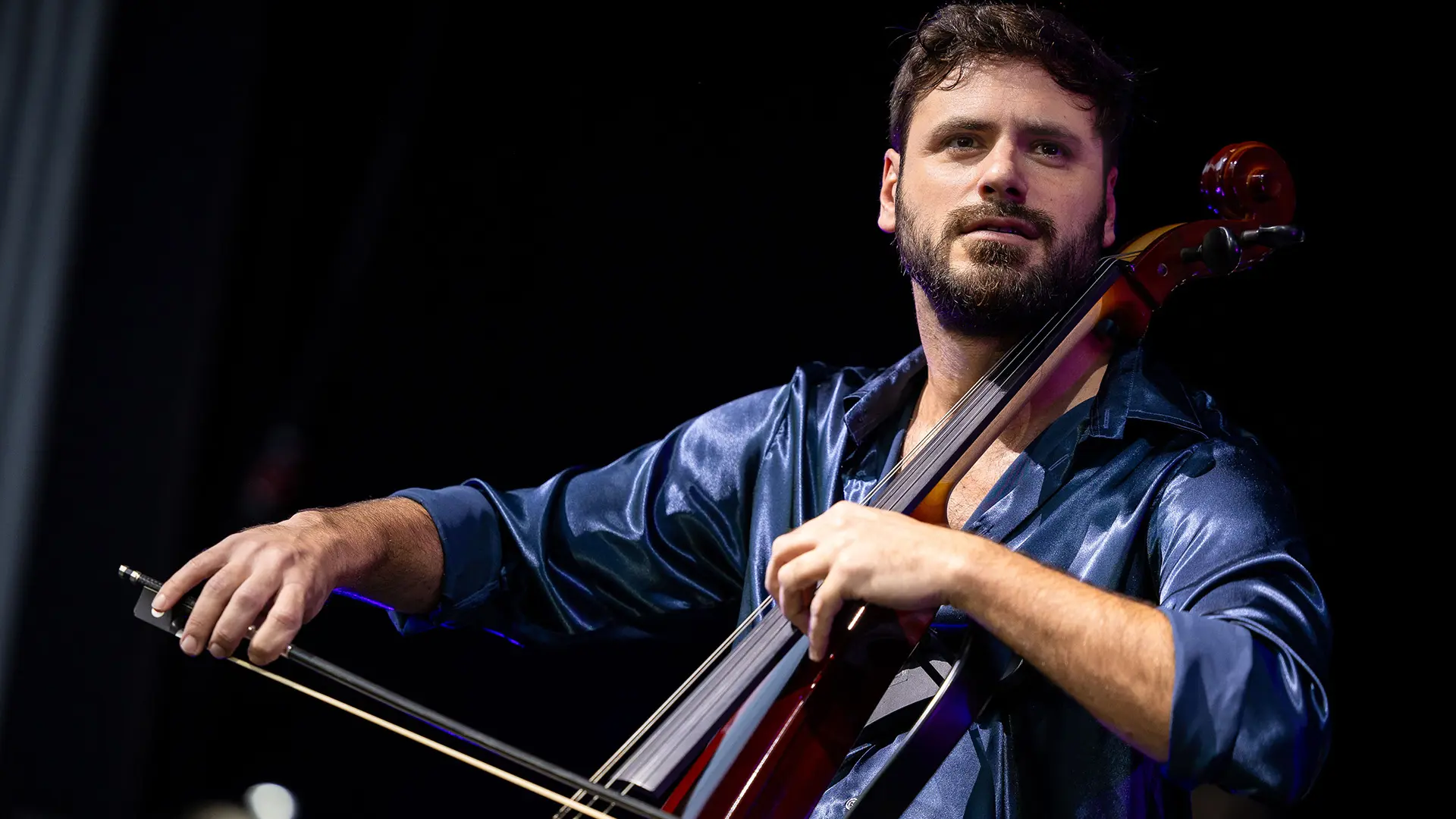
There are performances that rely on grandeur, and then there are performances that strip everything away until only the essential remains. In August 2018, at the Arena Pula in Croatia, HAUSER delivered one of those rare musical moments where simplicity became the most powerful force in the room.
The setting alone carried centuries of weight. Built over 2,000 years ago during the Roman Empire, the amphitheatre once echoed with the sounds of combat, cheers, and spectacle. Gladiators fought where modern audiences now sit in quiet anticipation. Time had changed its purpose, but not its presence. Every stone seemed to carry memory.
Into this historic space walked HAUSER, one half of the internationally acclaimed duo 2CELLOS. But unlike the high-energy performances often associated with contemporary crossover classical music, this moment required something entirely different. There were no elaborate arrangements, no backing tracks, and no visual distractions. Just a cello.
As he sat down and began to play “Adagio,” composed by Rolf Løvland of Secret Garden in 1995, the atmosphere shifted almost immediately. The music did not rush. It unfolded slowly, deliberately, allowing each note to breathe into the vast space of the amphitheatre.
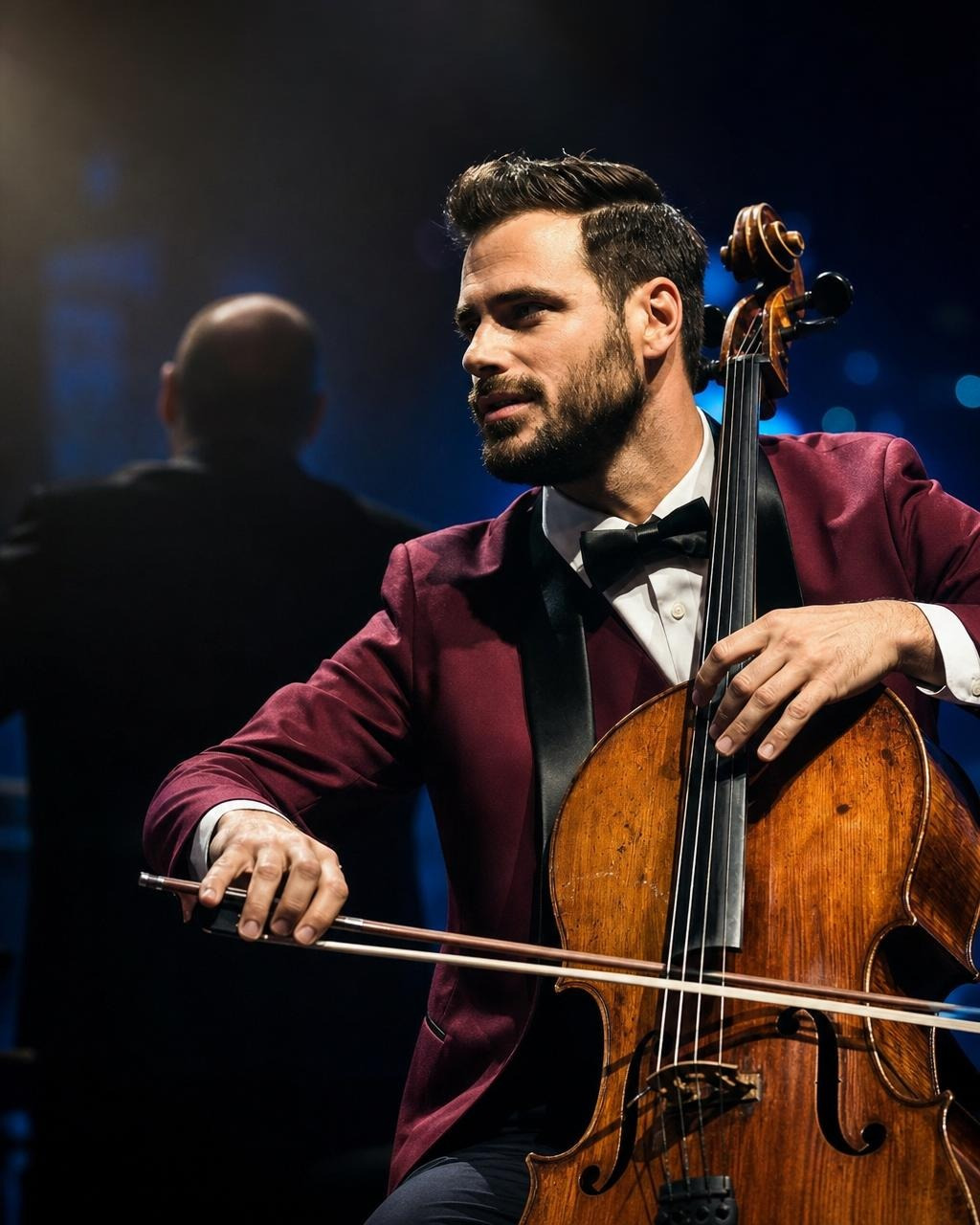
What made the performance unforgettable was not volume or complexity, but restraint. Between the notes, there was silence—deep, almost tangible silence. In a modern world filled with constant noise, that absence became its own kind of sound. It held the audience in place.
Five thousand people sat together in stillness. No applause interrupted the flow. No phones lit up the darkness. It was as if everyone understood instinctively that the moment should not be broken.
“Adagio” itself carries a history beyond that night. It has been used in cinema, most notably in Wong Kar-wai’s 2004 film 2046, where it contributed to the film’s emotional atmosphere. The piece, and its composer Rolf Løvland, are also known for creating “You Raise Me Up,” a song that has been interpreted by more than 500 artists worldwide. Its legacy already spans decades and continents.
Yet in Pula, something subtle changed. Familiar music can sometimes feel new when placed in a different context, and here, surrounded by ancient stone and open sky, “Adagio” seemed to shed its history. It no longer felt like a composition heard before, but like something arriving in real time—fragile, present, and immediate.
As the final notes faded into the night, there was no rush to break the silence. The audience remained still, as though acknowledging that applause would interrupt something that didn’t need interruption.
Moments like this are rare in live performance. They remind us that music is not always about spectacle or intensity. Sometimes, its deepest impact comes from stillness—from allowing sound and silence to exist together without interference.
Long after the performance ended, what stayed was not just the melody, but the atmosphere it created. In an ancient amphitheatre built for noise and spectacle, it was silence that became unforgettable