At the Verona Arena, one of Italy’s most iconic open-air venues, music has echoed for centuries. From opera to orchestral performances, its ancient stone walls have carried countless emotions. But on this night, it was not just another concert that filled the space—it was a farewell.
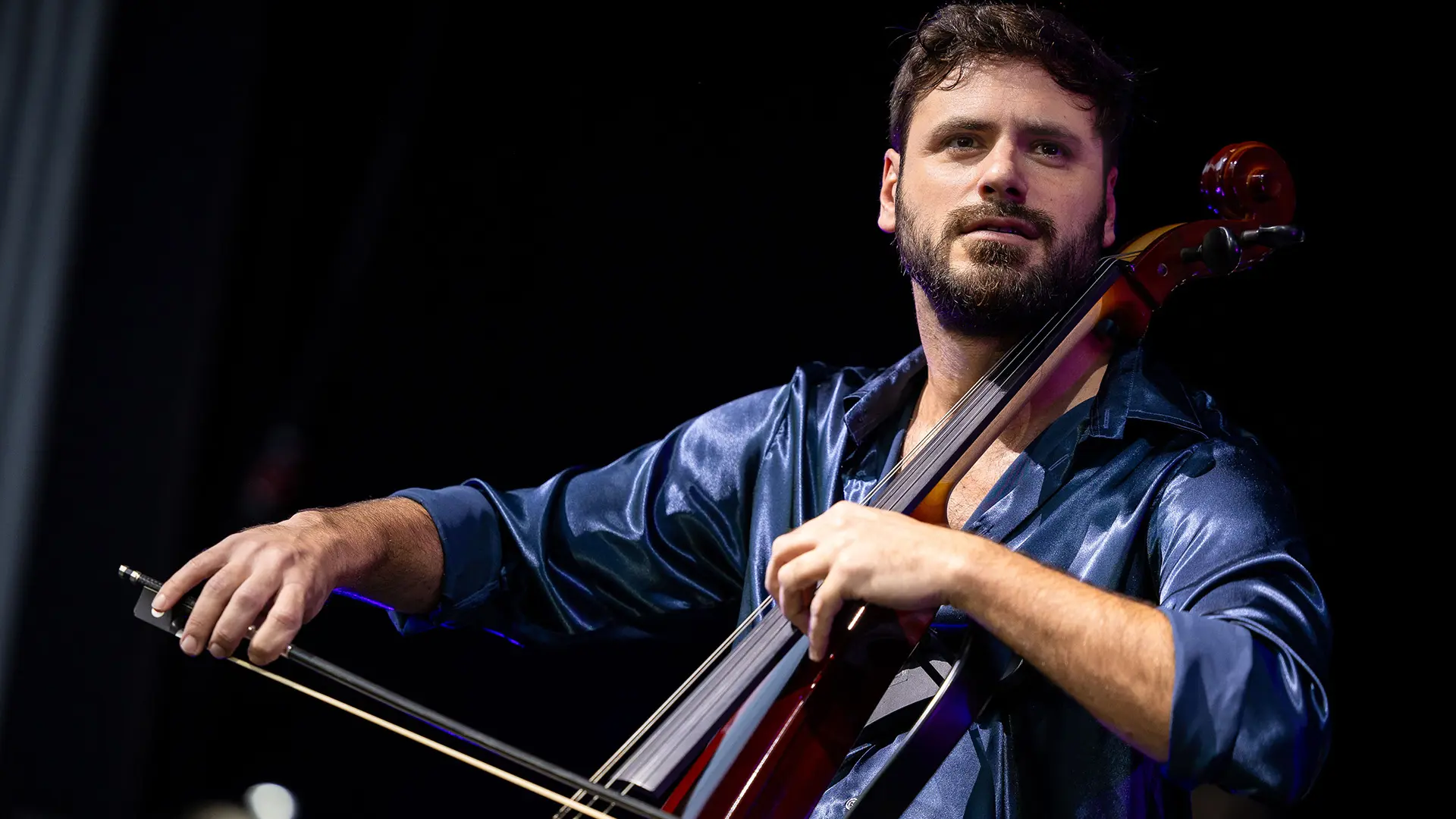
2CELLOS, the groundbreaking duo of Luka Šulić and Stjepan Hauser, had spent over a decade transforming the image of the cello. What was once seen as a classical instrument confined to concert halls became, in their hands, a powerful voice capable of rock intensity, cinematic emotion, and global appeal.
Their performances were never ordinary. They bent genres, broke expectations, and in the process, built a worldwide fanbase that stretched far beyond classical music audiences. Together, they performed on some of the biggest stages in the world, often with shredded bows and unstoppable energy, redefining what instrumental music could feel like.
But like all creative partnerships, theirs eventually reached a natural turning point.
The farewell concert at Verona Arena marked the end of their journey as a duo. As the final notes faded and applause settled into memory, the stage slowly emptied, leaving behind a silence that felt heavier than any sound they had ever played.
In that quiet aftermath, a small moment unfolded that captured the essence of everything 2CELLOS had been. Luka Šulić, who had chosen to step away from touring life to focus on family, was seen carefully wiping down Hauser’s cello. It was not a performance gesture or part of the show—it was personal, unspoken, and deeply human.
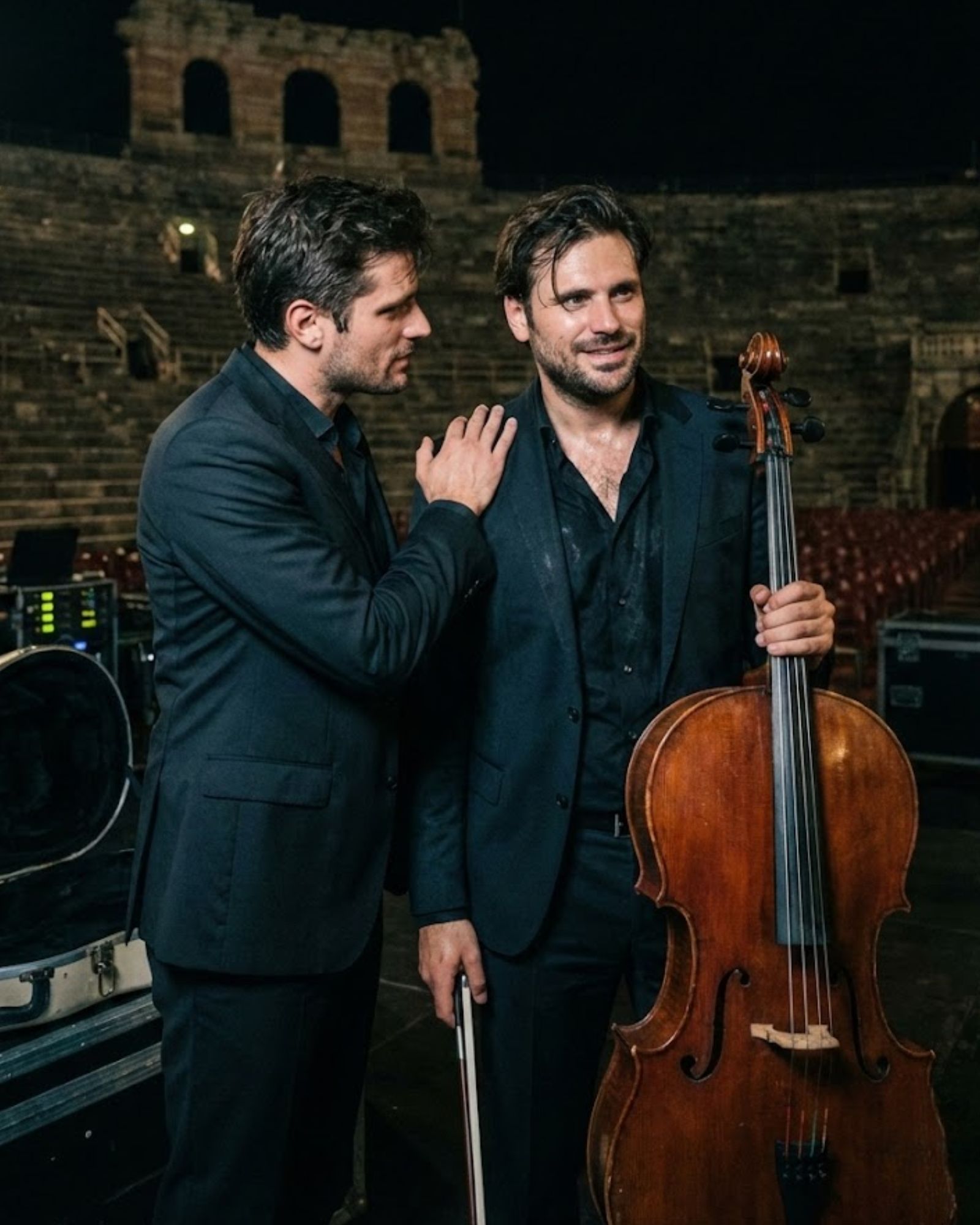
Hauser, still standing in the fading atmosphere of the arena, reportedly smiled and told his longtime partner to return home to his wife and children, assuring him he was fine. Yet the emotion of the moment was difficult to hide. After years of shared stages, endless tours, and a partnership built on instinct and trust, saying goodbye could not be simple.
Luka did not try to extend the moment with words. Instead, he offered a quiet, steady pat on Hauser’s shoulder. That single gesture carried everything they had experienced together—success, struggle, laughter, exhaustion, and brotherhood.
The world often remembers 2CELLOS for their explosive performances and viral moments, but it is scenes like this that reveal the foundation beneath the music. Their connection was never just professional; it was built through years of discipline, shared ambition, and a mutual understanding that few partnerships in music ever reach.
Even as they moved in different directions—Luka toward family life and Hauser toward a continuing solo career—the bond forged between them did not dissolve with the end of the concert.
The Verona Arena farewell did not feel like an ending in the traditional sense. Instead, it felt like a pause in a longer story, one chapter closing while the memory of their music continued to resonate.
2CELLOS may have taken their final bow as a duo, but the brotherhood that carried them through a decade of music remains intact—silent, steady, and unbroken, even after the last note has faded.