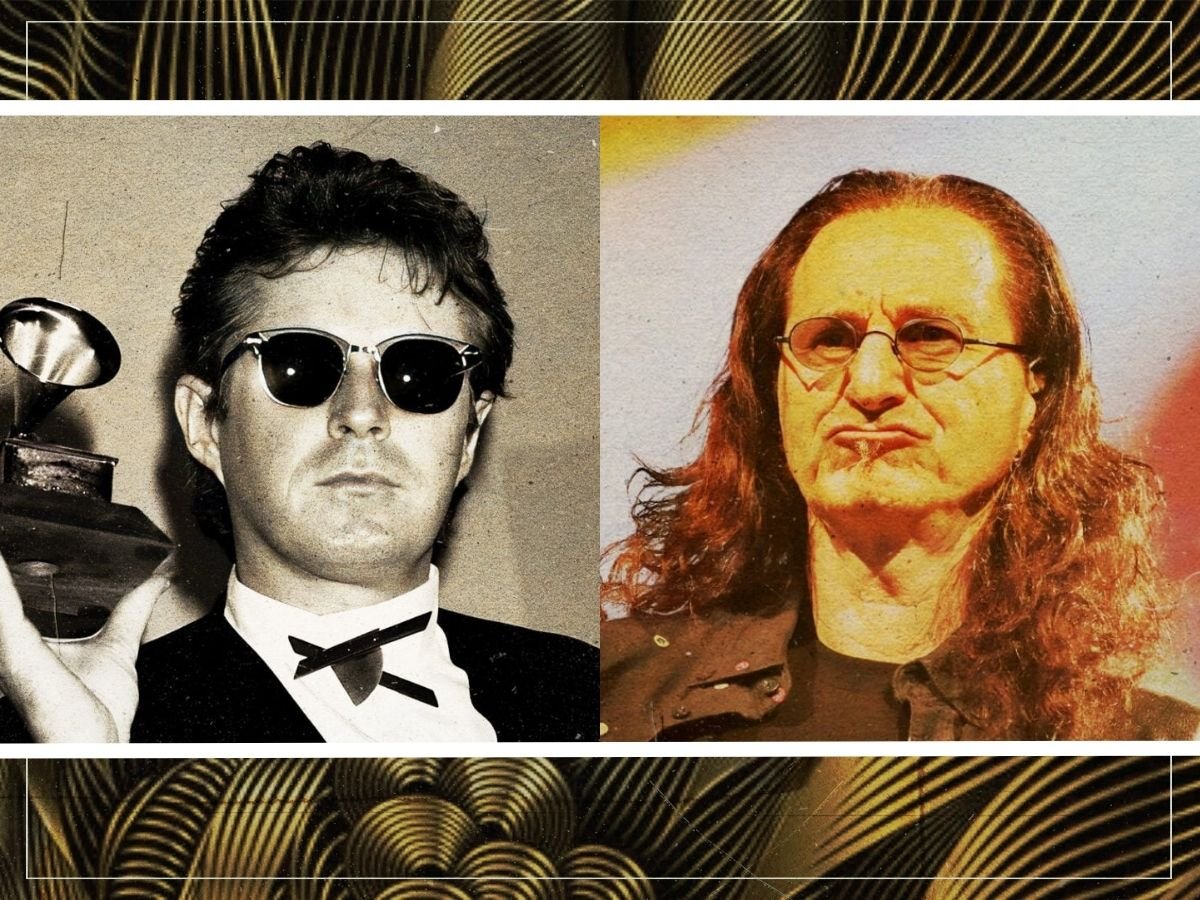
“Yuck”: What Sparked the Feud Between Rush and the Eagles?

Don Henley dismissed Rush’s
Don henley

Some bands don’t just make great music—they redefine the entire landscape of rock. By blending genres, pushing boundaries, and crafting a sound that defies categorization, certain groups leave an undeniable impact. While Rush and the Eagles may seem like polar opposites, both bands expanded the possibilities of rock in their own ways. Yet, despite their shared ambition, the two have a surprising rivalry—one fueled by a particularly nasty comment from Don Henley.

The Eagles: Breaking Genre Barriers

Long before Rush became prog-rock titans, the Eagles were reshaping American music by merging country and rock into a laid-back, radio-friendly sound. Their early records set the standard for a new wave of soft rock, but their evolution didn’t stop there. With the addition of Joe Walsh, the band leaned into a heavier, guitar-driven sound, culminating in Hotel California.

“When Bernie [Leadon] decided that he just wasn’t interested very much in continuing, Don [Henley] and Glenn [Frey] thought I would plug in really well with where the Eagles were eventually going to go,” Walsh recalled. “At the time, I was going, ‘Aw f***, it’s time to do another solo album. Oh, s***. Anybody got any ideas?’ You know? So, it all just kind of came together. I joined the Eagles – and the result, of course, was Hotel California.”

Rush: Always Defying Expectations

While the Eagles took country-rock to new heights, Rush approached music with a different philosophy—constant reinvention. The Canadian trio had no interest in following trends, instead blending hard rock, progressive experimentation, and even synth-heavy new wave elements. Whether they were crafting sprawling epics like 2112 or radio-friendly hits like Tom Sawyer, Rush never limited themselves to a single sound.

But even the most legendary bands face hardships. When drummer Neil Peart suffered the devastating loss of his wife and daughter, he stepped away from music entirely. His bandmates, Geddy Lee and Alex Lifeson, put Rush on hold indefinitely, prioritizing their friend’s healing over the band’s future.

Years later, they regrouped to create Vapor Trails, marking Rush’s return after an extended hiatus. However, their comeback wasn’t celebrated by everyone—especially not Don Henley.

The Comment That Started the Feud

At the time of Rush’s reunion, the Eagles were also making a comeback after a long breakup. Henley, seemingly unimpressed by Rush’s return, took an unnecessary swipe at the band.

“I can’t think of another band that has broken up for 14 years, then got back together and made a record,” Henley remarked. “You do get bands like Rush getting back together. Yuck.”

His words didn’t sit well with Geddy Lee, who had no intention of staying silent.

“Why should he talk about us?” Lee shot back. “What the hell did we have to do with him? He sounds like an a**hole to me.”

Bad Blood That Never Faded

Henley’s dismissal of Rush wasn’t just an offhand remark—it exposed a clear divide between the two bands. The Eagles, known for their polished, mainstream appeal, had little in common with Rush’s intricate musicianship and progressive ambition. But while their music may have been worlds apart, Henley’s insult made one thing clear: the respect between them was nonexistent.

To this day, there’s no love lost between the two camps. Whether it was an unprovoked attack or just another example of Henley’s notorious arrogance, one thing is certain—Geddy Lee didn’t forget, and Rush fans never forgave.

0 Shares:
Leave a Reply

Your email address will not be published. Required fields are marked *

You May Also Like
Bruce
Read More

‘I’ve Waited My Whole Life For This Moment…And Now I’m Losing It,’ a fan whispered through tears as Bob Seger’s voice broke the silence: ‘I don’t know how many more nights like this we’ve got left.’ Then, like a lightning bolt igniting the arena, Bruce Springsteen stepped onto the stage, guitar ablaze, and together they unleashed ‘Old Time Rock and Roll’ with a ferocity so raw, so electrifying, it felt as if Madison Square Garden itself was breathing in unison with every chord. Fans screamed, cried, clung to strangers, and danced like this was the final heartbeat of the world. This Wasn’t Just A Concert. It Was A Resurrection. Two Titans, One Stage, One Anthem—Proving That Music Can Tear Open Souls, Heal Wounds, And Set Every Heart On Fire. Fans flooded social media: ‘I’ve never felt my heart explode like this,’ wrote one. Another cried, ‘I swear, I’ll never forget this night—my soul is still trembling.’ And as the final chord rang out, the arena held its breath, tears streaming, hearts pounding, knowing they had witnessed a historic, once-in-a-lifetime eruption of rock—and that nothing will ever feel this alive again

“I Don’t Know How Many More Nights Like This We’ve Got Left”: When Bob Seger and Bruce Springsteen…
toby-keith
Read More

“39 YEARS BESIDE HER… AND ONE FINAL SONG HE COULDN’T LET THE WORLD HEAR.” They say Toby Keith penned one final masterpiece before he passed. But you won’t find it on Spotify. You won’t hear it on the radio. His wife, Tricia, kept it. Not out of selfishness, but out of sanctity. In a life lived under the blinding stadium lights, she was his quiet harbor for nearly 40 years. That song is the final conversation between two hearts that beat as one—a melody too intimate for the world to judge. It brings us back to the promise he once sang: “”Forever hasn’t got here yet.”” Perhaps, in that hidden song, he finally told her that their forever had truly arrived. It is a beautiful reminder that the deepest love doesn’t need an audience to be real; it just needs to be held close, in the silence where only two people understand.

Introduction You know that bittersweet ache when you’re waiting for something — or someone — that feels like…
Barry-Gibb
Read More

THE BEE GEES — THREE BROTHERS WHO REDEFINED THE SOUND OF POP AND SOUL . Barry Gibb – Lead vocals, guitar Robin Gibb – Lead vocals, distinctive vibrato Maurice Gibb – Harmony vocals, bass, keyboards From their humble beginnings in Manchester, England, to the dazzling heights of worldwide fame, the Bee Gees became far more than a musical group — they became a symbol of unity, artistry, and timeless emotion. Their harmonies weren’t built in studios or shaped by producers; they were born in the heart of brotherhood, forged through laughter, loss, and love that ran deeper than melody itself. The sound they created was unmistakable — Barry’s golden falsetto, Robin’s haunting vibrato, and Maurice’s steady, soulful grounding blended into something greater than the sum of its parts. Together, they didn’t just perform songs; they told stories that resonated across generations and genres. With unforgettable hits like “How Deep Is Your Love,” “Stayin’ Alive,” “To Love Somebody,” and “Words,” the Bee Gees turned disco into poetry, pop into emotion, and heartache into harmony. Their music defined the pulse of the 1970s and continued to inspire countless artists long after the glitter faded. But behind the hits was something purer — three brothers bound by music and meaning. Through every triumph and tragedy, they stood together, proving that family could be both the source of pain and the wellspring of creation. Even now, decades after their voices first rose together, their songs continue to echo through time — in film, on radio, and in the hearts of those who still hum their melodies in quiet moments. Because the Bee Gees weren’t just a sound. They were a feeling — of hope, of connection, of love that refuses to fade. Three voices. One soul. One eternal harmony.

THE BEE GEES — FOUR BROTHERS WHO REDEFINED THE SOUND OF POP AND SOUL 🎶 Barry Gibb – Lead…