The Day Joe Walsh Handed Jimmy Page His Most Legendary Guitar

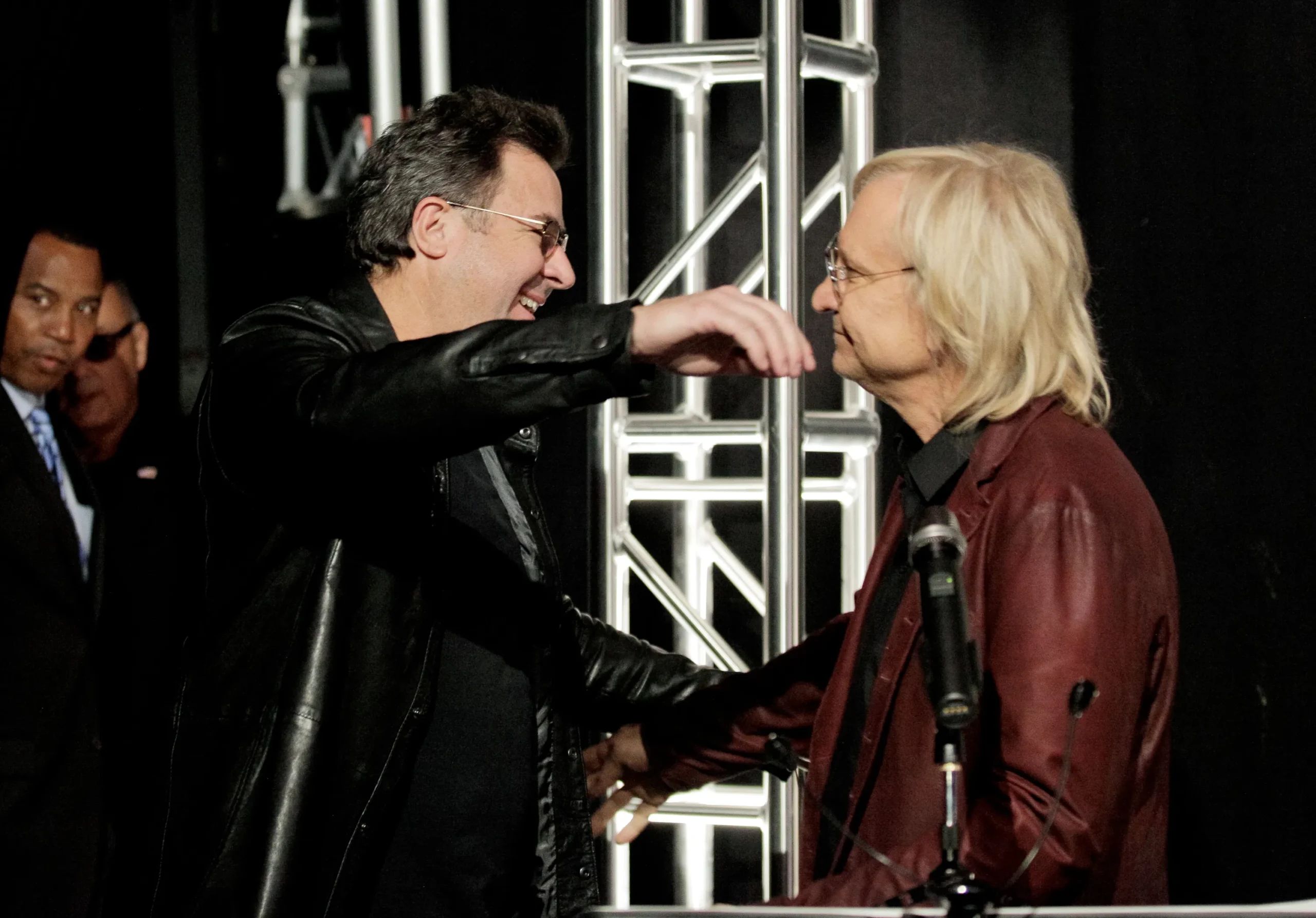
Joe Walsh & Vince Gill

For any true musician, an instrument is never just a tool. It becomes a voice, a way to speak without words. Jimmy Page, like many great players, owned countless guitars throughout his career, but a few of them carried stories that shaped his sound — and rock history itself.

Even before Led Zeppelin, Page understood the importance of tone. As a young but seasoned session player, he knew no one could last in the studio without mastering the craft of sound. By the time he joined The Yardbirds, Page was developing his own guitar language, one that leaned on his trusty Fender Telecaster. With it, he blended blues-rock and psychedelia on songs like “Heart Full of Soul,” a hint of the fire that would later define Zeppelin.

Once Led Zeppelin took off, the Telecaster stayed with him, powering early classics such as “Good Times Bad Times.” But as Zeppelin’s sound grew heavier and more ambitious, Page realized he needed an instrument that could take him further.

That’s where Joe Walsh entered the story. Long before joining the Eagles, Walsh had made his mark with the James Gang and had even shared the stage with Jimi Hendrix. During this time, he became friends with Page. Sensing that Page needed a different kind of guitar, Walsh offered him a Gibson Les Paul Standard.

Page hesitated at first, but the moment he plugged it in, everything changed. Reflecting on it later, he said:

“With the Les Paul, you’d get feedback through the amp and speakers, but you could control it more easily and work with it. You could change the literal note and frequency that was coming back on the feedback. I just really enjoyed playing Joe’s guitar. So I agreed with him that maybe I should buy his Les Paul Standard after all. I played [it] on ‘Whole Lotta Love’ and ‘What Is and What Should Never Be’ and that decided it for me.”

That decision altered the course of Zeppelin’s sound. While the Telecaster was still part of his arsenal, the Les Paul became Page’s weapon of choice, driving the heavier, more experimental tones on Led Zeppelin II. Songs like “Whole Lotta Love” didn’t just push Zeppelin forward — they helped define the very sound of 1970s hard rock.

Walsh, for his part, seemed to have a gift for putting iconic guitars in the right hands. Around the same time, he also passed a Gibson Les Paul to Pete Townshend, who used it on Who’s Next. In another life, Walsh might have made a fine guitar dealer, but in reality, he ensured that two of rock’s most important players had the perfect instruments to change music forever.

0 Shares:
Leave a Reply

Your email address will not be published. Required fields are marked *

You May Also Like
Hank Marvin
Read More

When Demon Music Group’s Ben Stanley talks about Hank Marvin, there’s a reverence in his voice that says everything: “He is a legend.” Not just because Hank shaped the sound of British guitar music… Not just because his red Stratocaster and unmistakable tone inspired generations… But because his influence is still alive, still felt, and still echoing across decades of musicians who grew up trying to play like him. The new Hank Marvin campaign wasn’t just another re-release. It was a celebration — a reminder of how one guitarist changed the course of British pop and rock, long before the world realized what was happening. Ben Stanley and the team wanted to bring that legacy forward, not as nostalgia, but as something vibrant and relevant today. And the response proves it: fans rediscovering classics, younger listeners hearing Hank for the first time, and musicians everywhere nodding in appreciation at a sound that has never gone out of style. There’s something powerful about seeing a legend given the spotlight he deserves… especially when the people behind the scenes truly believe in the story they’re telling. But the real surprise? What Ben Stanley revealed about why this campaign meant so much — and the unexpected moment that convinced him Hank’s legacy was about to shine brighter than ever

Few guitarists have ever owned a sound the way Hank Marvin owned his. The glasses.The red Stratocaster.The unmistakable echo-drenched tone…
Nicole and Keith
Read More

“NEARLY 20,000 PEOPLE CAME FOR KEITH URBAN — AND LEFT WATCHING HIM CRY.” Backstage, the noise felt distant, like it belonged to another night. Nicole Kidman knelt, straightened a sleeve, and whispered, “I’m right here.” Out front, nearly 20,000 fans waited for the show they thought they knew. Instead, a child stepped into the light — no wave, no nerves on display — her eyes locked on her father. The first note wobbled, then found its footing. Not perfect. Just honest. Keith didn’t rush in. He brushed the strings softly, like he was protecting the moment rather than performing it. Halfway through, his smile gave way to tears, and he let them fall. There was no big finish, no pose for the crowd — just a family meeting in the middle of the stage. And for a few quiet minutes, applause didn’t matter. Because love was louder.

  Love Was Louder: The Emotional Night Keith Urban and His Daughter Moved 20,000 to Tears In the…