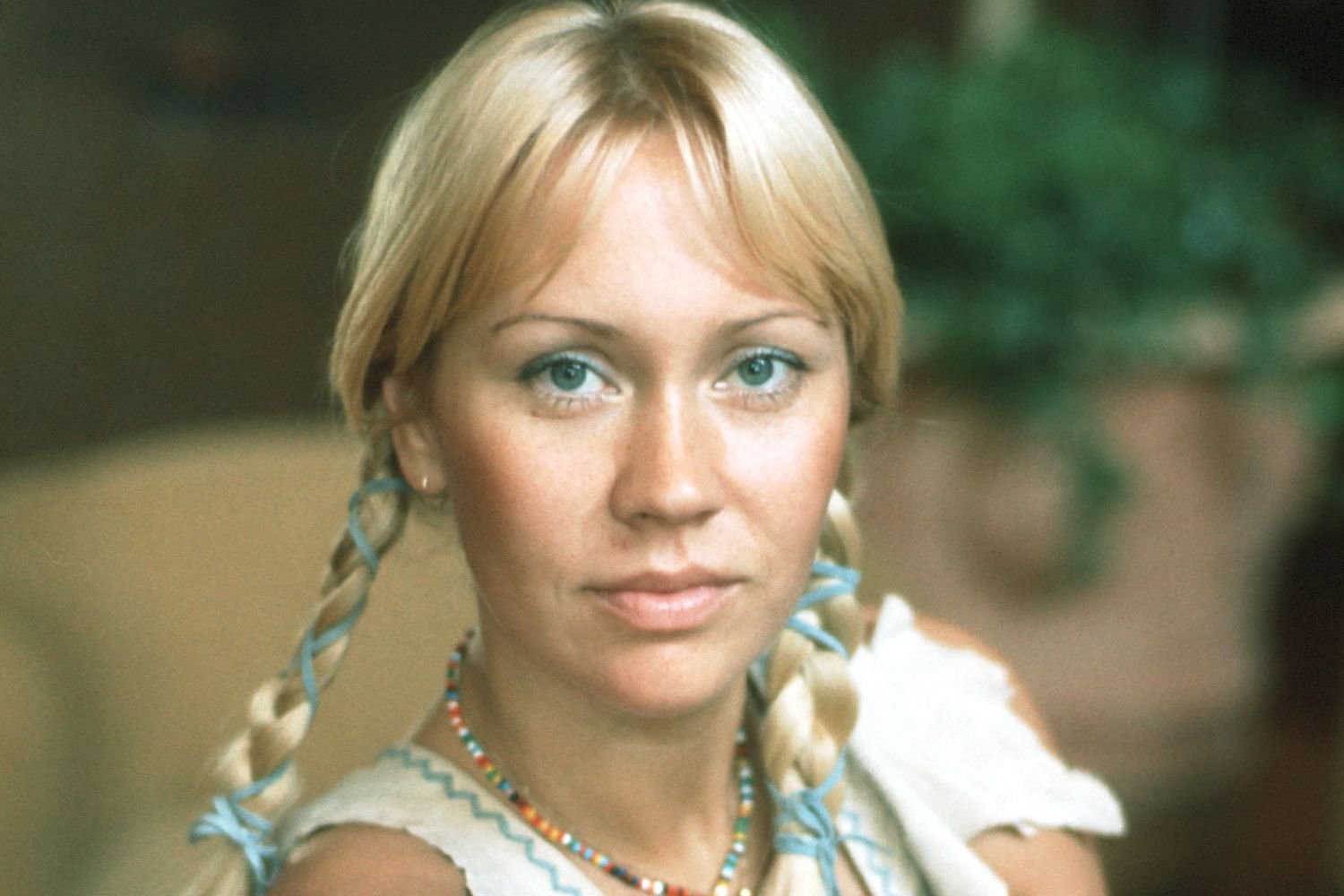

To millions, Agnetha Fältskog will forever be the golden girl of ABBA — the voice that shimmered through “The Winner Takes It All,” “S.O.S.,” and “Thank You for the Music.” Her radiant presence defined an era, her face gracing album covers and magazine pages from Stockholm to Sydney. Yet behind the glow of fame and the sweet perfection of her voice was a woman quietly breaking beneath the weight of everything the world expected her to be. When the lights dimmed and the applause faded, Agnetha didn’t just step out of the spotlight — she disappeared into silence. And for years, no one truly knew why.
Her story began long before ABBA conquered the world. Born in Jönköping, Sweden, Agnetha was a child of melody — writing songs at six, performing at church, and dreaming of nothing more than a piano and peace. When she met Björn Ulvaeus, their connection was instant — two young musicians bound by love and song. Together with Benny Andersson and Anni-Frid Lyngstad, they formed ABBA, and within a few short years, they were global icons. But while the world saw harmony, Agnetha’s inner world was growing more fragile.
Fame brought her everything — and took just as much away. Endless travel, screaming crowds, and the constant pressure to be perfect began to wear her down. She once confessed that the noise of success made her long for silence. “I’m shy,” she told an interviewer in 1977. “I’m not the girl people see on stage. I just want peace.” But peace became impossible. By the time “Dancing Queen” had conquered the charts, Agnetha was trapped in a life she no longer recognized.
The real breaking point came in 1979, when her marriage to Björn — once the heartbeat of ABBA’s love songs — began to unravel. Their separation was public, painful, and cruelly immortalized in music. “The Winner Takes It All” became a worldwide anthem of heartbreak, but for Agnetha, it wasn’t just a performance — it was a wound set to melody. Years later, she admitted, “I sang it with tears in my eyes. It felt like I was living the lyrics.”
After ABBA’s split in 1982, the woman who had once lit up stadiums with her smile withdrew completely. She focused on raising her two children, refusing interviews and rarely appearing in public. Rumors swirled — of loneliness, fear of flying, and struggles with anxiety — but those close to her say the truth was more delicate. Agnetha wasn’t hiding from the world; she was healing from it. For years, she lived quietly on her island home outside Stockholm, baking, tending her garden, and finding comfort in the quiet rhythms of everyday life.
But even in her isolation, music never left her. In private, she continued to write — soft, reflective songs about love, loss, and the passage of time. Her 2004 comeback album “My Colouring Book” revealed a woman older, wiser, but still achingly tender. “I didn’t want to prove anything,” she said then. “I just wanted to sing again.” And when she returned once more for ABBA’s Voyage project in 2021, the world saw not a lost star, but a survivor — a woman who had faced the storm and chosen to live quietly on her own terms.
Yet those who have known her best say there are still secrets she’s never spoken aloud — memories of fame’s darker side, of heartbreaks never healed, and of fears that fame might return to take more than it gave. In rare moments, Agnetha has hinted that one day, she might tell her full story. “There are things people don’t know,” she once whispered to a Swedish journalist, “and maybe they shouldn’t.”
Still, the world waits. Because Agnetha Fältskog isn’t just a pop icon — she’s a mystery of light and shadow, a woman who gave her heart to music and then spent a lifetime trying to reclaim it. Her voice remains a time capsule — youthful, pure, but tinged with the melancholy of everything that came after.
And perhaps that is her final truth: that the greatest beauty often comes from those who have walked through sorrow in silence. Agnetha’s story isn’t just about what fame gave her — it’s about what it took, and how she found herself again when the music stopped. The question now is whether she’s finally ready to let the world hear the rest of her song.
Video