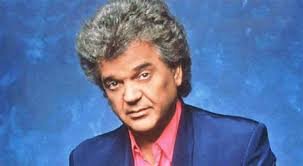
 Born Harold Lloyd Jenkins in Friars Point, Mississippi, Conway’s journey began far from the glamour that would later surround his name. In his early years, he wasn’t chasing country fame — he was chasing rhythm. As a teenage rock ’n’ roller in the 1950s, he scored a massive hit with “It’s Only Make Believe,” a song that carried him to the same stages as Elvis Presley and Jerry Lee Lewis. But fame came fast, and so did its emptiness.
By the late 1960s, Conway turned back toward home — toward country music, the sound that mirrored his soul. What followed was nothing short of a musical rebirth. Songs like “Hello Darlin’,” “You’ve Never Been This Far Before,” and “Linda on My Mind” didn’t just top charts — they became emotional touchstones, timeless portraits of love and longing that still echo across generations.
And then came Loretta Lynn — the fire to his velvet, the truth to his tenderness. Together, they created some of the most powerful duets in country music history: “After the Fire Is Gone,” “Louisiana Woman, Mississippi Man,” and “Feelins’.” Their chemistry was undeniable, built not on scandal but on shared respect and a rare artistic bond. They weren’t lovers — they were believers in each other’s truth.
But for all his triumphs, Conway carried quiet burdens. Those close to him speak of a man haunted by the weight of his success, a perfectionist who demanded everything from himself and gave everything to his audience. In his final years, he spoke often of slowing down, of finding peace beyond the spotlight.
That peace, however, never came the way anyone expected. In June 1993, after a show in Branson, Missouri, Conway collapsed from an aneurysm. He never performed again. But some who were there that night say it felt different — as if he had known. “He talked about going home,” one crew member recalled. “Not to Mississippi — somewhere farther.”
And maybe that’s why his voice still lingers — in truck stops, late-night jukeboxes, and hearts that never stopped missing him. Because legends like Conway Twitty don’t truly leave the stage. They live on in the space between melody and memory, in the songs that refuse to die.
His story isn’t about fame — it’s about faith, endurance, and the price of greatness.
And through it all, the velvet voice remains — eternal, echoing softly in the dark.
Video