WHEN THE MONKEES CHANGED TELEVISION FOREVER
It was September 12, 1966, when the world first met four mischievous, wide-eyed dreamers who would change television — and pop culture — in ways no one could have imagined. The show was called “The Monkees,” a half-hour comedy about a struggling rock band trying to make it big. What began as a playful experiment for NBC quickly turned into a cultural phenomenon that blurred the line between make-believe and reality.
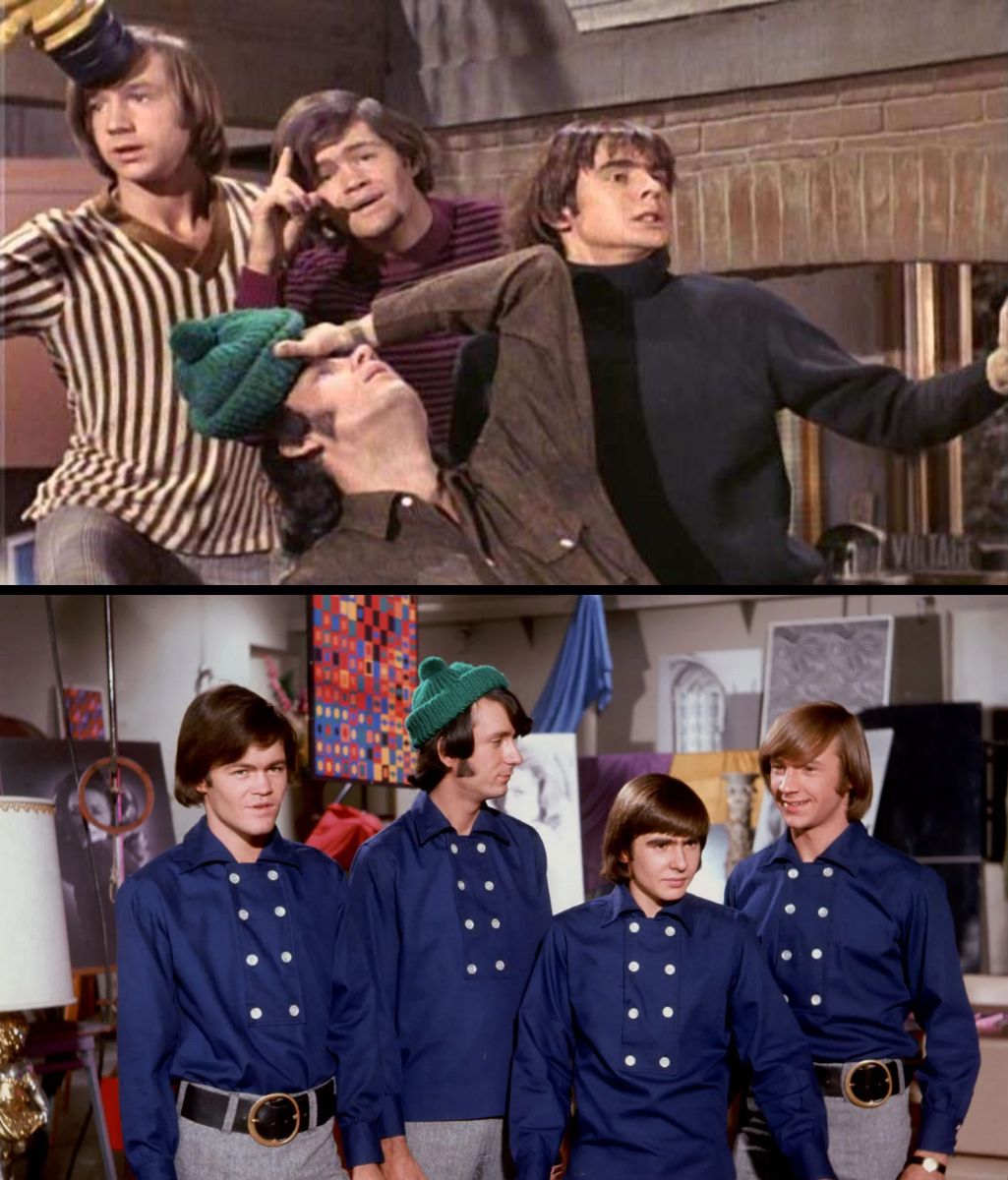
There they were — Davy Jones, Micky Dolenz, Michael Nesmith, and Peter Tork — four young men with charm, humor, and just enough chaos to keep viewers glued to their screens. Week after week, they sprinted across television sets in zany chase scenes, traded quick-witted jokes, and broke into infectious pop songs that felt like sunshine set to rhythm. Behind the laughter, though, something unexpected was happening: the fictional band was becoming real.
Within months, their music began to outshine the show itself. The Monkees’ debut single, “Last Train to Clarksville,” rocketed up the charts, followed soon after by “I’m a Believer,” which became one of the biggest hits of the decade. Fans who had tuned in for the humor now found themselves captivated by the harmony — by songs that carried both innocence and imagination. In a time of social upheaval and cultural change, The Monkees offered something different: joy without pretense, optimism without apology.
They didn’t just entertain — they revolutionized. Their series pioneered the use of music videos, weaving performances and storytelling into a format that would later inspire generations of artists. Before MTV was even a dream, The Monkees were already blending sound and image in a way that made music feel alive on screen. Their goofy energy and visual playfulness broke boundaries, teaching television that it could sing, laugh, and dream all at once.
But perhaps what made The Monkees truly timeless wasn’t their fame — it was their heart. Each member brought his own spark: Davy’s charm, Micky’s wit, Mike’s creativity, and Peter’s soul. Together, they created something no script could contain. Offscreen, their bond deepened. They began writing, recording, and performing on their own, fighting to prove that they were more than television characters. And they succeeded.
By the end of the decade, The Monkees had sold more than 65 million records, won an Emmy Award for Outstanding Comedy Series, and left an imprint that still glows with nostalgia and warmth. Their laughter, their music, and their fearless creativity reminded the world that sometimes, the most beautiful truths come from stories we never meant to be real.
Nearly six decades later, their songs still fill the air — on car radios, in old record stores, and in the hearts of those who grew up singing along. When “I’m a Believer” plays, memories light up like old film reels: Saturday mornings, transistor radios, and a belief that life could be both funny and full of music.
The Monkees didn’t just change television. They changed the way joy sounded.
A show that started as fiction became a phenomenon — and a band that was never meant to exist ended up changing the world.
Video