In a chilling escalation that has gripped the nation, the man accused of brutally stabbing 23-year-old Iryna Zarutska to death aboard a bustling Charlotte light rail train is now facing the ultimate punishment: the federal death penalty. This horrifying case, which unfolded in broad daylight and was captured on surveillance footage, has sent shockwaves through communities far beyond North Carolina, raising urgent questions about public safety, random violence, and the pursuit of justice. As details emerge, the story reveals a nightmare scenario that could happen to anyone – and it’s far from over.
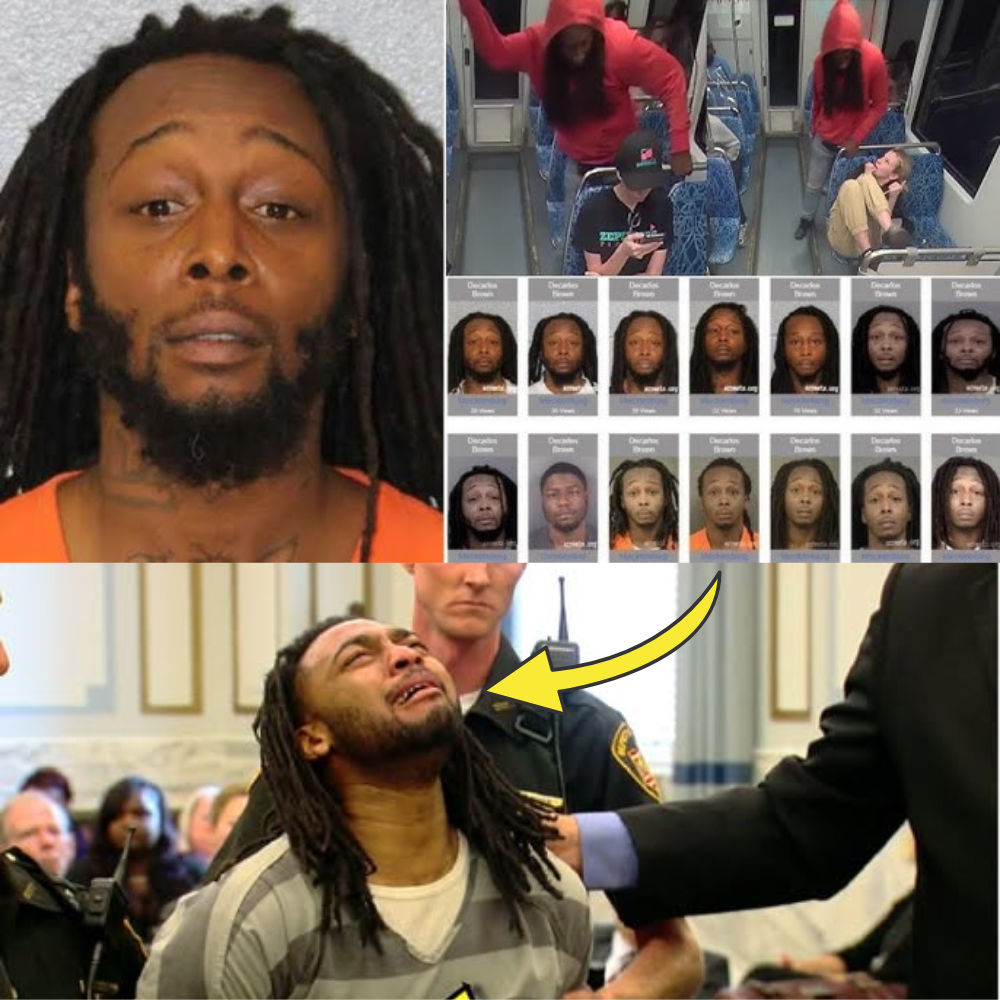
The tragedy struck on a seemingly ordinary day in late August 2025, when Iryna Zarutska, a vibrant young woman from Ukraine who had recently sought refuge in the United States, boarded the Charlotte Area Transit System (CATS) Blue Line train. Zarutska, described by friends and family as kind-hearted and ambitious, was on her way home after a long shift at a local job. She had fled the war-torn landscapes of her homeland in search of a better life, enrolling in English classes and dreaming of building a future in America. Little did she know that her routine commute would turn into a scene of unimaginable horror.
According to eyewitness accounts and official reports, the attack was swift and merciless. Around 6 p.m., as the train hummed along its tracks through the heart of Charlotte, a man later identified as Decarlos Brown Jr., 29, approached Zarutska without warning. What followed was a frenzied assault: Brown allegedly pulled out a knife and stabbed her multiple times in a brutal frenzy that left passengers frozen in terror. Blood stained the seats and floor as screams echoed through the carriage. Zarutska, fighting for her life, collapsed amid the chaos, her final moments marked by the indifference of a crowded train where no one intervened in time.
Passengers scrambled to pull the emergency brake, halting the train at the nearest station. Brown, unfazed and covered in evidence of his alleged crime, calmly exited the platform – but his escape was short-lived. Surveillance cameras, a staple of modern public transit security, captured every gruesome detail. Within minutes, Charlotte-Mecklenburg Police officers swarmed the scene, arresting Brown as he attempted to blend into the evening crowd. Items recovered from him included the bloodied weapon, sealing what authorities called an “open-and-shut” case from the start.
Who was Iryna Zarutska? Born in a small town near Kyiv, she had endured the hardships of conflict before immigrating to the U.S. under humanitarian programs designed to aid those fleeing Russia’s invasion. In Charlotte, she found a new beginning, working part-time while pursuing education. Friends remember her as someone who lit up rooms with her smile and determination. “Iryna was full of life,” one close acquaintance shared in a heartfelt tribute. “She came here for peace, but found only violence.” Her family, still in Ukraine, has been devastated, grappling with the loss while navigating the complexities of international grief. Memorials have sprung up online and in local parks, with candles and flowers symbolizing the fragility of the American dream for immigrants.
On the other side of this tragedy stands Decarlos Brown Jr., a figure whose background paints a troubling picture. Born and raised in Charlotte, Brown had a history dotted with minor brushes with the law, including charges related to theft and disorderly conduct. However, nothing in his record hinted at the capacity for such extreme violence. Investigators have delved into his life, uncovering reports of mental health struggles and possible substance abuse issues. Was this a random act of rage, or something more calculated? Rumors swirl about motives – some speculate it was a hate crime targeting Zarutska’s Ukrainian heritage amid global tensions, while others point to a possible psychotic episode. Brown has remained silent in custody, his demeanor described as stoic and unremorseful during initial court appearances.
The case took a dramatic turn this week when a federal grand jury indicted Brown on charges of carjacking resulting in death – a crime that carries the possibility of capital punishment under federal law. This escalation from state-level murder charges to federal prosecution underscores the severity of the incident. Prosecutors argue that the stabbing occurred during an attempted theft of Zarutska’s belongings, elevating it to a federal offense. “This was not just murder; it was a brazen attack on public safety,” a lead investigator stated during a press briefing. The decision to pursue the death penalty has ignited debates nationwide, with advocates for capital punishment praising the move as a deterrent, while opponents decry it as outdated and inhumane.
Why federal involvement? The CATS light rail system, funded in part by federal dollars and crossing jurisdictional lines, falls under broader oversight. This allows the U.S. Department of Justice to step in, especially in cases involving interstate elements or heightened public interest. Brown’s indictment hearing, originally set for earlier dates, has been postponed to April 2026, giving both sides time to build their cases. Defense attorneys are expected to challenge the evidence, perhaps arguing diminished capacity or questioning the surveillance footage’s clarity. Meanwhile, the prosecution vows to present a airtight narrative, including forensic analysis of the knife and DNA matches.
The ripple effects of this crime extend far beyond the courtroom. Ridership on the CATS Blue Line has plummeted in the months following the stabbing, with reports indicating a 20-30% drop in daily passengers. Commuters now eye strangers warily, clutching bags tighter and opting for rideshares over public transit. City officials have responded with promises of enhanced security: more cameras, increased patrols, and even discussions about metal detectors at stations. “We cannot let fear win,” Charlotte’s mayor declared in a recent address, announcing a multimillion-dollar investment in transit safety. Community groups, particularly those supporting immigrants, have organized vigils and awareness campaigns, highlighting the vulnerabilities faced by newcomers in an increasingly polarized society.
This incident also shines a spotlight on broader issues plaguing American cities. Random acts of violence on public transportation are not isolated; similar tragedies have occurred in New York, Chicago, and Los Angeles, prompting calls for national reforms. Mental health experts point to underfunded services as a root cause, arguing that individuals like Brown slip through the cracks until it’s too late. Immigration advocates, meanwhile, use Zarutska’s story to underscore the dangers refugees face even after escaping war zones. “She survived bombs in Ukraine only to die on a train in America,” one activist lamented.
As the case progresses toward trial, the eyes of the world remain fixed on Charlotte. Will justice be served with the death penalty, or will Brown’s life be spared in favor of life imprisonment? The debate rages on social media, with hashtags like #JusticeForIryna trending alongside calls for systemic change. For Zarutska’s loved ones, closure feels distant, but her memory fuels a push for safer streets and rails.
In the end, this brutal stabbing isn’t just a crime story – it’s a stark reminder of life’s unpredictability. One moment, a young woman boards a train full of hope; the next, she’s gone, leaving a void that echoes through families, communities, and courtrooms. As Brown faces the gallows of federal justice, the question lingers: What drove this man to such darkness, and how can we prevent the next horror from unfolding? The answers may come in time, but for now, the nation holds its breath, waiting for the scales of justice to tip.