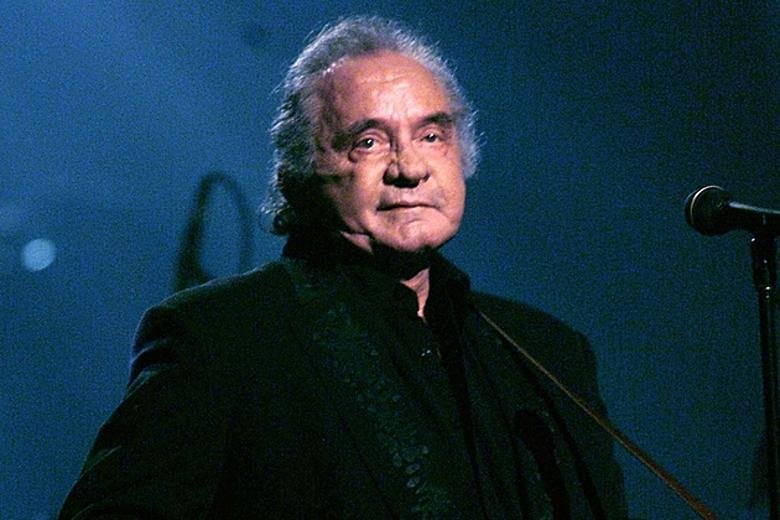
By the time he stepped onto the stage at the Carter Family Fold on July 5, 2003, Johnny Cash was already a legend living in the fragile space between memory and mortality.
Known worldwide as the “Man in Black,” Cash had recorded more than a hundred albums and shaped the sound of American music across generations. But on that night, the weight he carried was not fame—it was loss. Just seven weeks earlier, he had said goodbye to June Carter Cash, his wife, creative partner, and lifelong source of grounding.
Witnesses described a man who needed assistance to reach the stage. Yet when he arrived, there was no hesitation in his presence. Even in physical decline, Cash retained the quiet authority that had always defined him—not loud, not showy, but deeply rooted in truth.
At one point during the performance, he paused. The room fell still as he spoke about June, his voice breaking with emotion. He reflected on her presence in his life, describing her as a source of strength and inspiration even beyond death. It wasn’t a scripted moment—it felt like a direct conversation with memory itself.
Then came the unexpected choice.
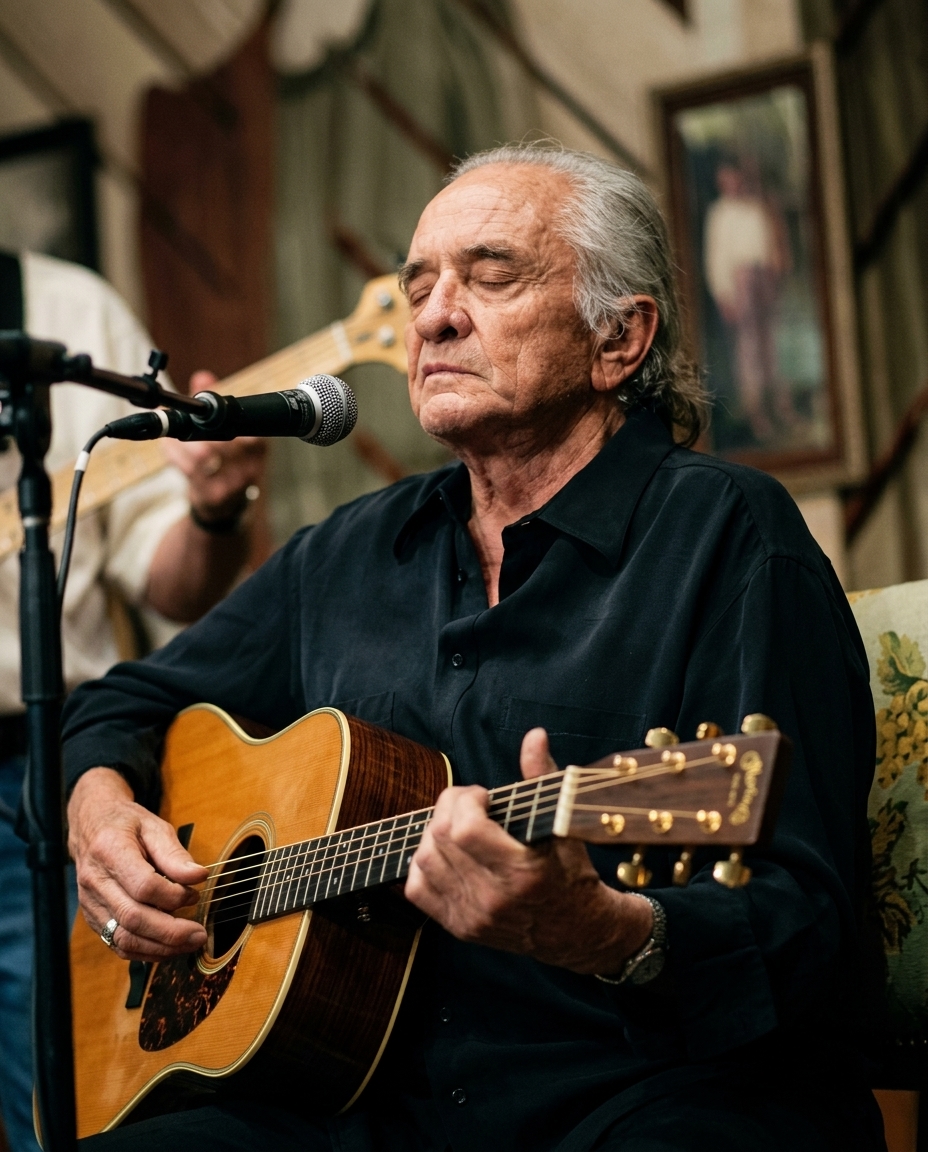
For his final song of the night, Cash turned to Understand Your Man, a track he told the audience he had not performed live in approximately 25 years. The decision carried a quiet weight, as if he were reaching back across time to retrieve something once set aside.
The performance itself was unadorned. No theatrical build-up, no attempt to recreate past energy—just a voice shaped by age, experience, and emotion. In that simplicity, the song took on a different meaning. It was no longer just a hit from 1964; it became a reflection of endurance, regret, memory, and acceptance.
When the final notes faded, the band transitioned into I Walk the Line, a fitting echo of a career built on steadiness and personal conviction. Cash was then helped off the stage. It would be the last time he ever performed live.
Less than two months later, he was gone.
Looking back, that night is often remembered not for spectacle, but for its stillness. There was no attempt to say goodbye in words. Instead, there was music—raw, restrained, and deeply human.
And perhaps that is why the question still lingers around that final performance. Not because it needs a definitive answer, but because it doesn’t have one.
Just a man, a song revisited after 25 years of silence, and a final walk offstage that became part of music history.