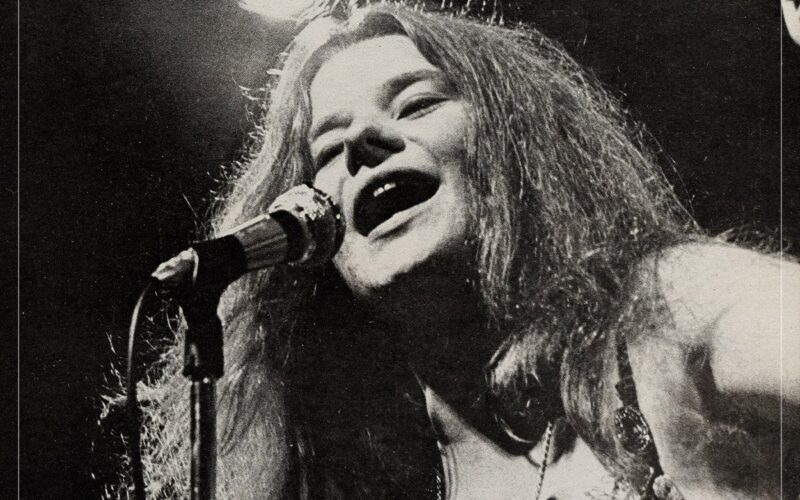
Janis Joplin’s main source of inspiration was mostly her own survival.
Discussing her tragic song ‘Kozmic Blues’, she once said, “I can’t write a song unless I’m really traumatic, emotional, and I’ve gone through a few changes, I’m very down. No one’s ever gonna love you any better, and no one’s gonna love you right.”
Joplin was, to many, the ultimate connoisseur of pouring heartache into music. She was, to borrow a phrase from Florence Welch, the leader of “suffering and intensity”, holding the stage with the weight of every burden that she ever let define her. While to her, it often felt like it was swallowing her whole, it would be the one thing that ensured her legacy withstood the test of time, her art providing the ultimate masterclass in raw vulnerability.
Joplin might not have been able to see the true extent of the impact of her craft, but while she was alive, she constantly kept a watchful eye on those around her, even if they seemed privy to a certain kind of belonging and happiness that she felt was never made for people like her. She knew how people viewed her, as it was the same as she viewed herself, but she also observed how others managed to tell their own stories and let it guide her own words – even if it came from entirely different experiences and emotions.
When you look at a legend like Joplin, it’s hard to imagine her ever having her own influences. She’s the kind of artist who inspires and guides others, not the other way around. But as with many greats, Joplin’s desire to platform her own stories started somewhere. And, often, it came from the people who can say a lot by doing seemingly very little, holding the power of emotion in just one or two notes instead of building over the entirety of a song.
In Joplin’s view, only a few could pull this off, and two of them were the masters of vocal technique themselves: Aretha Franklin and Billie Holiday. As Joplin once explained, “Billie Holiday, Aretha Franklin. Now, they are so subtle, they can milk you with two notes. They can make you feel like they told you the whole universe. But I don’t know that yet. All I got now is strength. Maybe if I keep singing, maybe I’ll get it.”
For the entirety of her time in the spotlight, all that Joplin felt that she had was that familiar “strength” that we still love and celebrate about her today. But often, she saw it as a weakness, something that reminded her of her own perils in love and loss. Watching singers like Holiday and Franklin, she was reminded of the other side of the coin, where people excelled with all the things she could never have, a different kind of beauty she knew she’d never reach.
But at its core, all that was was two varying sides of complicated expression. Joplin’s might have fallen heavier on the side of darkness, especially when it came to nursing or leaning into her own demons and letting them come out on stage, but Franklin and Holiday had their versions of that too, letting raw emotion grace the surface by letting go of the reins that kept it all inside whenever they weren’t in front of a live audience.
That was also the kind of expression that floored people like Joplin. Often, it’s the type of feeling you can’t put words to. The type of feeling that singers like those can let bleed, the story of their “whole universe” in just a few moments, with people like Joplin watching on and wondering if they’ll ever get there too, without realising that along the way, she already had.