It was a night built for spectacle — 30,000 fans across three sold-out performances, and a venue as iconic as Arena di Verona, where history and music often feel inseparable. Yet despite the scale, the moment that audiences continue to talk about had nothing to do with volume, lighting, or vocal power.
Instead, it came down to something far smaller. Almost invisible.
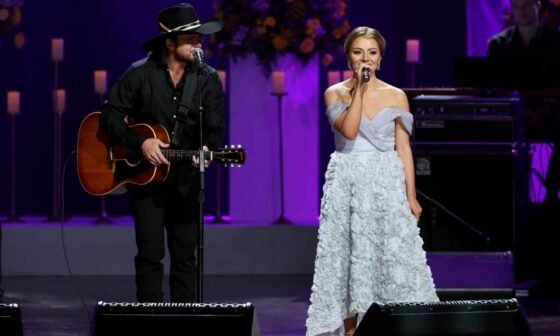
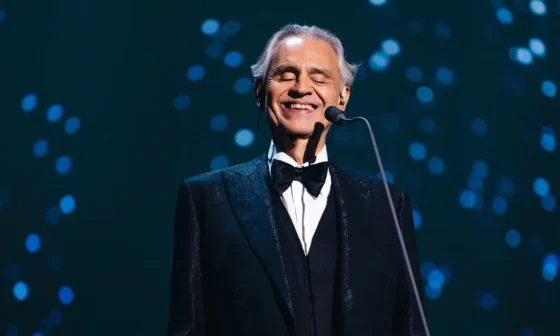
When Gianluca Ginoble stepped into Shallow, the opening was unexpectedly restrained. Rather than launching into dramatic intensity, he chose a softer, almost fragile approach that immediately shifted the atmosphere inside the arena. The crowd responded not with noise, but with stillness — as if collectively sensing that the performance was going to unfold differently.
Then Annalisa entered the moment.
Where Gianluca’s tone was controlled and grounded, Annalisa brought a contrasting energy — sharper, more emotional, and increasingly intense as the arrangement built. The interplay between their voices created a dynamic tension: modern pop emotion meeting operatic control, each pushing the other forward without overpowering the space between them.
It wasn’t just a duet. It felt like a conversation unfolding in real time.
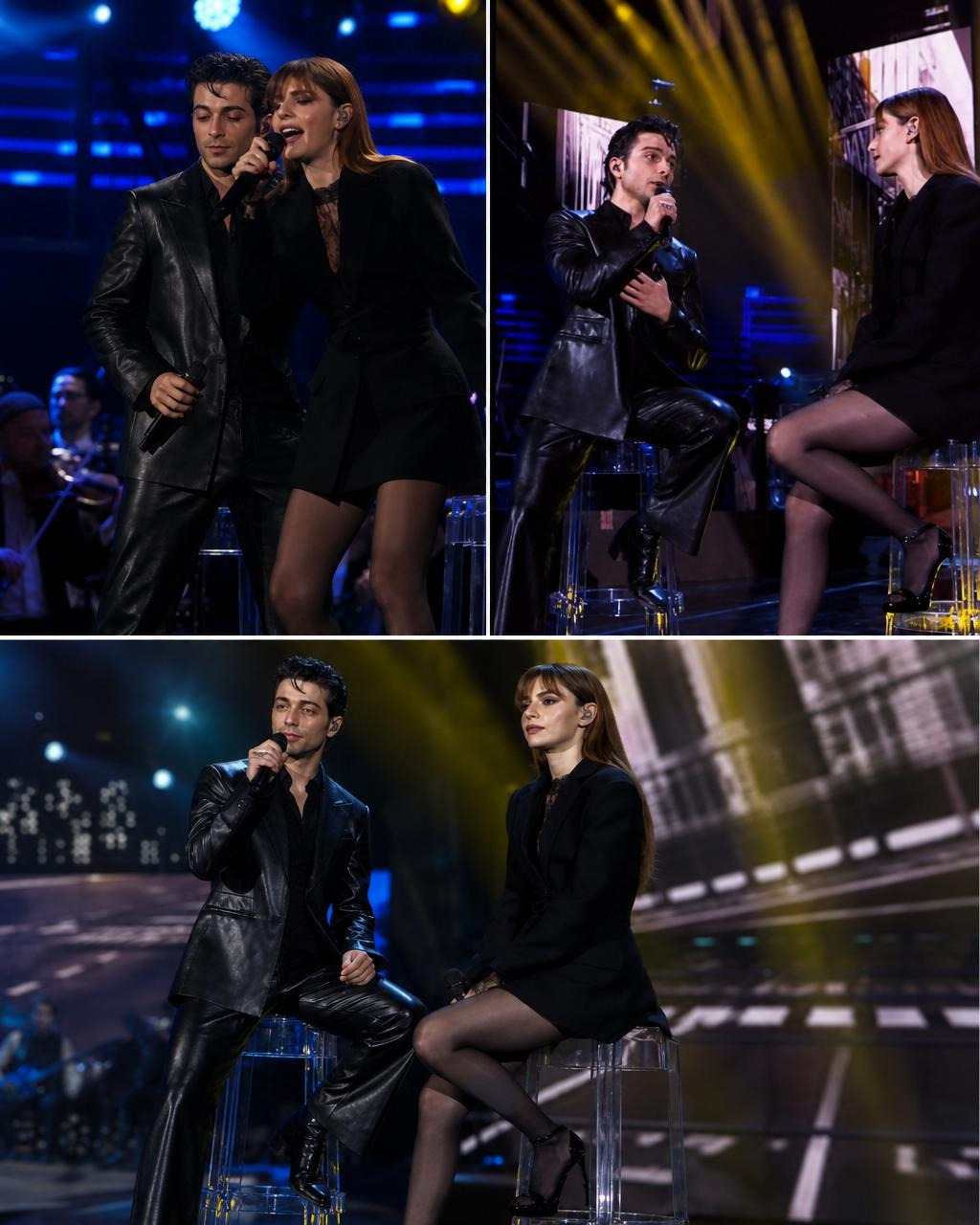
As the song climbed toward its peak, the technical performance became almost secondary to what the audience was witnessing emotionally. The arena, which had been filled with thousands of people, seemed to narrow its focus down to the stage alone. Even subtle movements carried weight, and every phrase felt amplified by anticipation.
And then came the moment that audiences keep replaying.
Near the emotional climax, there was a brief exchange — a glance between Gianluca and Annalisa that lasted only seconds. It wasn’t staged or exaggerated. It didn’t interrupt the performance. It simply existed within it, like a natural reaction between two performers fully immersed in the same emotional space.
Yet that small moment has become the most talked-about part of the entire performance.
Fans online describe it as “unexplainable,” not because of what was said or done, but because of what was felt. A kind of silent acknowledgment between two artists who had just crossed a shared emotional peak. In an era where performances are often dissected for technical perfection, this moment stood out precisely because it wasn’t engineered.
It was human.
By the time the final notes faded, the audience erupted into applause, but the conversation had already shifted elsewhere. Clips of the performance circulated widely, with viewers repeatedly focusing on that brief exchange — the kind of detail that often goes unnoticed in real time but becomes unforgettable in replay.
In the end, Shallow at Arena di Verona wasn’t remembered just for its vocal power or scale. It was remembered for something far more fragile — a split-second connection between two performers that no stage direction could have created, and no audience could have predicted.