There are concerts you remember because the music was good.
There are shows you remember because the crowd was electric.
And then there are nights like this — when time itself seems to bend, when everyone present understands, at the exact same second, that they are witnessing something the world will never be allowed to see again.
Last night at London’s O2 Arena, that happened.
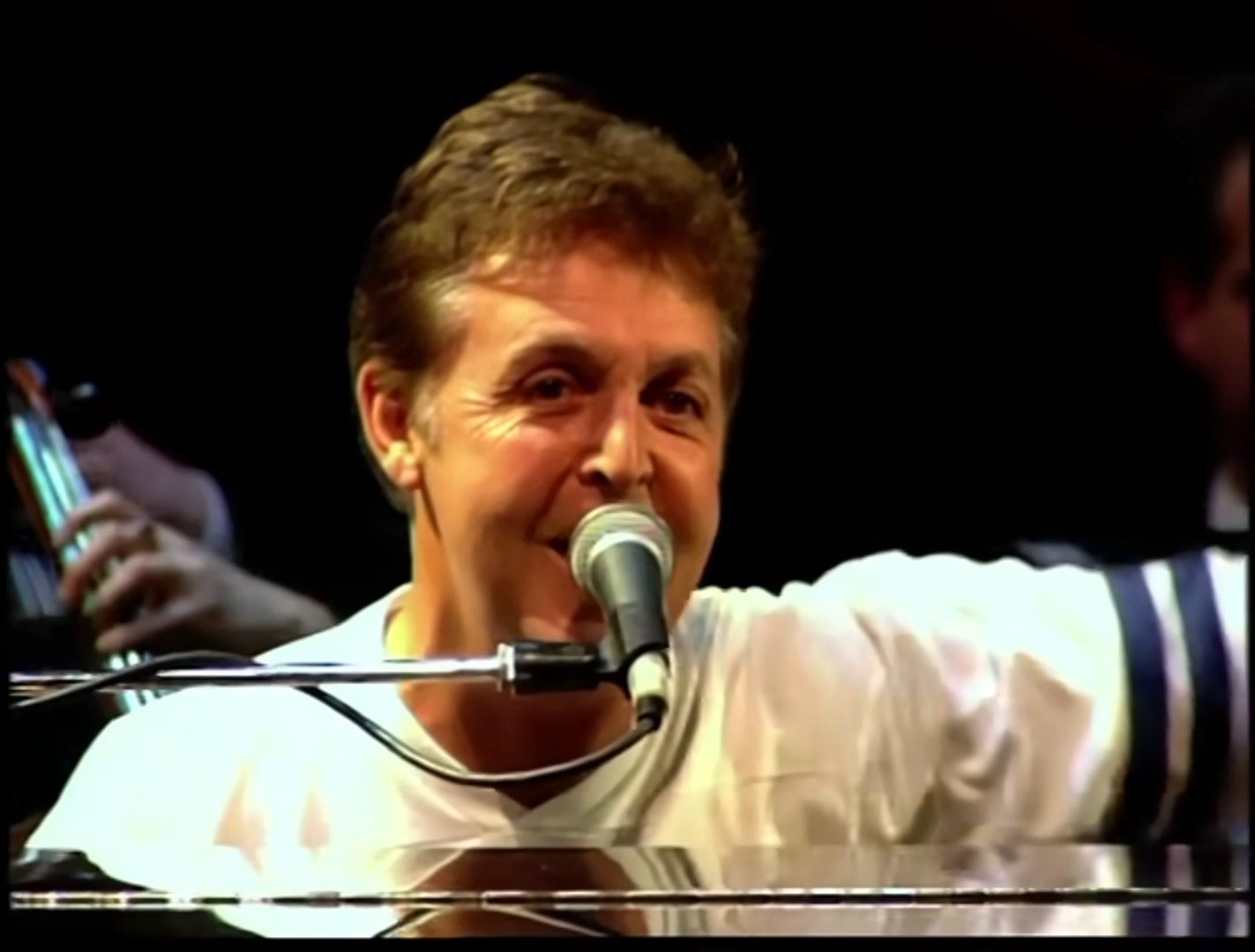
Paul McCartney’s Got Back tour was nearing its final stretch. The mood in the room was warm, celebratory, reflective — the kind of quiet joy that comes when an audience knows they’re approaching the end of something meaningful. The lights softened. The crowd settled into what they believed would be a familiar closing sequence.
Then Paul stepped toward the microphone.
He didn’t dramatize it.
He didn’t pause for effect.
He simply spoke one sentence — and history inhaled.
“Bring to the stage the mighty, the one and only… Ringo Starr.”
For a fraction of a second, the arena froze — as if the words hadn’t yet found their way into belief.
Then the sound hit.
Twenty thousand people erupted in disbelief, joy, and something close to reverence as Ringo Starr walked onto the stage. No announcement video. No tease. No buildup. Just a living Beatle stepping into the light beside another — not as a reunion act, not as a tribute, but as himself.
This wasn’t nostalgia.
This wasn’t a reenactment.
This wasn’t history repackaged.
This was history still breathing.
When Muscle Memory Becomes Magic
The moment Ringo sat behind the kit, something extraordinary happened. There was no hesitation. No adjustment. No sense of age catching up.
They locked in instantly.
As if the decades had folded inward.
They launched straight into “Sgt. Pepper’s Lonely Hearts Club Band”, tight and joyful, the sound of two musicians who never truly stopped speaking the same musical language. The crowd sang every word, not loudly at first — almost carefully — like they were afraid to disturb the moment.
Then came “Helter Skelter.”
Raw. Thunderous. Unhinged in the best possible way.
The song didn’t feel like a callback. It felt defiant. Loud proof that time may pass, but fire doesn’t always fade. Paul attacked the bass. Ringo drove the rhythm with that unmistakable swing that helped shape modern rock drumming itself.
The arena shook.
Why Everyone Knew This Was “The One”
Phones were everywhere — not because people wanted content, but because their minds couldn’t hold the moment on their own. Strangers hugged without speaking. Grown adults cried openly. Some stood frozen, hands over mouths, unable to cheer because cheering felt too small.
Everyone understood the same truth at once:
This will never happen again.
No holograms will ever replace this.
No AI can recreate the way they glanced at each other.
No future tribute can replicate the weight of now.
These weren’t symbols of The Beatles.
They were the real thing.
Two of the last living architects of modern music, standing together, not to say goodbye — but to play.
More Than Music
What made the moment so powerful wasn’t just who was on stage — it was what they represented.
Paul McCartney and Ringo Starr are not just survivors of a legendary band. They are living bridges to a time when music reshaped culture, challenged authority, and united generations across borders and languages.
Seeing them together wasn’t about reliving the past.
It was about realizing how much of the present still flows from what they created.
A Miracle Disguised as a Finale
When the final notes faded, the applause didn’t feel like applause. It felt like gratitude. Like the room was saying thank you — not just for the songs, but for the gift of being there when history quietly decided to show itself one more time.
No encore could follow it.
No words could explain it.
A tour finale became something else entirely — a once-in-a-lifetime collision of legacy, friendship, and timing that will live on only in memory and imperfect recordings.
And everyone who was there knows:
They didn’t just attend a concert.
They became witnesses.