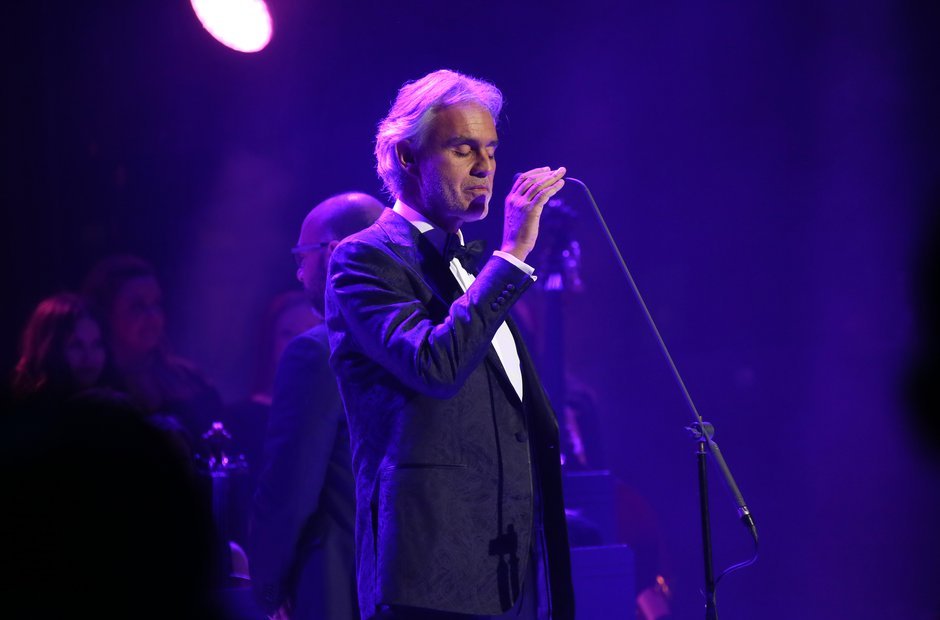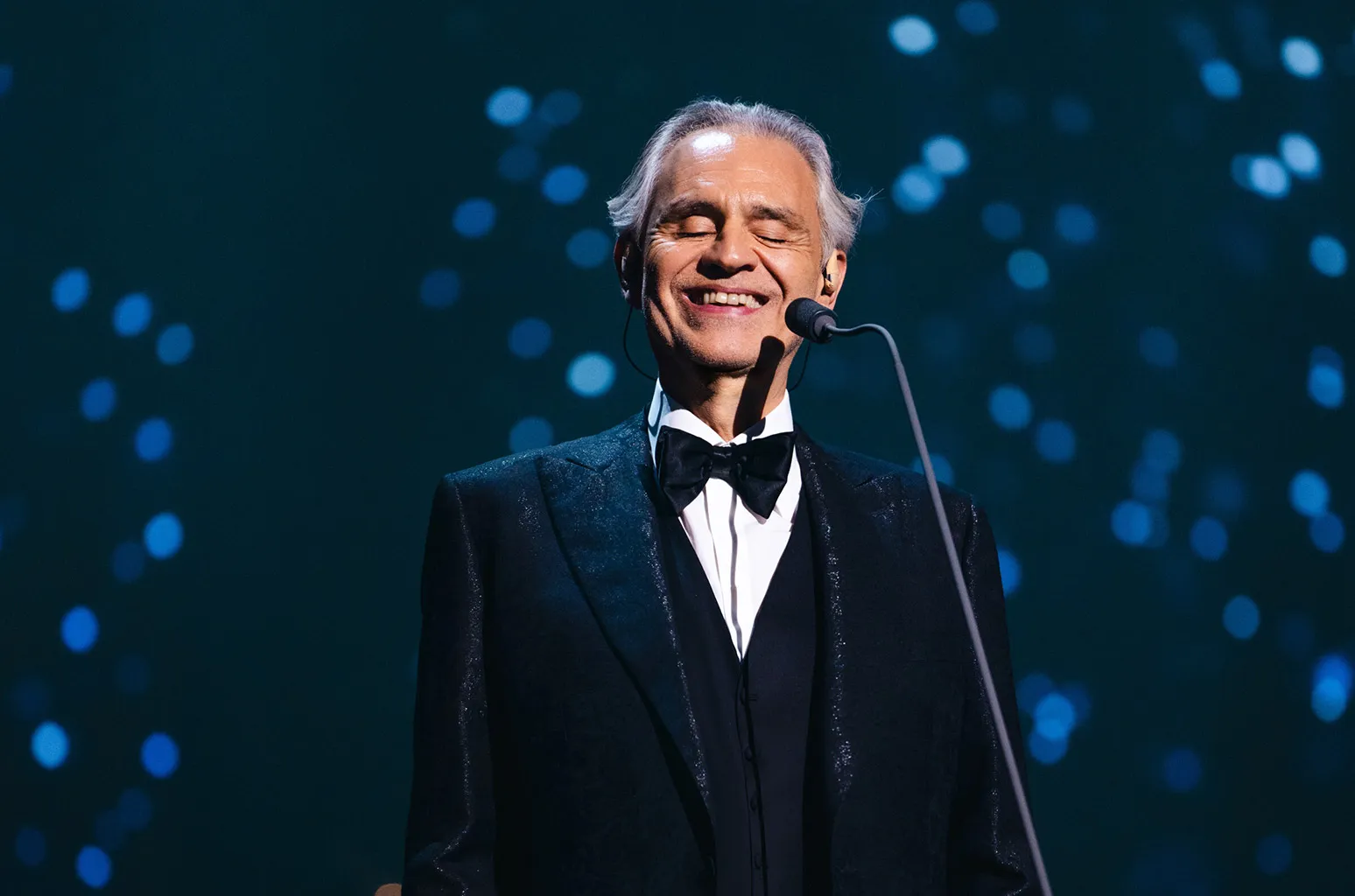
It was meant to be one of those unforgettable nights—an arena filled with nearly 90,000 people, the stage illuminated, and the voice of Andrea Bocelli carrying over a sea of anticipation. The atmosphere had all the markings of a transcendent performance, the kind of concert where music and emotion blend into something larger than the moment itself.
But in the middle of it all, everything stopped.
As the orchestra reached its peak and the crowd was fully immersed in the performance, a sudden disruption in the audience changed the course of the evening. A young attendee had reportedly become unconscious, and within moments, the situation drew attention from those nearby—and then from the stage itself.
Without hesitation, Bocelli paused the performance.#
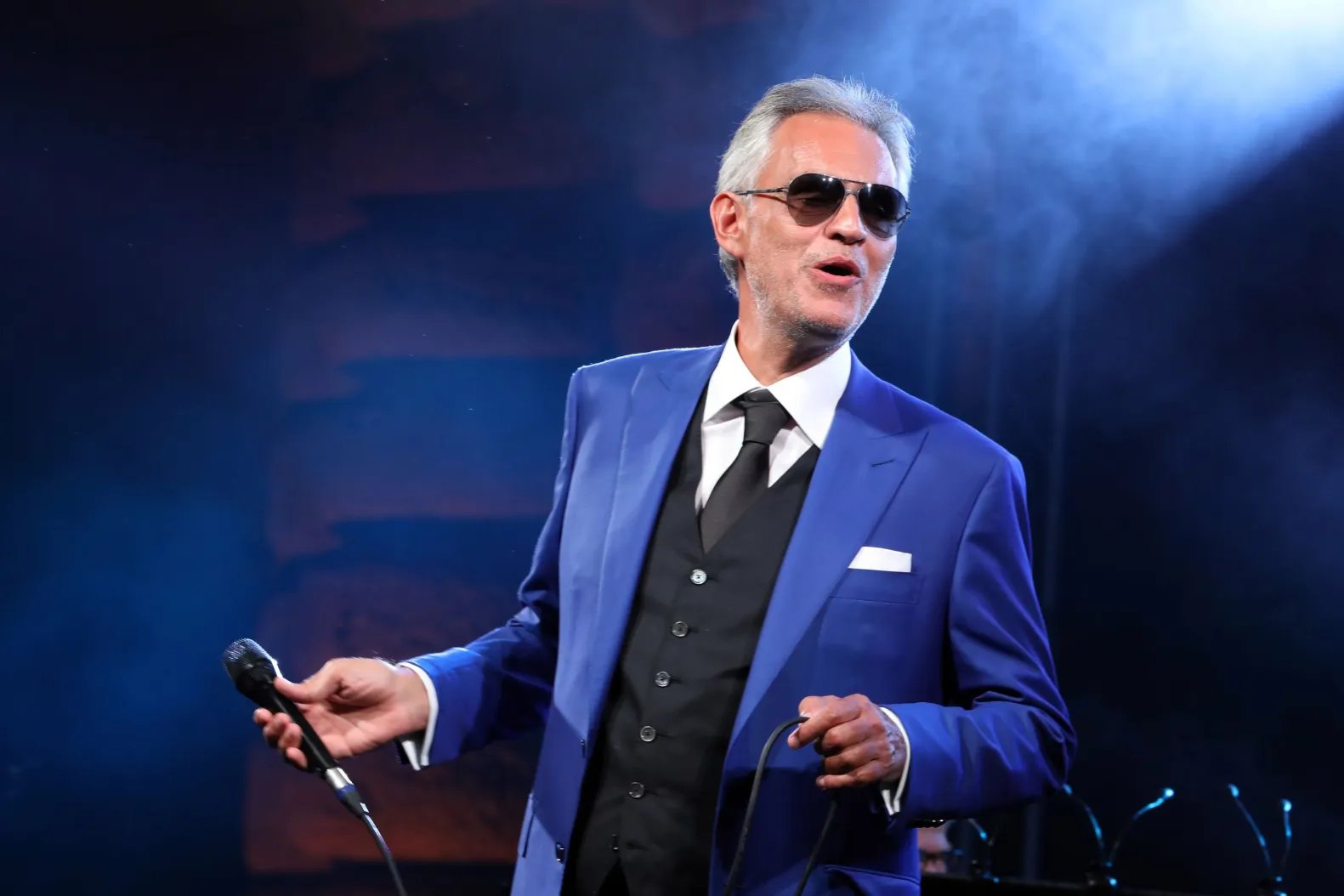
The music faded. The lights that had once swept across the stadium seemed to lose their motion. And in an instant, nearly 90,000 people fell into an unusual kind of silence—not the silence of anticipation, but of concern.
For an artist whose performances are often described as deeply emotional and immersive, the interruption was not about spectacle but about humanity. Bocelli has long been known not only for his vocal artistry, but for the sensitivity he brings to live performance—an awareness that extends beyond the stage and into the people experiencing the music.
What followed was a quiet break in the concert as attention shifted entirely to the audience member in distress. Medical personnel and staff responded quickly, while the crowd remained still, many unaware at first of what had occurred, and others watching with growing concern.
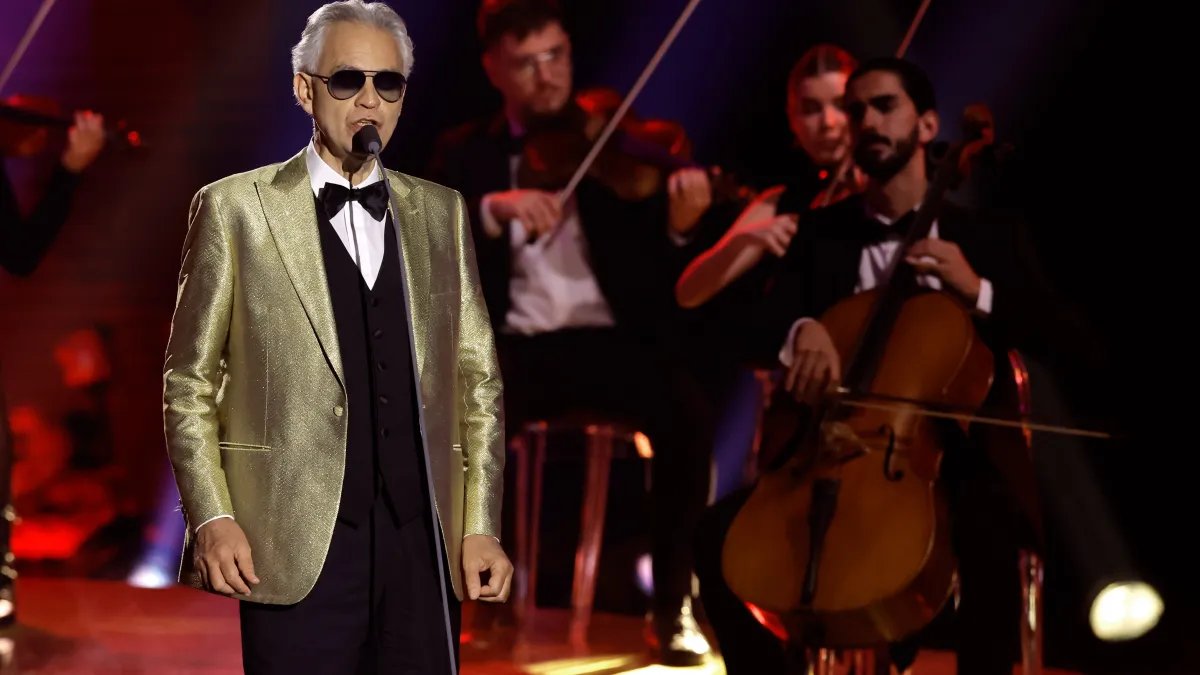
In large-scale concerts, moments like this are rare but not unheard of. Yet what made this instance stand out was the collective response—both from the audience and from the stage. Rather than frustration or disruption, there was patience. A shared understanding that, in that moment, something more important than music was unfolding.
Witnesses later described the atmosphere as surreal. A stadium that had moments earlier been filled with orchestral intensity now felt suspended in time. Conversations quieted. Movement slowed. The usual energy of a live performance gave way to stillness and attention focused on a single unseen point in the crowd.
For Bocelli, whose career has been defined by emotional expression and connection, the decision to stop the performance reflected a long-standing ethos: that music exists within life, not apart from it. His concerts have often been praised for their intimacy despite their scale, and this moment underscored that quality in the most human way possible.
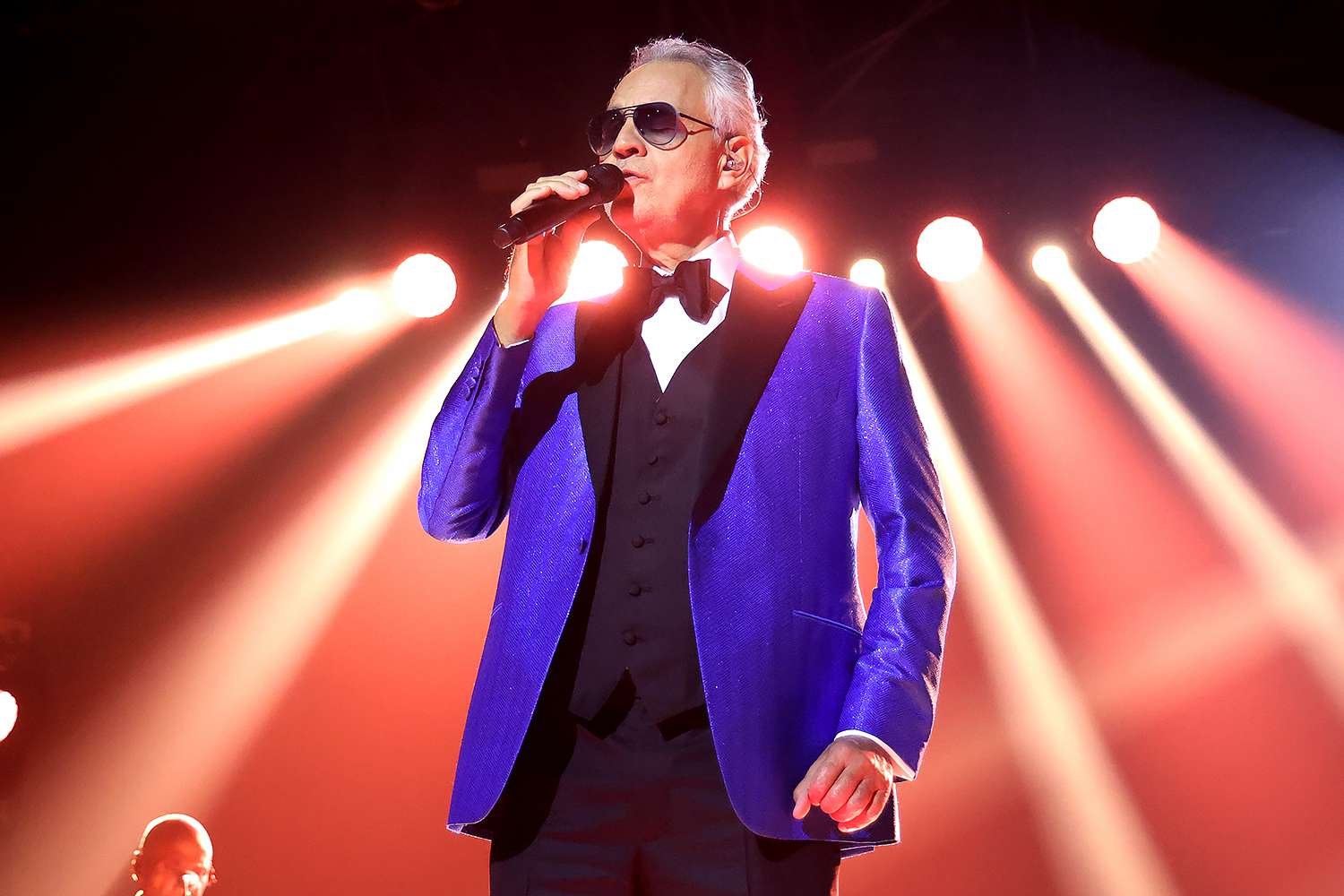
After the situation was addressed, the performance eventually continued. But for many in attendance, the night had already been marked by something far more memorable than any setlist. It became a reminder that even in the most grandiose settings—stadiums filled with light, sound, and expectation—human moments can instantly redefine everything.
As fans reflected afterward, many spoke less about the interruption itself and more about what it represented: empathy, awareness, and the unspoken bond between artist and audience.
In the end, the concert was remembered not only for its music, but for its silence—a silence that carried more weight than sound ever could.