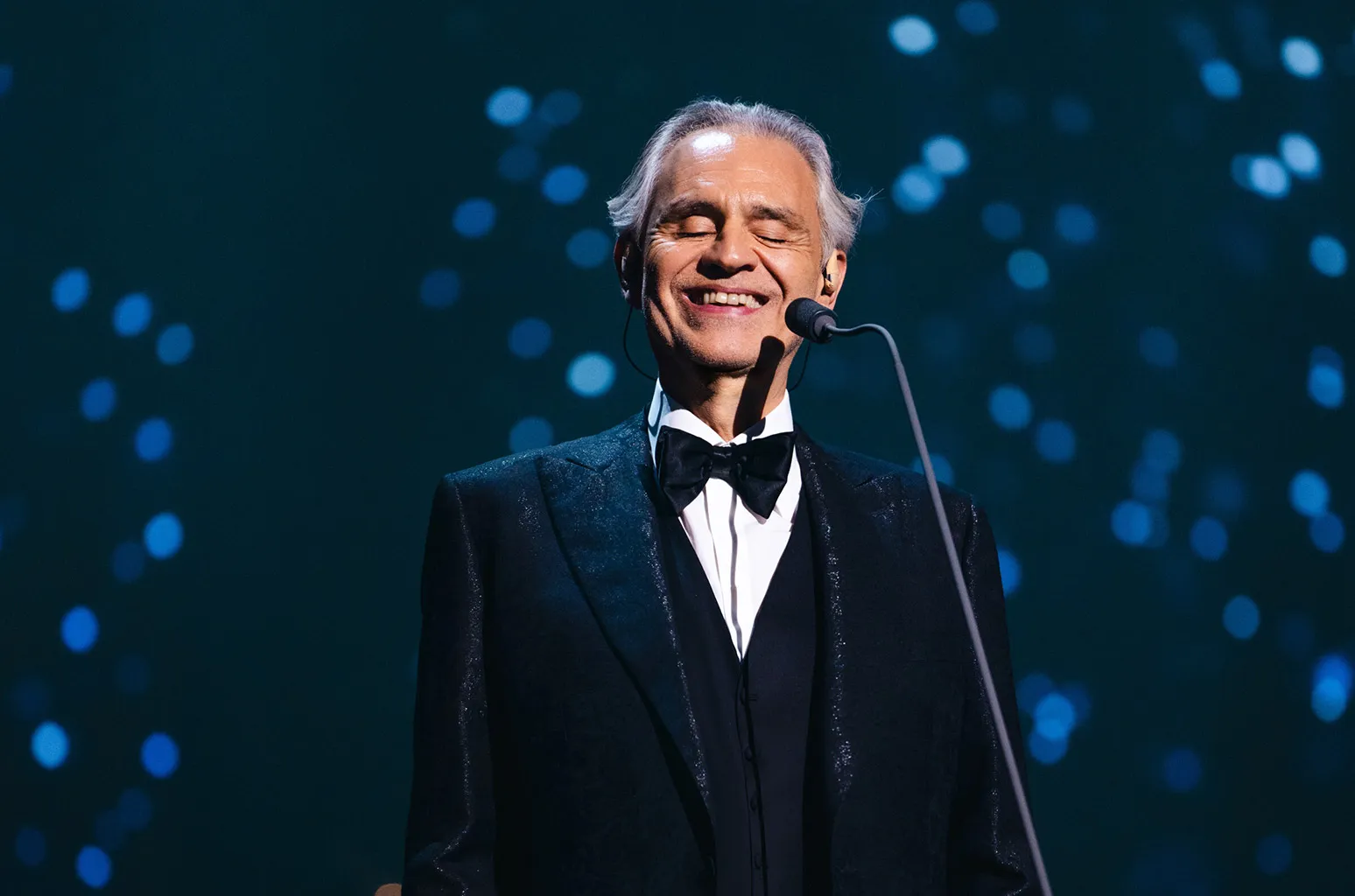
There are moments in music that feel less like performances and more like quiet revelations. The recent release from Andrea Bocelli and his daughter Virginia Bocelli is one of those rare moments—an intimate duet that carries both personal history and emotional depth.
For years, Bocelli’s voice has been synonymous with elegance and power, filling concert halls and reaching audiences across the world. Yet this recording offers something different. It is not shaped by the grandeur of a live performance or the expectations of a global audience. Instead, it feels closer, more reflective—like a glimpse into a private musical exchange between father and daughter.
The duet, described as a long-lost family recording, has a raw quality that sets it apart. There is a softness to it, an unpolished sincerity that allows the emotion to come through without distraction. As their voices intertwine, the contrast between Bocelli’s seasoned tenor and Virginia’s youthful tone creates a sense of balance that feels both natural and deeply expressive.
What makes this release especially meaningful is the passage of time it seems to carry. Listeners have described the experience as almost timeless, as though the recording exists outside of any single moment. It is not just a song, but a connection—one that reflects both shared heritage and a continuing bond.

For Virginia Bocelli, who has already begun to step into the musical world alongside her father, the duet represents more than a collaboration. It is a continuation of a legacy, shaped not only by technique and training, but by something more personal: a shared love of music. Singing alongside her father, she brings a sense of warmth and authenticity that resonates throughout the piece.
Andrea Bocelli, known for his ability to convey emotion through every note, approaches the duet with a quiet restraint. Rather than dominating the performance, he allows space for the interplay between their voices. The result is a piece that feels less like a showcase and more like a conversation—one carried through melody rather than words.
Fans have responded with a mixture of admiration and reflection. For many, the duet serves as a reminder of the enduring power of music to capture moments that might otherwise remain unseen. It also highlights a different side of Bocelli’s artistry—one that is rooted not in spectacle, but in connection.
In an era where music is often produced for immediate impact, this release stands apart. It does not demand attention; it invites it. It asks listeners to slow down, to listen closely, and to appreciate the subtle interplay of voices that tell a story without needing explanation.
Ultimately, this duet is not just about Andrea and Virginia Bocelli. It is about the way music can preserve feeling, bridge generations, and create something that lingers long after the final note fades. In its simplicity, it offers something rare: a moment that feels both personal and timeless, shared now with the world.