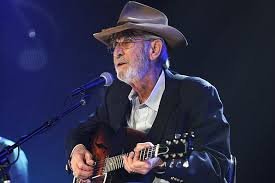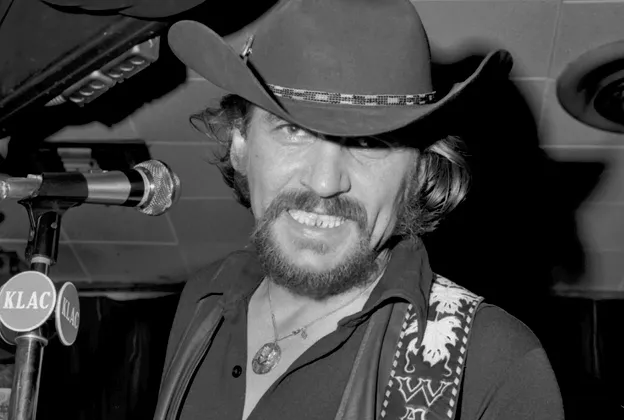
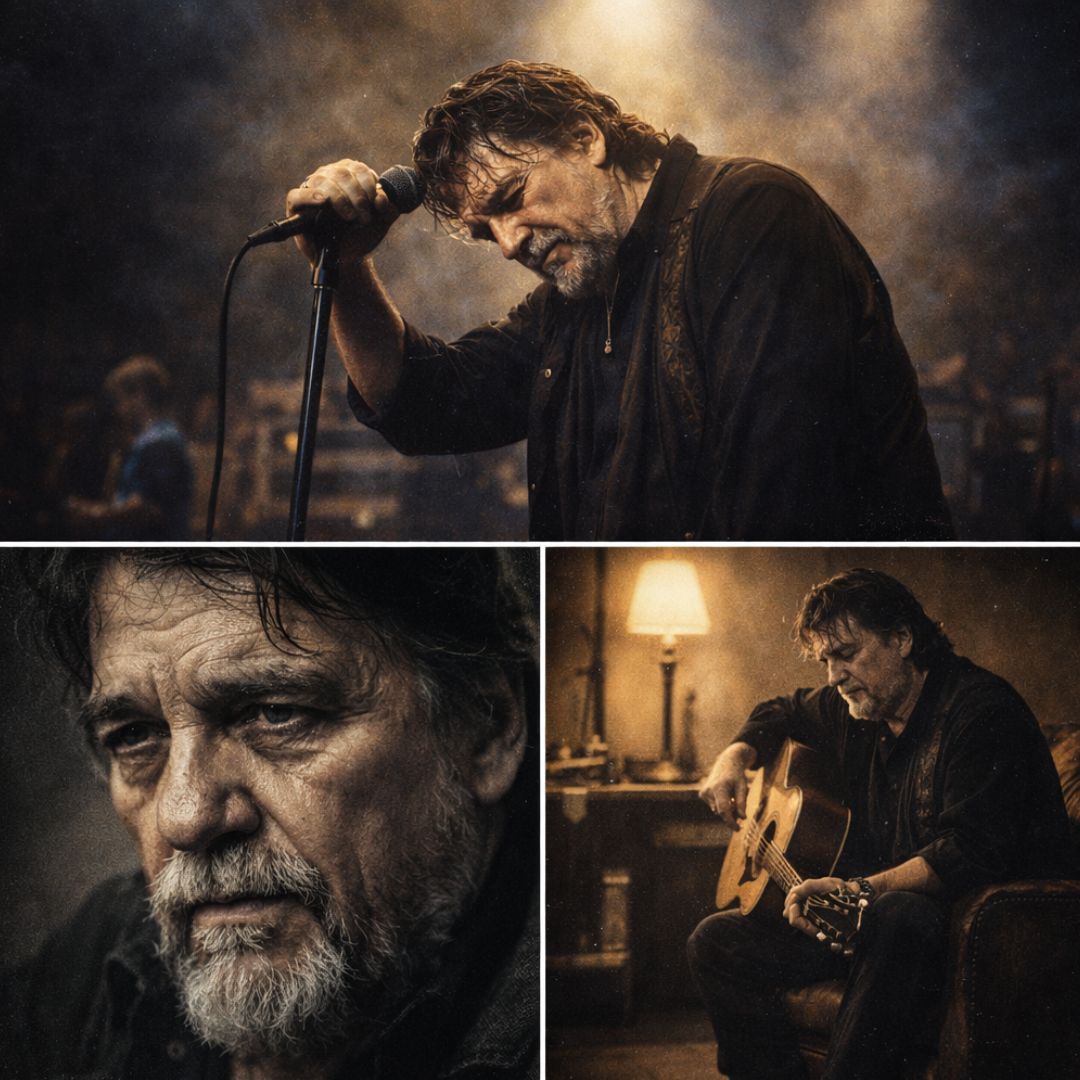
“AFTER MORE THAN 40 YEARS OF FIGHTING, WAYLON JENNINGS STOPPED RUNNING.” The final years of Waylon Jennings weren’t about rebellion anymore. They were about control. By his early sixties, his body showed every mile he’d lived. On stage, he stood still. Sometimes leaning on the mic. Letting the band carry the moment while silence hung just a little longer than expected. Not for drama. Because life had slowed the tempo. But when he sang, nothing was missing. That voice was still rough. Still honest. Still alive. He didn’t need the outlaw image anymore. No rules left to break. Just a man who learned that survival takes discipline, not defiance. When he left, it didn’t feel like surrender. It felt like choosing his own ending.

Waylon Jennings

For most of his life, Waylon Jennings was defined by motion.
Always pushing forward. Always pushing back. Against the industry. Against expectations. Against anything that tried to fence him in. The outlaw image wasn’t a costume — it was survival. It was how he stayed upright in a business that preferred polish over truth.

But the final chapter of Waylon’s story didn’t sound like rebellion.
It sounded like restraint.

By the time he reached his early sixties, his body carried the receipts of a life lived hard. Diabetes had taken its toll. His weight fluctuated. His stamina wasn’t what it once was. Walking across a stage took effort now, not swagger. Some nights, he leaned into the microphone stand not for effect, but because balance had become something you respected, not assumed.

Audiences noticed the stillness first.

The old Waylon would pace. Command the space. Lock eyes with the band and push the tempo just to see who could hang on. The later Waylon stood planted. Feet firm. Shoulders steady. Sometimes he let the band roll on while he waited a beat longer than expected before coming in. That pause wasn’t showmanship. It was listening. To the music. To his breath. To his body telling him how fast the night could go.

And then he sang.

That’s where the myths fell apart.
Nothing was gone.

The voice was still there — rough, weathered, unmistakable. It didn’t reach as high, but it didn’t need to. It sounded like someone who had survived everything he once tried to outrun. Every note carried weight, not because it was loud, but because it was earned. He sang like a man who knew exactly who he was and didn’t need to explain it anymore.

Backstage, the chaos was gone too.

No late-night defiance. No wild unpredictability. He kept to a routine. Watched what he ate. Took his medication seriously. Left the room when it got too loud. Some people mistook that for softness. They were wrong. This was discipline — the hardest kind for a man who built a legend on refusing it.

Waylon had already beaten the industry at its own game. He had fought for creative control when it was unheard of. He had forced Nashville to accept that artists could own their sound, their band, their choices. There were no more walls left to punch through. No villains left to face.

Staying alive became the last stand.

When news of his failing health began to circulate, Nashville didn’t sensationalize it. There were no dramatic headlines, no manufactured legends. People simply understood. They’d seen him slow down. They’d heard the spaces between the notes grow wider. They knew this wasn’t a man being defeated. It was a man conserving what mattered.

In his final performances, there was something almost peaceful about him. Not happy. Not sad. Just settled. Like someone who had stopped arguing with time and learned how to walk alongside it instead.

When Waylon Jennings died in 2002, it didn’t feel like a collapse.
It felt complete.

The outlaw didn’t burn out in flames.
He didn’t go down swinging.

He chose control over chaos.
Truth over image.
Discipline over defiance.

And in doing so, he proved something quieter, but maybe braver than anything he’d ever done before — that sometimes the strongest ending isn’t rebellion at all.

It’s knowing when to stop running.

0 Shares:
Leave a Reply

Your email address will not be published. Required fields are marked *

You May Also Like
Julian Lennon
Read More

Five sons. One song. And a legacy that finally exhales. Julian Lennon, Sean Lennon, James McCartney, Dhani Harrison, and Zak Starkey don’t try to recreate The Beatles. They stand quietly inside its shadow and let Here Comes the Sun breathe again — not as nostalgia, but as continuation. No spectacle. No imitation. Just five voices carrying something fragile, honest, and deeply understood.

LIGHT BREAKING THROUGH FIVE SHADOWS There are songs that belong to history, and there are songs that seem…
Jamal Roberts
Read More

“THE GREATEST MOMENT OF HIS CAREER.”— Jamal Roberts Stuns the Nation at the 2026 College Football Playoff Championship, Turning the National Anthem Into a Full-Circle Triumph That Left Millions Watching in Awe! The national spotlight didn’t just turn to Jamal Roberts — it locked in. As millions tuned in for one of the most high-profile pregame moments of the year, the American Idol Season 23 winner stepped onto the field and delivered “The Star-Spangled Banner” before the largest audience of his career. What followed stunned even the most die-hard sports fans. There were no gimmicks, no overreaching theatrics — just a commanding voice, unwavering control, and a sense of purpose that filled the stadium and echoed across the country. Social media erupted within seconds, with viewers calling it one of the best national anthem performances in history. For Roberts, it was more than applause — it was a full-circle triumph. From Mississippi classrooms, to primetime television, to one of the most-watched stages in American sports, this was the moment everything aligned. By the final note, the reaction said it all: this wasn’t just a performance — it was the greatest moment of his career, and a reminder that sometimes one song, sung the right way, can change how the world sees you forever. 👇 Details below.

Jamal Roberts, the Season 23 winner of American Idol, was met with an overwhelming wave of praise after…
toby-keith
Read More

The microphone stand center stage was empty. A single red solo cup sat on the stool next to it. Jason Aldean walked out, but he didn’t pick up his guitar. He just stood there, looking at that empty spot. The opening chords of “Should’ve Been a Cowboy” began to play, but nobody sang. The crowd was confused for a heartbeat. Then, they understood. 50,000 people started singing. They took the verse. They took the chorus. They sang for the man who couldn’t be there. Jason didn’t sing a note. He just lifted that cup towards the sky. In the VIP section, grown men in cowboy hats were openly weeping. It wasn’t a concert anymore. It was a family reunion missing its loudest brother. That night, Nashville didn’t just hear the music. They felt the loss.

The microphone stand at center stage was empty. No guitar leaned against it. No voice tested the sound.…