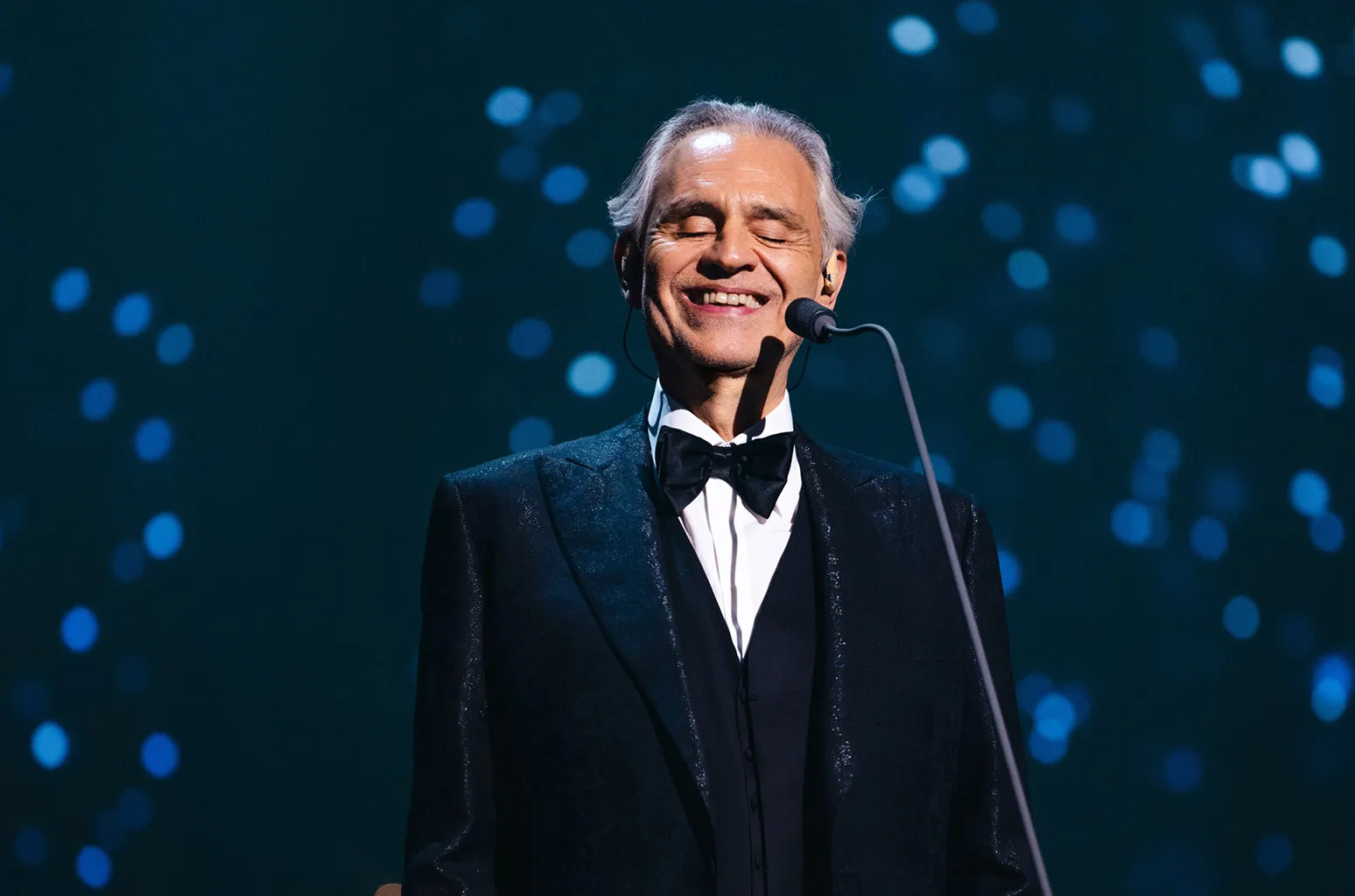
In the world of international music, few names carry the same global recognition as Andrea Bocelli and André Rieu. Their careers have been defined by decades of touring, sold-out performances, and audiences spanning generations and continents.
Yet alongside their artistic achievements, there is another aspect of their public image that often draws attention: the stability of their personal lives.
Unlike the fast-moving narratives often associated with celebrity culture, both artists have been consistently associated with long-term family relationships and a private life that remains largely separate from their stage personas. This contrast between public performance and private continuity has contributed to how audiences perceive them — not only as performers, but as individuals who maintain a sense of grounding amid global fame.

For fans, this often becomes part of the broader admiration. The idea that artists who perform for millions can still preserve a sense of personal consistency resonates strongly in an industry frequently shaped by change and visibility.
However, it is important to distinguish between public image and personal interpretation. While aspects of their family lives are known through interviews and public appearances, much of what circulates online tends to be simplified into broader narratives about “perfect” or “unchanging” relationships. In reality, like anyone, public figures experience private lives that are not fully visible to audiences.
What remains undeniable is the impact both artists have had on global music culture. Bocelli’s voice has brought classical crossover music to mainstream audiences, while Rieu has helped bring orchestral music to large-scale public celebrations around the world.
Their longevity in both career and public identity often invites reflection on what sustains a life in music over decades — discipline, adaptation, and a clear separation between professional performance and personal space.
Ultimately, the fascination with their private lives says as much about audience curiosity as it does about the artists themselves. In a world where visibility is constant, the idea of stability becomes a story in itself.
And perhaps that is why these narratives persist — not because they define the artists, but because they offer a contrast to the pace of modern fame.