
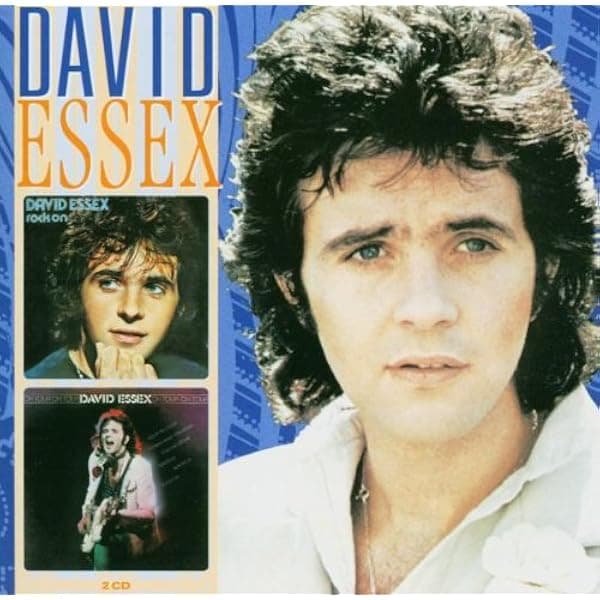
A haunting exposé of the puppeteers pulling the strings of fame.
For those of us who came of age in the vibrant, glitter-splashed era of glam rock, the name David Essex evokes a potent mix of memories: the defiant swagger of “Rock On,” the infectious, star-making anthem “Gonna Make You a Star,” and the undeniable charisma of a genuine icon. In 1974, at the very peak of his powers, Essex delivered what was arguably his most commercially successful single, an ode to the very celebrity he was becoming. It soared to the top of the UK charts, becoming a defining song of the year. But for those who bought the vinyl and flipped it over, a different story unfolded—a darker, more cynical tale that served as a stark, aural warning. That song was “Imperial Wizard,” a B-side that stands as one of the most compelling and unsettling tracks in his discography.
This song, which appeared on the reverse side of the UK number-one hit “Gonna Make You a Star,” never had its own moment in the spotlight. It was the hidden truth tucked away behind the glossy, manufactured facade of the A-side. While a casual listen might lead one to simply categorize it as an album track from his 1974 self-titled LP, its true significance lies in its deliberate placement. It was a conscious decision to sandwich the glamorous fantasy with the bleak reality. While millions sang along to the optimistic “you can be a superstar,” a select few were privy to the chilling subtext that power and fame came with a hidden price.
The very title, “Imperial Wizard,” is provocative and, at first glance, deeply unsettling. Given its unfortunate and entirely unrelated association with the Ku Klux Klan, it requires careful understanding. This is not a song about racial hatred or bigotry. It is, in fact, a piercing commentary on the music industry itself—a metaphor for the shadowy, controlling figures behind the scenes. The “Imperial Wizard” is a puppeteer, the powerful man in the suit pulling the strings of the artist, manufacturing a public persona and dictating their every move. The lyrics, with lines like “You’re the one who pulls the strings / Of the dolls that you can make,” are a direct, raw exposé of the manipulative nature of show business. It was a theme that was particularly poignant for an artist like David Essex, who had navigated his way from humble beginnings in the East End to the pinnacle of British pop. The song is a thinly veiled expression of his own disillusionment with the machinery of fame and the powerful forces that sought to control his image and artistry.
Musically, the song is a masterpiece of atmospheric tension. It eschews the breezy pop hooks of his hits for a more sinister, brooding sound. An ominous, pulsing synth line, dark piano chords, and a simple, repetitive beat create a sense of unease. David Essex’s voice, typically smooth and confident, is delivered with a world-weary cynicism that perfectly matches the song’s tone. It feels like a late-night confession, a whispered secret about the dark side of a glamorous world. For those of us who watched the meteoric rise of stars in the 70s, this song was a sobering reminder that for every bright light, there was a long, dark shadow.
In an era of manufactured teen idols and carefully crafted pop, “Imperial Wizard” stands as a defiant act of artistic integrity. It’s a song that didn’t seek commercial success but rather emotional truth. It is a time capsule of a young artist’s frustration and a powerful cautionary tale that resonates with anyone who has ever felt a loss of control in their own life. Today, decades later, it remains a testament to the fact that even at the height of fame, some of the most profound statements are made in the quietest, most overlooked corners of an album or a single’s flip side. It’s not the song we remember dancing to, but it’s the one we return to for its honest, unsettling beauty.
Video: