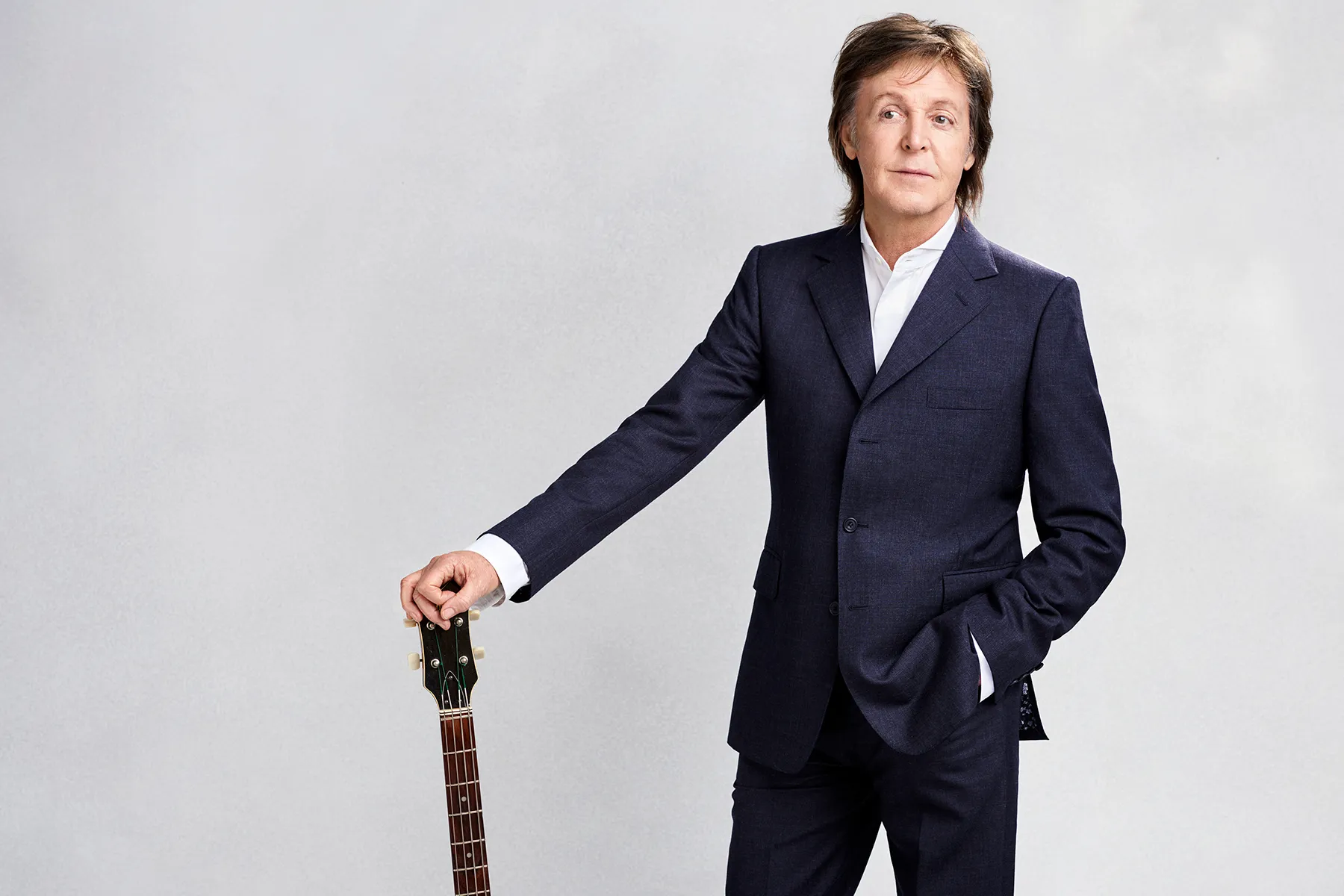
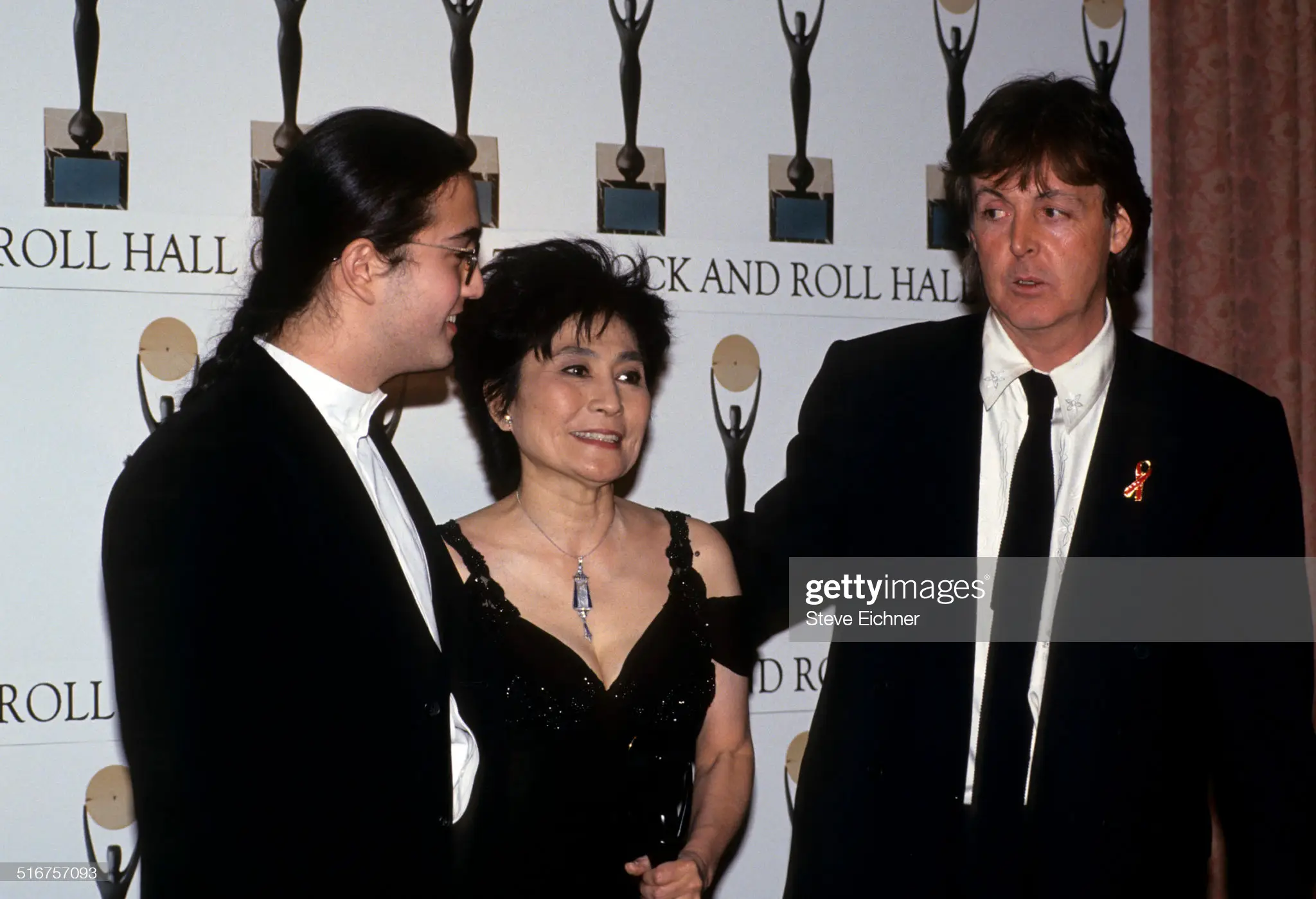
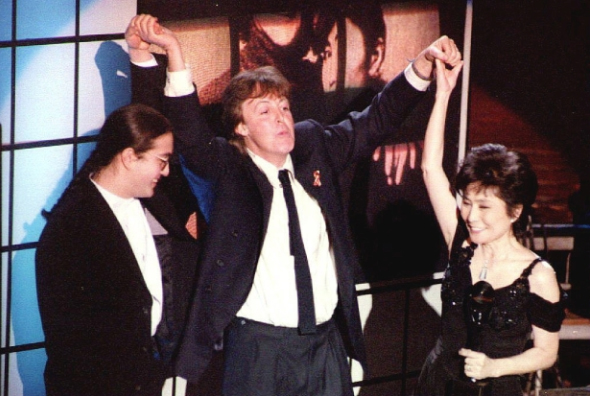
On a quiet, emotionally charged night in 1994, history folded in on itself at the Rock and Roll Hall of Fame. The crowd expected an induction. What they received instead was a letter — spoken aloud — that sounded less like a speech and more like a man finally finishing a conversation interrupted by death.
Standing alone at the podium, Paul McCartney did not perform. He did not posture. He addressed one person only: John Lennon.
“Dear John,” he began — and in that instant, the room shifted. Applause died quickly, replaced by a listening silence that felt almost reverent.
Paul didn’t recount fame first. He went back to Woolton, to a summer fête, to a boy onstage singing the wrong lyrics with absolute confidence. He remembered the first songs, the early hunger, the naïve desire to be famous without any idea what that would cost. He spoke of smoking tea leaves from his father’s pipe, of Julia Lennon’s ukulele, of learning guitar chords the wrong way around. These weren’t anecdotes for the crowd — they were memories retrieved intact, as if John might still hear them.
As the letter unfolded, the story widened. Liverpool. Hamburg. Broken windscreens. Sleeping piled together in the back of a freezing van — “a Beatle sandwich,” Paul joked softly. The Cavern Club. Notes passed up from angry blues purists. The first tour, the fake names, the myths dismantled gently and with humor. Fame didn’t arrive all at once — it accumulated, mile by mile, gig by gig, mistake by mistake.
Then America. New York. Los Angeles. Elvis. Ed Sullivan. Abbey Road. Paul recalled nerves cracking his voice during “Love Me Do,” John encouraging him to scream through “Kansas City,” the shared glance over the line “I’d love to turn you on.” A partnership built on trust, challenge, mischief, and instinct — spoken aloud without bitterness, without revision.
When Paul reached the later years, his voice softened further. He spoke of phone calls after lawsuits, after anger, after silence. Of John baking bread. Of playing with Sean. Of reconnection. Of relief. For Paul, those ordinary details mattered more than chart positions ever could — because they meant John had survived long enough to find peace.
He did not avoid Yoko Ono. He mentioned her simply, honestly, without spectacle. Later that night — matching the reconciliatory tone — Yoko quietly handed Paul cassette demos John had recorded at home: “Free As a Bird,” “Real Love,” “Grow Old with Me,” and “Now and Then.” What followed would become the final new recordings credited to The Beatles — music born not from nostalgia, but from unfinished business.
When Paul reached the end of the letter, there was no grand crescendo. Just gratitude.

“This letter comes with love, from your friend Paul,” he said.
And then the line that sealed the night into history:
“John Lennon, you’ve made it. Tonight you are in the Rock and Roll Hall of Fame.”
For a moment, no one clapped. The silence came first — heavy, respectful, absolute. It was the sound of a room understanding it had witnessed something unrepeatable: not a tribute, not a reunion, but a goodbye that had waited fourteen years to be spoken out loud.
The applause eventually followed. But by then, it almost felt unnecessary.