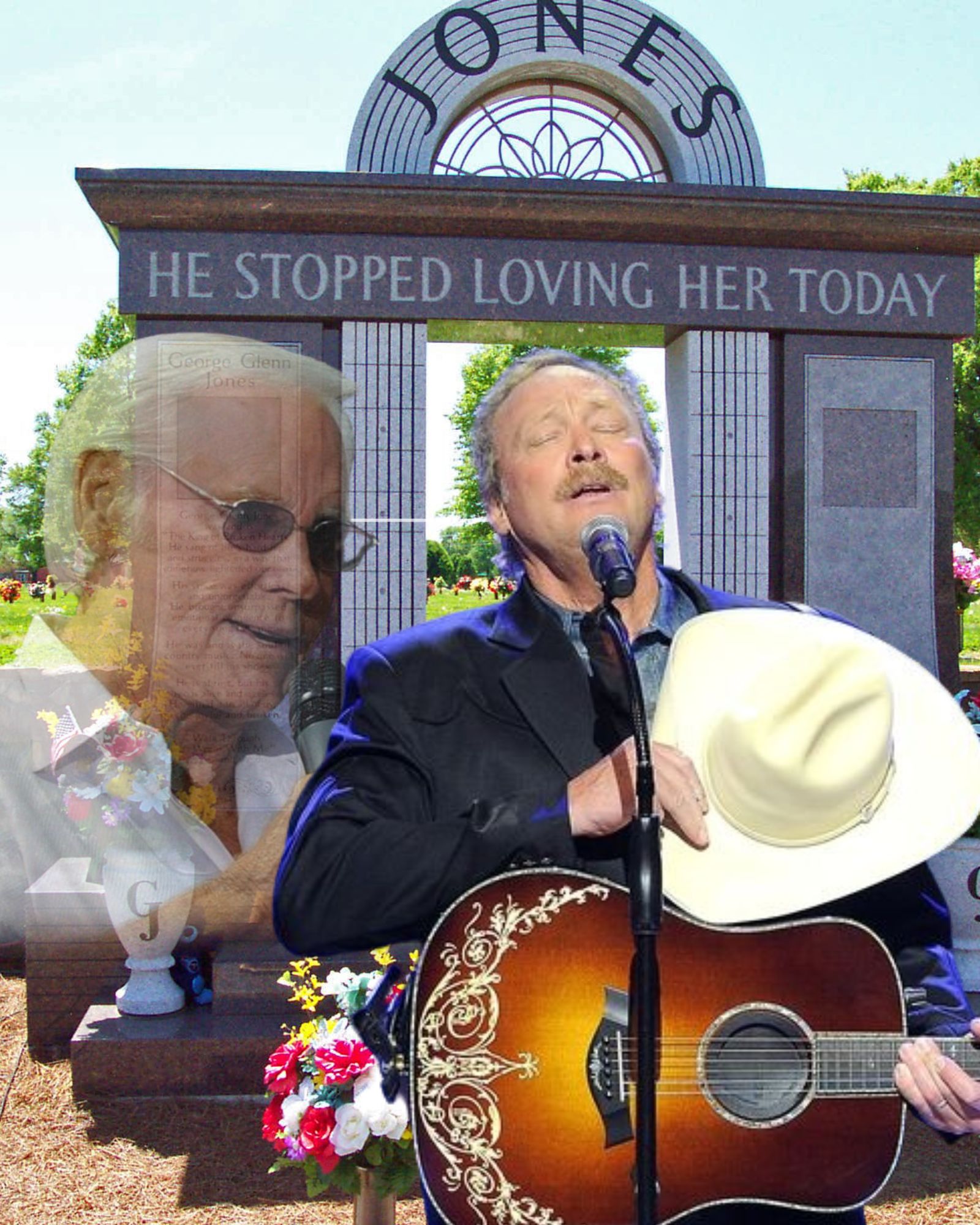
He took off his hat… and for a moment, time stood still. At George Jones’s funeral in 2013, Alan Jackson stepped onto the Grand Ole Opry stage and began to sing a song that once almost didn’t see the light of day. “He said, ‘I’ll love you ‘til I die’…”—the room fell utterly silent. That wasn’t just a performance. It was a farewell wrapped in love, grief, and the haunting power of a song that changed country music forever. When “He Stopped Loving Her Today” was recorded in 1979, even George Jones doubted it. Too sad, too grim, he said. But producer Billy Sherrill believed—and when it hit the airwaves in 1980, it soared to No. 1, reviving Jones’s career and earning him a Grammy. Today, it’s not just a hit—it’s the song that defines an entire genre. That day in Nashville, Alan Jackson didn’t just honor a friend. He reminded us all why this song lives on in the hearts of millions. It wasn’t just about George Jones. It was about every goodbye we’ve never quite gotten over

A Hat Comes Off, and Time Stands Still

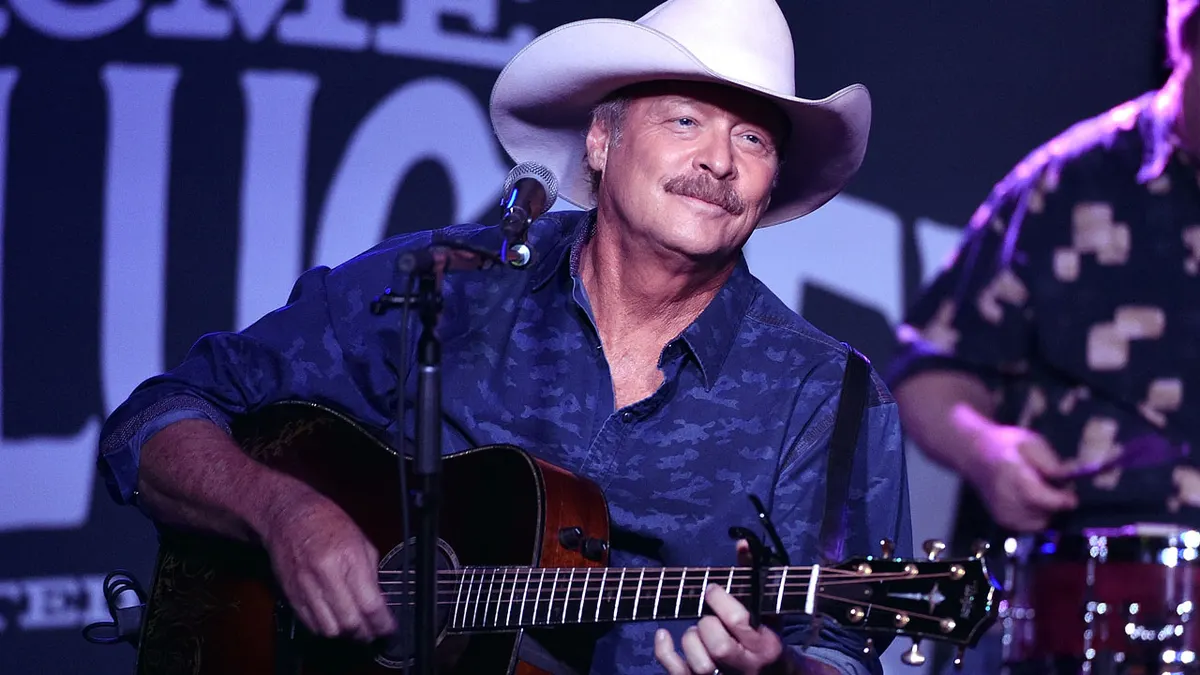
On a quiet morning in 2013, the Grand Ole Opry stage felt different. The lights were soft. The room was full, yet hushed. When Alan Jackson walked out, he didn’t rush. He paused, lifted his cowboy hat, and held it against his chest as if to steady himself.

Then he sang.

“He said, ‘I’ll love you till I die…’”

For a moment, the world seemed to stop. This wasn’t a concert. It was a farewell. The song he chose—He Stopped Loving Her Today—wasn’t just any hit. It was the song that defined George Jones, and the song that would now close the circle on his life.

The Song That Almost Wasn’t

Rewind to 1979. In a Nashville studio, George Jones listened to a demo that sounded more like a short story than a radio single. It was long. It was slow. It ended with death. Jones shook his head.

“Too sad,” he said. “Nobody wants to hear this.”

But his producer, Billy Sherrill, heard something else: a truth country music rarely dared to say out loud. He believed the song didn’t need to chase trends. It needed to tell the truth.

They recorded it anyway.

When it reached radio in 1980, something unexpected happened. Listeners didn’t turn away. They leaned in. The story of a man who loved a woman for decades—even after she was gone—felt painfully human. The record climbed to No. 1. Jones’s career, which had been faltering, surged back to life. Awards followed. History followed.

A Funeral, Not a Performance

Decades later, inside the Grand Ole Opry, Alan Jackson stood where so many legends had stood before him. He didn’t decorate the song. He didn’t change it. He simply carried it—line by line, breath by breath.

As the final words faded, there was no rush of applause. Just silence. The kind that happens when people don’t want to break what they’re feeling.

In that silence lived more than grief. There was gratitude. There was memory. There was the understanding that some songs don’t belong to charts anymore—they belong to moments.

Why This Song Refuses to Fade

“He Stopped Loving Her Today” survives because it doesn’t pretend love is easy. It doesn’t promise happy endings. It says what many people already know: some goodbyes never fully close.

That’s why it still plays at late-night radio hours. That’s why it still gets requested at small-town stations. That’s why one man removing his hat on a Nashville stage could make millions feel the same ache at once.

The Goodbye We All Recognize

That day in Nashville, Alan Jackson didn’t just honor a friend. He reminded the world why George Jones mattered—and why this song will outlive them both.

It wasn’t just about a singer.
It wasn’t just about a funeral.
It was about every love that didn’t end cleanly.
Every promise that lasted longer than life.

And when the last note hung in the air, it felt less like an ending…

…and more like a truth we’re still learning how to say goodbye to.

0 Shares:
Leave a Reply

Your email address will not be published. Required fields are marked *

You May Also Like
Stewart Copeland
Read More

It was late in the set, under hot stage lights, when it became impossible to look anywhere else. Onstage with The Police, during “Can’t Stand Losing You,” Stewart Copeland sat slightly turned toward his kit — not playing for the song, but inside it. This wasn’t a throwback moment or a greatest-hits victory lap. This was a master at work, fully present, fully dangerous, fully alive.

Still the Wild Card on Stage: How Stewart Copeland Turned “Can’t Stand Losing You” Into a Living, Breathing…
Glenn Frey
Read More

“I Can’t Believe I’m Singing This Without Him… But I Feel Him Right Here.” When Deacon Frey, Son Of The Legendary Glenn Frey, Stepped Onto The Stage With The Eagles At British Summer Time In Hyde Park, London, The Crowd Didn’t Just Watch—they Wept, Cheered, And Held Their Breath All At Once. Performing The Iconic “Take It Easy”, A Song Co-written And Immortalized By His Father, Deacon’s Voice Carried More Than Melody—it Carried Decades Of Legacy, Love, And The Weight Of A Father’s Absence. Fans Swayed Under The Summer Sky, Many Whispering Through Tears, “Glenn Would Be So Proud… He’s Right Here With Him.” Each Note Hit With An Aching Beauty, A Reminder That Music Doesn’t Just Survive—it Lives, Passed Down Through Blood, Talent, And Devotion. The Entire Hyde Park Felt Suspended Between Past And Present, As If The Spirit Of Glenn Frey Had Joined His Son Onstage, Singing Alongside Him For One Unforgettable Night…..

“He’s Singing with His Father’s Spirit”: Deacon Frey Honors Glenn Frey with Poignant ‘Take It Easy’ at British…
Beatles
Read More

No one believed The Beatles could ever reunite — not after half a century, not when two of them had already crossed to the other side of life. But on one strange rooftop night, as Paul and Ringo began to play, the impossible happened: John’s and George’s voices suddenly rose into the open air, clear enough to freeze the entire crew in place. I

THE BEATLES’ FINAL MIRACLE — The Night Music Broke the Barrier Between Life and Death For more than…