How One Classic Italian Love Song Turned Matteo Bocelli’s Viña del Mar Performance Into a Career-Defining Moment

Matteo Bocelli

Some performances are carefully planned to become unforgettable. Others happen almost by accident.

For Matteo Bocelli, the turning point arrived at the 2024 Viña del Mar International Song Festival, one of Latin America’s most celebrated music events. He had traveled to Chile to perform alongside his father, the legendary Andrea Bocelli, whose remarkable career has inspired audiences around the world for decades. While many fans were eager to see the iconic tenor, few expected Matteo to leave such a lasting impression of his own.
The defining moment began with a familiar melody.

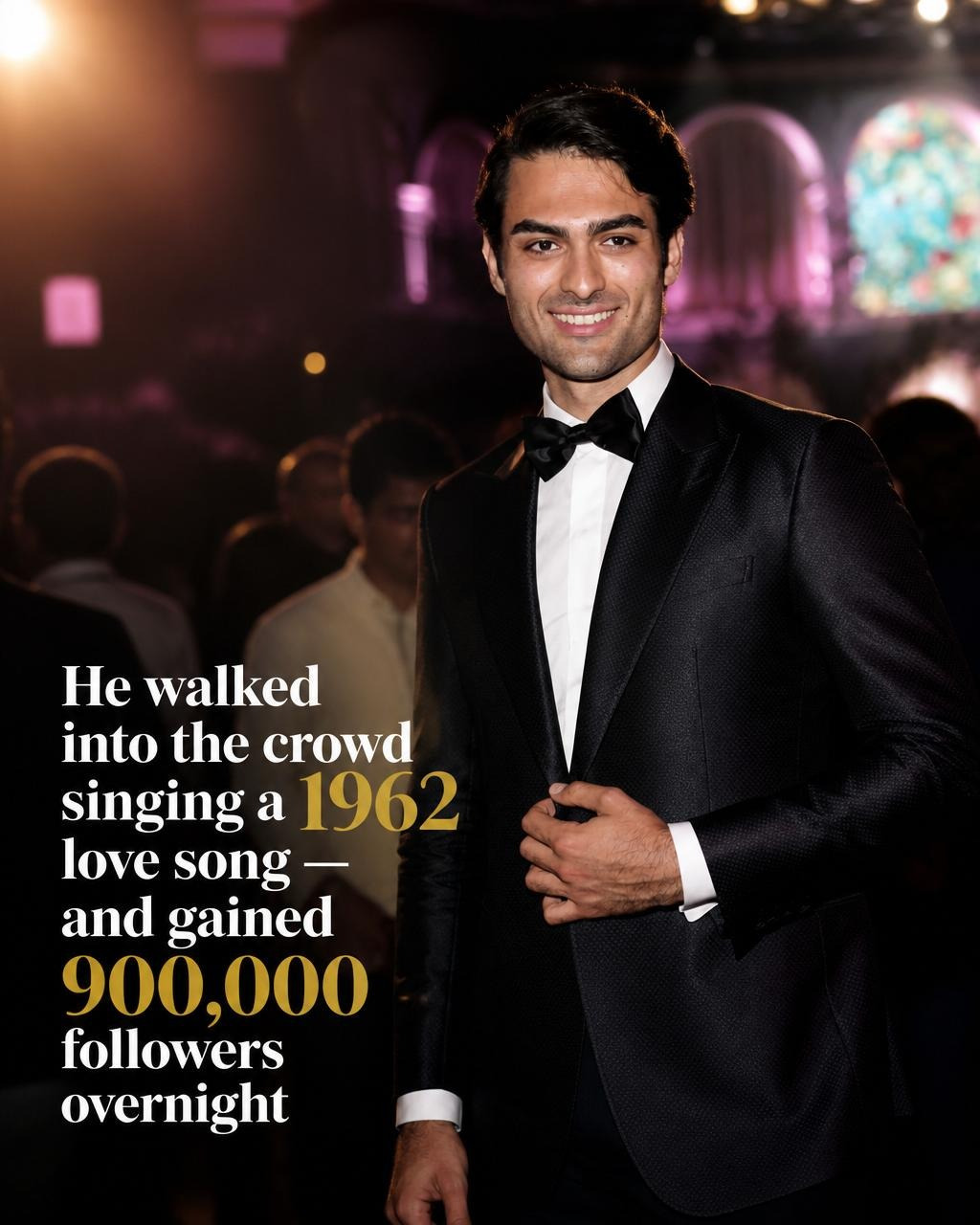
As the first notes of the timeless Italian classic “Quando Quando Quando” echoed through the Quinta Vergara amphitheater, Matteo made a spontaneous decision that changed the energy of the performance. Rather than remaining under the stage lights, he stepped down into the audience, moving between the rows while continuing to sing.

The distance between performer and audience disappeared almost instantly.

Fans reached out to shake his hand as he smiled and sang just a few feet away from them. Thousands of mobile phone lights illuminated the venue, creating a sea of glowing lights that swayed in rhythm with the music. One especially touching moment came when a woman gently kissed Matteo’s hand, a simple gesture that reflected the warmth and affection filling the arena.

It wasn’t an elaborate production or a dramatic vocal finale that captured people’s attention. It was the sincerity of the interaction. Matteo wasn’t simply performing for the audience—he was sharing the song with them.

Within hours, videos from the concert began circulating across social media platforms. Fans who had never seen Matteo perform before started searching for his music, following his accounts, and sharing clips of the unforgettable walk through the crowd.

The numbers told an extraordinary story.

Before the performance, Matteo’s Instagram account had approximately 651,000 followers. By the next morning, that number had climbed past one million. Reports suggested that nearly 900,000 of those new followers came from South America alone, demonstrating the powerful connection he had formed with audiences across the region.

Perhaps the most remarkable part of the story was the song itself.

“Quando Quando Quando” first appeared in 1962, decades before Matteo was born. Yet its romantic melody and timeless charm proved that great music can transcend generations. In the hands of a young performer willing to connect personally with his audience, a classic tune found new life and reached millions once again.

The performance also marked an important milestone in Matteo’s own artistic journey. While comparisons with his father are inevitable, moments like this showed that he is gradually building an identity that belongs entirely to him. His style blends traditional Italian influences with a modern stage presence, allowing longtime fans and younger listeners to meet somewhere in the middle.

When Matteo returned to the Viña del Mar Festival two years later, he arrived not as the son accompanying a global superstar, but as an artist welcomed in his own right. The audience greeted him with thunderous applause, and the festival honored him with both the Silver and Gold Gaviota awards—its highest recognitions.

Andrea Bocelli’s legacy, built over more than 90 million records sold, remains one of the greatest in modern classical and crossover music. Matteo is not trying to recreate that path. Instead, with moments like one unforgettable walk through the crowd during a 62-year-old love song, he is proving that his own story is only just beginning.


0 Shares:
Leave a Reply

Your email address will not be published. Required fields are marked *

You May Also Like
paul
Read More

“So Attitude-y, It Was Almost Intimidating” — Johnny Marr finally opens up about what it was really like playing alongside Paul McCartney, revealing the one astonishing talent people constantly forget about the former The Beatles legend, why McCartney felt like “two musicians in one,” and how a single jam session left Marr permanently rethinking everything he thought he knew about greatness — and the overlooked detail he shares about Paul’s playing is what’s sending longtime fans clicking to hear the story in full.

‘So Attitude-y’: Johnny Marr Speaks on What Playing With Paul McCartney Is Really Like, Names One Thing People…
Elvis
Read More

THE VOW OF SILENCE — ANN-MARGRET FINALLY BREAKS FOR ELVIS PRESLEY Introduction LOS ANGELES — For more than half a century, she kept her lips sealed. Not a whisper, not a confession, not even a nostalgic slip. Ann-Margret, the flame-haired dynamite of the Silver Screen, refused to add fuel to Hollywood’s longest-running rumor: her secret love with Elvis Presley. But now — older, wiser, and finally ready — she steps out of the shadows, not to sell a scandal, but to mourn the only man who ever matched her fire. Her voice trembles as she says the words that instantly send shockwaves through Hollywood’s golden memories: “It was intense… deeply real,” Ann-Margret admits. “What we had was serious, profound, and genuine.” No ghostwriters. No book deal. No TV tell-all. Just a woman revealing the truth she guarded like sacred scripture. THE UNSTOPPABLE SPARK THAT SHOOK 1960s HOLLYWOOD Spring 1963. The sun bounces off chrome cars, gossip magazines scream from every newsstand, and the set of Viva Las Vegas becomes the epicenter of a cultural earthquake. On one side: Elvis Presley, already a living myth — the King of Rock and Roll, adored by millions, worshipped like a deity. On the other: Ann-Margret, the Swedish-born wildcat with a voice like velvet and a soul that defied Hollywood’s fragile femininity. The moment they met, the air cracked. Sparks didn’t fly — they detonated. Crew members later described their chemistry as “radioactive,” “dangerous,” and “too real for the cameras.” Even between takes, their laughter synced, their bodies moved in rhythm, and their energy pulled like magnets. Director George Sidney confirmed what the entire set had already whispered: “They didn’t need to act. The electricity you saw on film—that was them. Completely authentic.” Their on-screen flirtation spilled effortlessly into late-night motorcycle rides through the Nevada desert, intimate dinners far away from the flashbulbs, and long emotional conversations about fear, fame, and the loneliness of living in the spotlight. Ann-Margret eventually admitted: “We were soulmates. He understood me in ways no one else ever did.” But destiny had already written a cruel footnote in their love story. THE HEARTBREAK NO SCRIPT COULD FIX Elvis was already promised — not by contract, but by expectation — to Priscilla Beaulieu, the young woman waiting faithfully at Graceland. Ann-Margret grew up with strict values. Loyalty wasn’t negotiable. She refused to become the woman who broke another heart, even if it shattered her own. And so the affair ended. Not with a fight. Not with betrayal. But with two people letting go of something bigger than either of them could control. Their romantic relationship ended — but their bond never died. THE FLOWERS NO ONE SPOKE ABOUT In the decades that followed, Hollywood moved on. Paparazzi found new obsessions. Fans forgot. Publicity machines buried the truth. But something quiet and haunting endured. Every opening night of Ann-Margret’s career, a bouquet arrived in her dressing room. Always elegant. Always perfect. Always anonymous. No card. No initials. No signature. Just the familiar whisper of memory. She never needed to ask. The tradition lasted more than ten years — until the night everything changed. AUGUST 16, 1977 — THE WORLD STOPS Ann-Margret was preparing for her Lake Tahoe performance when a stagehand leaned in and delivered the sentence that cracked her world open: Elvis Presley was gone. Gone at 42. Gone too soon. Gone with a silence that roared across the planet. Ann-Margret could barely speak when recalling the moment to a close friend: “I couldn’t breathe. It felt like the world stopped.” The crowd waited. The band tuned up. The spotlight dimmed. But she never walked onto the stage that night. Instead, she wept behind the curtain — not as a Hollywood star, but as a woman mourning the man she once loved. Days later, while thousands flocked to Graceland, Ann-Margret slipped quietly through a side entrance. No cameras. No entourage. No reporters. She said goodbye alone. Invisible in a sea of grief. But grieving more deeply than anyone around her could imagine. FOUR DECADES OF LOYALTY AND A PROMISE SHE NEVER BROKE For the next forty years, Ann-Margret did something unheard of in Hollywood: she kept her silence. No tell-all memoir. No scandal-driven interviews. No exploitation of the most explosive love story of her life. She calls her silence “a promise.” “It wasn’t something to sell,” she told a journalist quietly. “It was something to protect.” She later married actor Roger Smith, a man who understood, accepted, and respected the quiet devotion she still carried for Elvis. Their marriage lasted until Smith’s death — a testament to loyalty, maturity, and emotional truth. Even those closest to Elvis confirmed it: Longtime friend and Memphis Mafia member Marty Lacker stated: “She truly loved Elvis — and he loved her. That was real. He just couldn’t live two lives.” Those words—simple, raw, devastating—explain everything better than any tabloid ever could. A SONG THAT NEVER STOPS PLAYING The world spins forward. Graceland welcomes new generations. Hollywood rewrites itself every year. But the story of Elvis and Ann-Margret remains frozen—glowing, untouchable, and strangely eternal. It’s not about scandal. Not about gossip. Not even about forbidden love. It’s about two souls who collided with the force of a supernova and carried the warmth of that collision for decades afterward. Ann-Margret’s silence was never emptiness. It was respect. It was love. It was the last gift she could give the man who once held her heart with the intensity of a thousand spotlights. And now, finally breaking her vow, her truth reveals the quiet heart of a legend we all thought we already knew. Some stories don’t fade. Some flames don’t die. Some promises echo louder than words ever could. And perhaps this one isn’t finished yet. Video

Introduction LOS ANGELES — For more than half a century, she kept her lips sealed. Not a whisper,…
Bon-Jovi
Read More

Bon Jovi roared onto the Live 8 stage in Philadelphia, belting out Livin’ On A Prayer to a sea of hundreds of thousands, while two billion people watched across the globe — a moment so electric that even the Benjamin Franklin Parkway seemed to shake; Jon Bon Jovi’s voice, raw and defiant, carried not just the anthem of a generation but a rallying cry against poverty, echoing like thunder across continents; fans later swore they had never seen the band burn brighter, their fists pumping in unison as if the world itself was daring to hope again; to this day, the performance is remembered not only as rock history, but as the night Bon Jovi turned a concert into a global prayer.

Bon Jovi roared onto the Live 8 stage in Philadelphia and for a few blistering minutes the world…
Vince Gill’s
Read More

Vince Gill and Carrie Underwood should honestly come with a warning label—because when they sing together, it’s addictive, and people can’t stop hitting replay. Their performance of “How Great Thou Art” was so powerful it felt like time stopped. Carrie’s voice floated out like something straight from heaven—soft one second, explosive the next—while Vince’s guitar and harmonies wrapped around her vocals like pure magic. They’ve shared the stage before, but this moment was on a whole different level. By the time Carrie unleashed that final, earth-shaking power note, the entire crowd was on its feet, jaws dropped, and hearts racing. Viewers weren’t just impressed—they were spellbound. No wonder the video blew up on YouTube. With chemistry like that, it’s almost unfair… because once you hear them together, you just can’t stop.

Carrie Underwood stepped into the spotlight in a silver gown, the kind that catches light like stained glass…