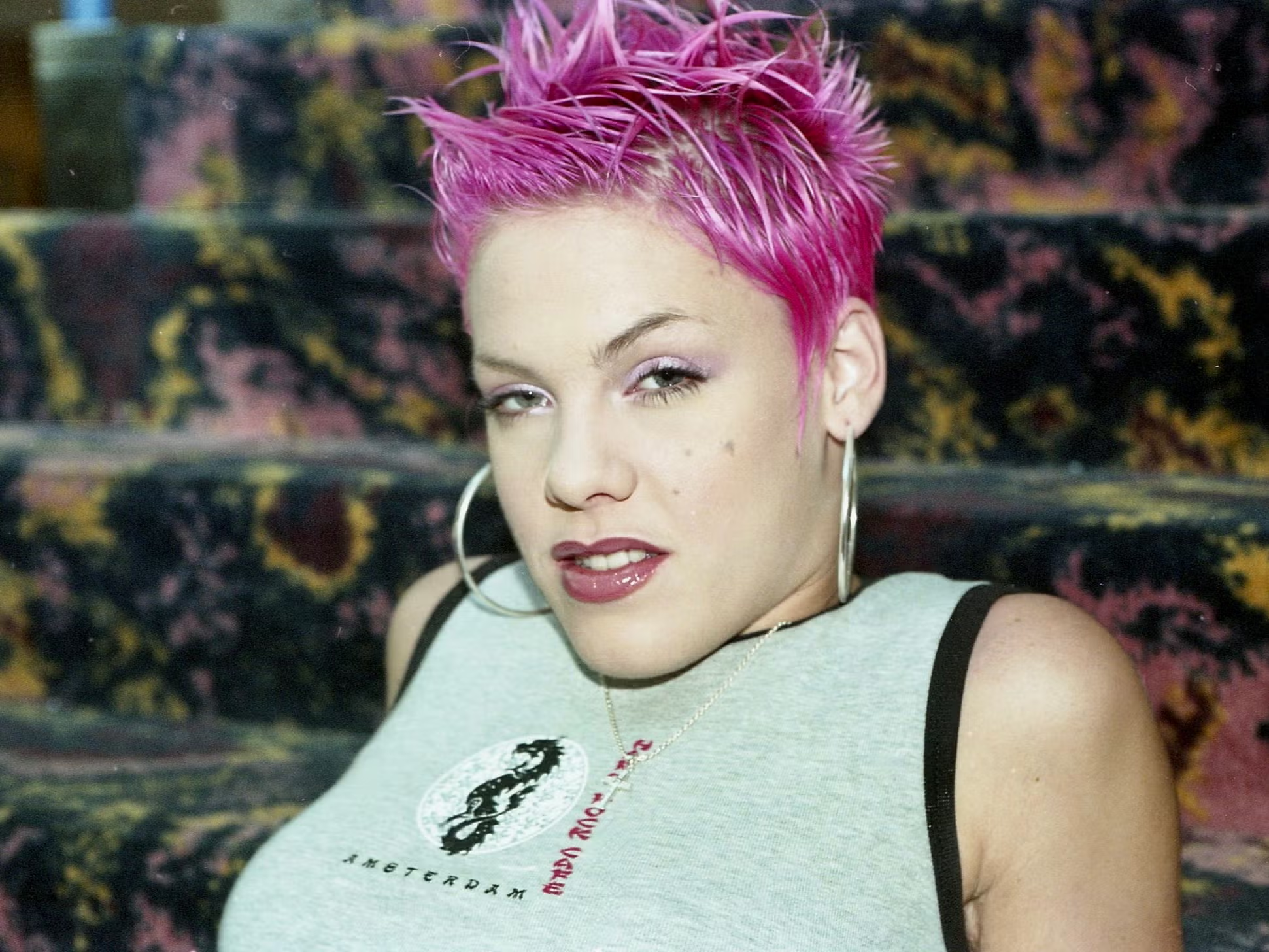
Every artist can point to someone who made them believe there was room to be themselves. For Halsey, one of those defining influences has been P!NK—an artist whose career has long challenged expectations about beauty, femininity, and what it means to succeed in pop music without compromising authenticity.
Long before Halsey established herself as a chart-topping singer and songwriter, she was watching artists who dared to stand apart from the crowd. Among them, P!NK stood out not simply because of her powerful voice or energetic performances, but because she consistently rejected the idea that women in music had to fit into a single mold.
At a time when polished perfection often dominated the industry, P!NK built her career by embracing honesty. Her songs explored heartbreak, self-doubt, resilience, family, and personal growth without hiding behind carefully crafted images. She combined vulnerability with confidence, proving that strength could exist alongside emotion and that authenticity could be more compelling than perfection.

For a young Halsey, that example carried lasting significance.
In interviews over the years, Halsey has spoken about growing up inspired by artists who refused to let stereotypes define them. P!NK’s willingness to challenge conventional beauty standards, question gender expectations, and express herself unapologetically showed that individuality could be an advantage rather than something to hide.
That influence became especially meaningful as Halsey began navigating her own place in the music industry. Entering pop music often comes with unspoken expectations about appearance, personality, and public image. Many emerging artists feel pressure to present a version of themselves that fits established formulas, even when it doesn’t reflect who they truly are.
Instead of following that path, Halsey developed a career built on openness. Her music has explored identity, mental health, relationships, and personal struggles with remarkable honesty, creating a connection with listeners who appreciate artists willing to share both their strengths and vulnerabilities.

While Halsey has always forged her own creative direction, she has acknowledged that seeing artists like P!NK succeed without sacrificing their individuality helped reinforce an important lesson: authenticity doesn’t have to be an obstacle to success—it can become its foundation.
That philosophy has shaped more than Halsey’s music. It is reflected in her evolving style, creative projects, and willingness to speak openly about issues that matter to her. Rather than allowing outside expectations to dictate her identity, she has consistently embraced change, experimentation, and personal growth.
P!NK’s career offers a similar message. Across decades in the spotlight, she has continued to reinvent herself while remaining recognizable for the qualities that first earned audiences’ respect: honesty, resilience, and an unwavering commitment to being herself. Those qualities have inspired countless fans, but they have also left a lasting impression on younger artists searching for their own voices.
The connection between the two performers is not about imitation. Halsey has never attempted to become another version of P!NK. Instead, she represents something equally meaningful—the next generation of artists taking inspiration from those who came before while creating paths that are entirely their own.
For fans, that story serves as a reminder that influence often works quietly. A single artist’s willingness to challenge convention can encourage someone else to do the same years later, creating a ripple effect that extends far beyond one album or one performance.
In the end, P!NK’s legacy is measured not only by her own achievements but also by the confidence she has inspired in others. Halsey’s journey stands as one example of how fearless authenticity can encourage the next generation to embrace who they are, proving that the most enduring influence isn’t about telling people who to be—it’s about showing them they never had to pretend to be anyone else.