How Stevie Nicks Turned “Edge of Seventeen” Into a Timeless Anthem of Grief, Courage, Healing, and the Unbreakable Human Spirit

STEVIE-NICKS

The story behind a song that transformed heartbreak into universal empowerment

Few songs in rock history carry the raw, unfiltered emotion of Stevie Nicks’ Edge of Seventeen. Released in 1981, it wasn’t just another track on her debut solo album — it was a declaration of resilience, a musical diary of grief, and a message of hope that would echo through generations. Behind the driving guitar riff and Nicks’ haunting vocals lies a story of profound loss, personal courage, and the transformative power of music.

The song was born out of a period of unimaginable grief. Stevie had recently lost her uncle Jonathan, a figure who had been both mentor and protector. The pain of his death weighed heavily on her, and in those early moments of songwriting, she discovered that music could be both a refuge and a catharsis. Every lyric in Edge of Seventeen carries a fragment of that sorrow, yet the song also pulses with the defiant energy of someone refusing to be consumed by grief.

What makes the track timeless is not just its narrative of loss, but the way Nicks transforms pain into power. Her voice, simultaneously fragile and commanding, turns vulnerability into strength. The iconic guitar riff, which has become instantly recognizable across decades, mirrors the heartbeat of someone navigating the edge between despair and perseverance. It’s a song that mourns and celebrates at the same time, a paradox that speaks to the human condition itself.

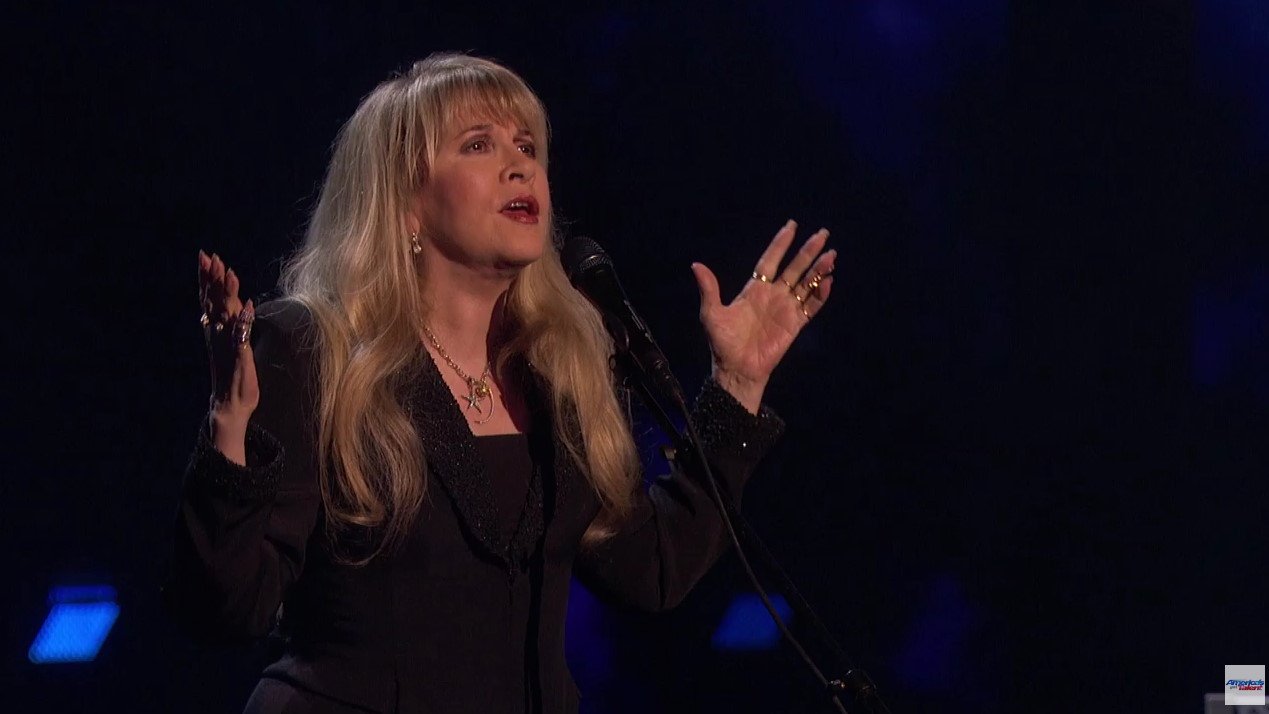
Performances of Edge of Seventeen have only deepened its impact. Nicks’ stage presence — the flowing shawls, the expressive gestures, and that unmistakable voice — turns every rendition into a shared experience. Fans have recounted how the song helped them through their own losses, heartbreaks, and moments of doubt, proving that Nicks’ personal grief resonates universally.

Beyond the personal, Edge of Seventeen also stands as a testament to the unbreakable human spirit. It is a reminder that from sorrow can emerge art that heals, connects, and inspires. Stevie Nicks didn’t just write a song; she created an anthem for anyone who has ever faced the abyss and refused to surrender.

Decades later, the track remains a cultural touchstone — played on radio stations, streamed millions of times online, and covered by artists across genres — because it captures something eternal: the courage to grieve, the resilience to move forward, and the transformative power of music to turn heartbreak into an enduring legacy.

Edge of Seventeen isn’t just a song. It’s a journey through grief, a celebration of courage, and a reminder that even in our darkest moments, the human spirit can shine unbreakably.

0 Shares:
Leave a Reply

Your email address will not be published. Required fields are marked *

You May Also Like
George-Strait
Read More

“THIS WASN’T A DUET. IT WAS A FATHER OPENING THE DOOR.” The crowd thought they were watching a concert. Then George Strait gave a small nod toward the wings. The band held the note. The lights softened. Something shifted in the air. Bubba Strait walked out, calm but steady. In that second, the King of Country wasn’t a legend anymore. He was a father inviting his son into the circle. No screaming. People stood. Quietly. Like they knew this wasn’t for applause. In the seats, Norma Strait rose too. Hand over her heart. Eyes bright. Watching the two men she loves share a song that felt lived-in, not practiced. No tricks. No shine. Just blood and time and a melody that finally found its place. And there’s more to this moment than the stage ever showed.

“Scroll down to the end of the article to listen to music.” This Wasn’t a Duet. It Was…
Vince Gill’s
Read More

Once again, Vince Gill strolls onstage looking like somebody’s dad who heard a guitar riff from across the room and said, “Hold my beer—let me show you how it’s really done.” And then he does exactly that. In a performance people will be talking about for years, Vince tears into the guitar with a level of skill that doesn’t even feel human. Keith Urban and Chris Stapleton are amazing players, no doubt—but Vince steps into a whole different universe. Every phrase he plays is clean, thoughtful, and packed with emotion. His licks twist and turn with crazy precision, and every note feels like it was handpicked for perfection. His solo isn’t just good—it’s the kind of musical magic that leaves the crowd staring, shaking their heads, wondering how one man can play like that.

With a career spanning over 30 years, Keith Urban used his time in the spotlight to create a career that…
neil diamond
Read More

When the lights dimmed at the Hollywood Bowl last Sunday, the crowd expected an ending. They didn’t expect a reckoning. From opposite wings of the stage, two wheelchairs emerged slowly, deliberately — as if time itself had decided to walk with caution. One carried Phil Collins. The other, Neil Diamond. At first, there was confusion. Then recognition. And then something rarer than applause: a stunned, collective silence. Twenty thousand people forgot how to breathe. A single spotlight flickered on. The faint hum of electricity filled the air. Neil leaned toward his microphone first, his voice barely holding steady. “Phil,” he said softly, smiling through the weight of decades, “I didn’t think we’d ever get to do this again.”

HOLLYWOOD BOWL HOLDS ITS BREATH AS PHIL COLLINS AND NEIL DIAMOND SHARE A FINAL, UNFORGETTABLE DUET    …