How Stevie Nicks Turned “Edge of Seventeen” Into a Timeless Anthem of Grief, Courage, Healing, and the Unbreakable Human Spirit

STEVIE-NICKS

The story behind a song that transformed heartbreak into universal empowerment

Few songs in rock history carry the raw, unfiltered emotion of Stevie Nicks’ Edge of Seventeen. Released in 1981, it wasn’t just another track on her debut solo album — it was a declaration of resilience, a musical diary of grief, and a message of hope that would echo through generations. Behind the driving guitar riff and Nicks’ haunting vocals lies a story of profound loss, personal courage, and the transformative power of music.

The song was born out of a period of unimaginable grief. Stevie had recently lost her uncle Jonathan, a figure who had been both mentor and protector. The pain of his death weighed heavily on her, and in those early moments of songwriting, she discovered that music could be both a refuge and a catharsis. Every lyric in Edge of Seventeen carries a fragment of that sorrow, yet the song also pulses with the defiant energy of someone refusing to be consumed by grief.

What makes the track timeless is not just its narrative of loss, but the way Nicks transforms pain into power. Her voice, simultaneously fragile and commanding, turns vulnerability into strength. The iconic guitar riff, which has become instantly recognizable across decades, mirrors the heartbeat of someone navigating the edge between despair and perseverance. It’s a song that mourns and celebrates at the same time, a paradox that speaks to the human condition itself.

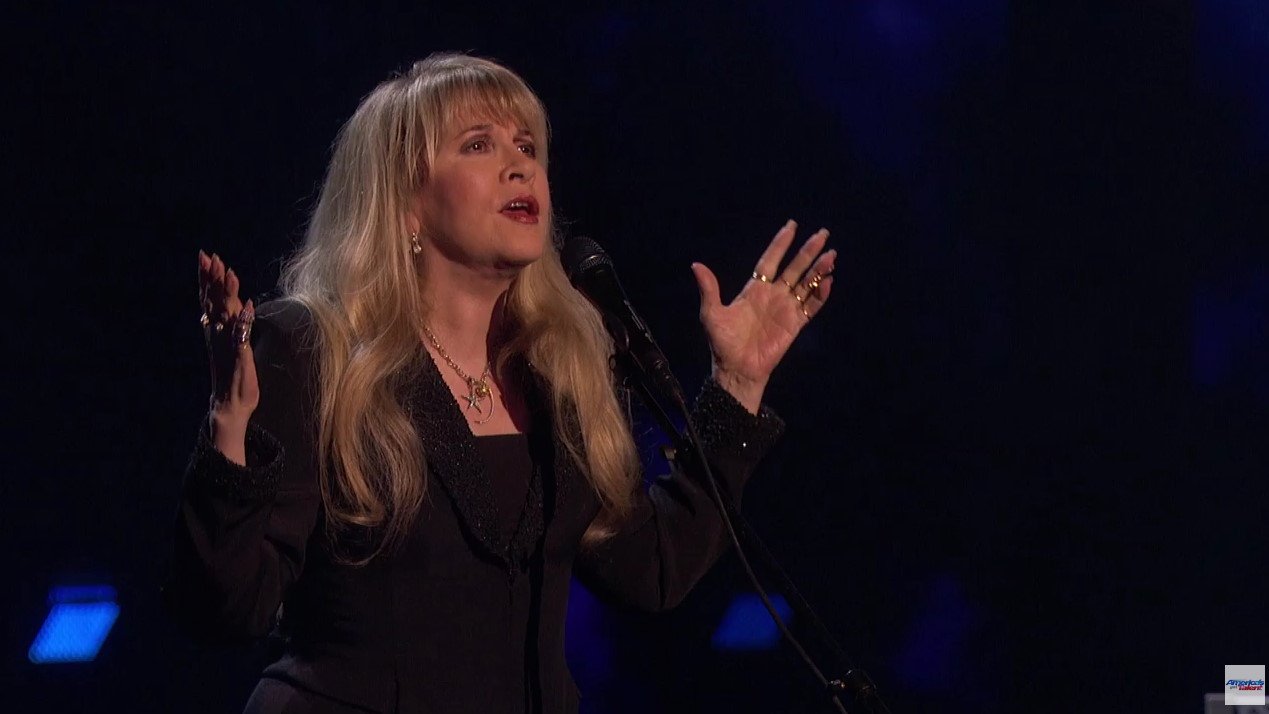
Performances of Edge of Seventeen have only deepened its impact. Nicks’ stage presence — the flowing shawls, the expressive gestures, and that unmistakable voice — turns every rendition into a shared experience. Fans have recounted how the song helped them through their own losses, heartbreaks, and moments of doubt, proving that Nicks’ personal grief resonates universally.

Beyond the personal, Edge of Seventeen also stands as a testament to the unbreakable human spirit. It is a reminder that from sorrow can emerge art that heals, connects, and inspires. Stevie Nicks didn’t just write a song; she created an anthem for anyone who has ever faced the abyss and refused to surrender.

Decades later, the track remains a cultural touchstone — played on radio stations, streamed millions of times online, and covered by artists across genres — because it captures something eternal: the courage to grieve, the resilience to move forward, and the transformative power of music to turn heartbreak into an enduring legacy.

Edge of Seventeen isn’t just a song. It’s a journey through grief, a celebration of courage, and a reminder that even in our darkest moments, the human spirit can shine unbreakably.

0 Shares:
Leave a Reply

Your email address will not be published. Required fields are marked *

You May Also Like
paul
Read More

“He Didn’t Sing the Next Line — He Stepped Back.” In the Middle of a Perfect Paul McCartney Night, One Small Invitation Changed the Air in the Stadium, the Music Fell Quiet, and a Young Voice Took the Space No One Expected, Creating a Moment So Fragile, So Human, That Even a Legend Chose Silence — and Left Thousands Realizing They Had Just Witnessed Something Far Bigger Than a Concert.

It was meant to be another highlight in a career filled with them. Paul McCartney stood at the…
courtney_hadwin
Read More

“She Turned a Street Performance Into a Rock Concert!” Christmas Came Early When Courtney Hadwin Lit up a Town’s Light Switch-on Event With Her Wild, Powerhouse Performance of “Merry X-Mas Everybody” by Slade. Dressed in a Shirt That Literally Sparkled With Lights, the Agt Star Channeled Pure Holiday Chaos and Magic — Dancing, Shouting, and Owning the Mic Like the Born Rockstar She Is. Fans Screamed, Phones Shot Up, and One Commenter Wrote, “Only Courtney Could Make Busking Feel Like Wembley!” Another Said, “Simon Cowell Called Her a Maniac — Now We See Why, and We Love It!” This Wasn’t Just Busking… It Was Christmas on Fire, Hadwin-Style.

Courtney Hadwin once again brought her fiery stage presence to life during a holiday light switch-on event, performing…
yung
Read More

The rumors were swirling, the concern was at a fever pitch after that bizarre and unsettling appearance with rock legends Aerosmith left everyone questioning his well-being. But now, in a defiant roar of raw energy, Yungblud has silenced all the whispers, storming back onto the stage shirtless and unhinged. This wasn’t just a comeback; it was a middle finger to the critics, a visceral explosion of punk spirit that saw him pouring every ounce of his controversial, chaotic soul into the microphone, proving that the same fire that sparked worry is the very inferno that fuels his legendary, unpredictable artistry.

Shirtless Yungblud returns to the stage after sparking concern with his bizarre appearance with Aerosmith at the MTV…
THE MONKEES
Read More

WHEN THE MONKEES CHANGED TELEVISION FOREVER: It was September 12, 1966, when The Monkees first premiered on NBC — a quirky new show about four young dreamers in a make-believe band. No one knew that within months, fiction would become reality. With hits like “I’m a Believer” and “Last Train to Clarksville,” they leapt from TV screens to radio waves, capturing the spirit of a generation. Blending humor, heart, and unforgettable melodies, The Monkees redefined pop entertainment and left a legacy that still dances brightly in the memories of those who grew up singing along.

WHEN THE MONKEES CHANGED TELEVISION FOREVER It was September 12, 1966, when the world first met four mischievous, wide-eyed…