Linda Ronstadt – “Por Un Amor”: A Love Song That Bleeds With Pain

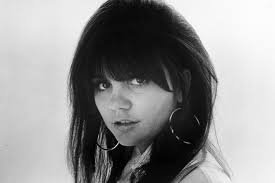
Linda Ronstadt

Hispanic Heritage Month: Linda Ronstadt and Her “Canciones” | Now See Hear!

Introduction

In a career defined by versatility and emotional truth, Linda Ronstadt reached one of her most haunting peaks with Por Un Amor. This was not just another performance—it was a raw confession, sung in Spanish, where love, sacrifice, and heartbreak collide in devastating beauty.

“Por Un Amor,” a classic Mexican bolero, tells the story of someone willing to endure endless suffering for the sake of love. When Linda Ronstadt sings it, the song feels painfully real. Her voice does not overpower the melody; instead, it trembles with restraint. Every phrase sounds like it costs her something emotionally, as if each note pulls directly from personal memory rather than rehearsed technique.

What makes this performance so shocking is its intimacy. Known worldwide as a rock and pop powerhouse, Linda strips away the armor here. Singing in Spanish—a language tied deeply to her Mexican heritage—she reconnects with her roots and reveals a vulnerability rarely seen on mainstream stages at the time. You don’t need to understand every word to feel the weight of the song. Her phrasing, breath control, and quiet pauses speak louder than translation ever could.

Onstage, her expression is calm but heavy with sorrow. There is no dramatics, no exaggerated gestures. Instead, there is stillness—a stillness that draws the audience closer. The pain in “Por Un Amor” is not explosive; it is enduring. It is the kind of heartbreak that lives quietly inside someone long after the relationship has ended.

This performance also challenged expectations. At a time when English-language hits dominated the charts, Linda Ronstadt boldly embraced traditional Latin music, not as a novelty but as something deeply personal. “Por Un Amor” became a bridge between cultures, proving that emotion has no language barrier.

For many fans, this song stands as one of the most emotionally devastating moments of her career. It shows that Linda Ronstadt was not just a singer with an extraordinary voice, but an artist brave enough to stand exposed before her audience. With “Por Un Amor,” she didn’t perform heartbreak—she lived it, if only for a few unforgettable minutes.

Video

0 Shares:
Leave a Reply

Your email address will not be published. Required fields are marked *

You May Also Like
Ignazio Boschetto
Read More

When Silence Spoke Loudest: Ignazio Boschetto’s Quiet Moment During “Grande Amore”It was meant to be a charity concert in Rome, but for those present, it became something far more intimate—a moment that felt less like a performance and more like a memory unfolding in real time. Ignazio Boschetto took the stage that evening with the quiet confidence of someone used to standing in front of audiences. Yet this time, the focus shifted away from him. The spotlight slowly moved toward Michelle Bertolini, his wife, who stepped forward without dramatic introduction or visible tension. The choice of song was not random. “Grande Amore” is not just one of the defining pieces of Ignazio’s career—it is a song that represents a chapter of his artistic identity, one that has been performed across stages around the world. But this time, it returned in a different form, carried by the voice of someone who shares his private world. As the opening notes began, the atmosphere in the room shifted almost instantly. Conversations faded. Movement slowed. The audience seemed to collectively recognize that what they were witnessing was not a standard performance. Ignazio did not join in. Instead, he remained still. With his hands gently resting and his posture calm, he watched and listened. There was no attempt to perform alongside her, no interruption of the moment. His silence became part of the performance itself—an unspoken presence that grounded everything happening on stage. Observers in the room noted how his expression remained steady throughout. It was not detachment, but attention. A quiet acknowledgment of something deeply familiar being reshaped in front of him. Hearing a song so closely tied to his own career, performed by someone he loves, created a layer of meaning that words would likely have interrupted rather than enhanced. As the song progressed, the silence around him seemed to deepen rather than fade. In many concerts, applause or vocal reactions fill the gaps between powerful moments. Here, however, the absence of noise became the defining feature. Every note carried further because nothing competed with it. There was no need for spectacle. No exchange of gestures between performer and audience. Just a shared experience unfolding slowly, almost carefully, between two people and the music that connected them. When the final notes finally faded, the room reportedly remained quiet for a brief moment longer than expected—an instinctive pause, as if no one wanted to break the atmosphere too quickly. What stayed with many in attendance was not a dramatic gesture or a climactic reaction, but the simplicity of Ignazio’s stillness. A silence that did not feel empty, but full—of memory, meaning, and something deeply personal that could not be fully expressed through applause. In the end, it wasn’t just “Grande Amore” that was heard that night. It was what silence can sometimes say when words and music briefly meet in the same space.

It was meant to be a charity concert in Rome, but for those present, it became something far…
John Lennon
Read More

The “Backward” Masterpiece: Why George Harrison Called This Lennon’s Best 🎸 What happens when you take a Beethoven classic and play it entirely in reverse? For John Lennon, it resulted in his final, hauntingly beautiful contribution to Abbey Road. While the rest of the band was drifting apart, this “difficult” harmony became the track George Harrison admired most for its sheer simplicity and soul. Discover the strange origin story of “Because”—a song born from a single piano moment with Yoko Ono that redefined the Beatles’ final sessions.

JOHN LENNON’S LAST GREAT GIFT TO ABBEY ROAD — AND THE QUIET, EERIE REASON GEORGE HARRISON SAID THIS SONG MEANT…