Matteo Bocelli Honors His Father in Spellbinding ‘Con Te Partirò’ Performance

Matteo Bocelli

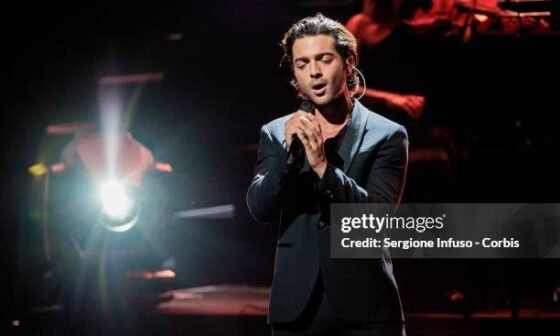
When Matteo Bocelli stepped onto the stage to perform “Con Te Partirò,” the weight of the moment was immediately palpable. The song, forever linked with his father, Andrea Bocelli, carries decades of musical history, emotion, and global recognition. Yet Matteo approached it not as a replica but as a heartfelt homage — a chance to honor the legacy while asserting his own voice.

From the opening notes, it was clear that Matteo’s rendition was deeply personal. He did not attempt to match Andrea’s iconic tenor; instead, he delivered each line with a tender vulnerability, allowing the melody to reflect his own experiences, hopes, and emotions. The audience, aware of the significance, fell into a spellbound silence, captivated by the delicate balance of reverence and individuality.

On the side of the stage, Andrea Bocelli watched, his legendary presence softened by visible emotion. Throughout the performance, he maintained a respectful quiet, absorbing the sound of his son carrying forward a song that had defined his own career. As Matteo’s voice swelled with emotion, Andrea was seen wiping away tears, touched by the authenticity of the tribute. It was a rare glimpse into the profound bond between father and son, expressed not in words but through music.

Reflecting on the performance afterward, Matteo shared, “I never intended to replace my father’s voice… I only wished to honor it.” Those words captured the essence of the moment: a delicate, loving gesture that transcended applause and accolades. It was not about comparison, but about continuity — the passing of a musical torch in the most intimate way possible.

Critics and fans alike were struck by the performance’s emotional resonance. While “Con Te Partirò” is a technically demanding aria, Matteo’s interpretation reminded everyone that music is as much about feeling as technique. Every note was infused with love, respect, and the unmistakable mark of an artist coming into his own. The audience, in turn, responded with a standing ovation that felt almost secondary to the emotional power of the performance.

For the Bocelli family, the event was more than a concert; it was a milestone in a shared journey. Andrea’s legacy is now intertwined with Matteo’s emergence as a voice of his own generation, bridging classical tradition with personal expression. In that sense, the evening symbolized continuity, resilience, and the enduring power of family through music.

In the world of classical and operatic pop, few moments resonate as deeply as this one: a son honoring his father’s achievements while carving out a space for his own artistry. Matteo Bocelli’s rendition of “Con Te Partirò” was not just a performance; it was a living tribute, a reminder that music can convey love, pride, and connection in ways that words alone cannot.

For fans around the world, witnessing this exchange — the combination of Matteo’s emotive voice and Andrea’s visible pride — offered a rare glimpse of legacy in motion, a moment where the stage became a vessel for family, emotion, and timeless music. 🎶👨‍👦❤️

0 Shares:
Leave a Reply

Your email address will not be published. Required fields are marked *

You May Also Like
toby-keith
Read More

THEY TOLD HIM TO SIT DOWN AND SHUT UP. HE STOOD UP AND SANG LOUDER. He wasn’t your typical polished Nashville star with a perfect smile. He was a former oil rig worker. A semi-pro football player. A man who knew the smell of crude oil and the taste of dust better than he knew a red carpet. When the towers fell on 9/11, while the rest of the world was in shock, Toby Keith got angry. He poured that rage onto paper in 20 minutes. He wrote a battle cry, not a lullaby. But the “gatekeepers” hated it. They called it too violent. Too aggressive. A famous news anchor even banned him from a national 4th of July special because his lyrics were “too strong” for polite society. They wanted him to tone it down. They wanted him to apologize for his anger. Toby looked them dead in the eye and said: “No.” He didn’t write it for the critics in their ivory towers. He wrote it for his father, a veteran who lost an eye serving his country. He wrote it for the boys and girls shipping out to foreign sands. When he unleashed “Courtesy of the Red, White and Blue,” it didn’t just top the charts—it exploded. It became the anthem of a wounded nation. The more the industry tried to silence him, the louder the people sang along. He spent his career being the “Big Dog Daddy,” the man who refused to back down. In a world of carefully curated public images, he was a sledgehammer of truth. He played for the troops in the most dangerous war zones when others were too scared to go. He left this world too soon, but he left us with one final lesson: Never apologize for who you are, and never, ever apologize for loving your country.

THEY TOLD HIM TO SIT DOWN AND SHUT UP. HE STOOD UP AND SANG LOUDER. He never looked…
Paul McCartney
Read More

For the first time in history, TIME has finally placed Paul McCartney exactly where he has always belonged. After more than six decades shaping the sound, soul, and emotional memory of modern music, McCartney has been named one of TIME’s 100 Most Influential People of 2025. This isn’t about a viral moment. Not a reinvention. Not nostalgia. It’s about a lifetime of influence — built quietly, patiently, song by song, generation by generation. From melodies that changed pop forever to lyrics that still feel personal decades later, his impact didn’t arrive overnight. It accumulated. It endured. It became part of how the world remembers love, loss, hope, and joy. This recognition feels less like an award — and more like history finally catching up. 🎶✨ 👇 See the full story, reactions, and why this moment matters in the first comment below.

For the first time in history, TIME finally put Paul McCartney’s name where it has always belonged. After…
Gianluca Ginoble
Read More

In 2025, Gianluca Ginoble sang Bridge Over Troubled Water like someone speaking quietly to a friend. No big gestures. No dramatic pauses. Just a steady voice that didn’t try to overpower the storm — it stayed with it. You could see it in his face. Calm. Focused. Almost protective. He didn’t perform the song. He carried it. Gently. Honestly. The hall felt closer somehow. Like the distance between the stage and the seats disappeared for a few minutes. This wasn’t about showing off a voice. It was about offering comfort. And sometimes, that matters more than applause.

There are songs that feel like shelter. Bridge Over Troubled Water is one of them—a piece written not to impress,…