Introduction
The summer of 1977 carried a heaviness that few could name but many could feel. As Elvis Presley released the album Moody Blue in July, fans were unaware that they were holding what would soon be regarded as the final musical farewell of the King of Rock and Roll. What appeared to be another RCA release would later stand as a haunting artifact from a superstar fighting a losing battle against time, health and legend. The blue vinyl shimmered like a quiet message from a man who was slipping beyond the reach of the spotlight that once defined him.
By 1976 the polished world of professional recording studios had become intolerable for Elvis. He would not leave Graceland. The excitement that ignited the global music scene in the 1950s had been dimmed by exhaustion, physical decline and the fog of medication. RCA, determined to gather new material from their most iconic voice, made an unusual decision. If Elvis would not go to the studio then the studio would come to him.
Recording trucks parked outside Graceland. Thick cables ran along the hallways and into the now legendary Jungle Room where Polynesian décor mixed with thick green carpet and carved wooden furniture. This odd and intimate setting became the birthplace of the tracks that formed Moody Blue. The atmosphere was far from a traditional studio. It was personal, unpredictable and quietly fragile. Yet it allowed Elvis to deliver performances that captured him in a raw state no sterile environment could replicate.
Producer Felton Jarvis had witnessed Elvis at his highest peaks and most challenging moments. During these final sessions he saw an artist who required patience and instinct. He later reflected on the difficulty of harnessing Elvis at this time.
“The challenge was getting him in the right headspace. You waited and hoped. But when he stepped up he was still the greatest singer alive.”
The material showed he was right. The title track Moody Blue written by Mark James was an unexpected blend of country pop and disco influence. The sound was bright and lively, sharply contrasting the condition of the man performing it. The song captured a bizarre and exciting energy of the mid seventies while Elvis sang about a complicated woman. Behind every upbeat passage was the unmistakable tension of someone trying to rise above his own limitations.
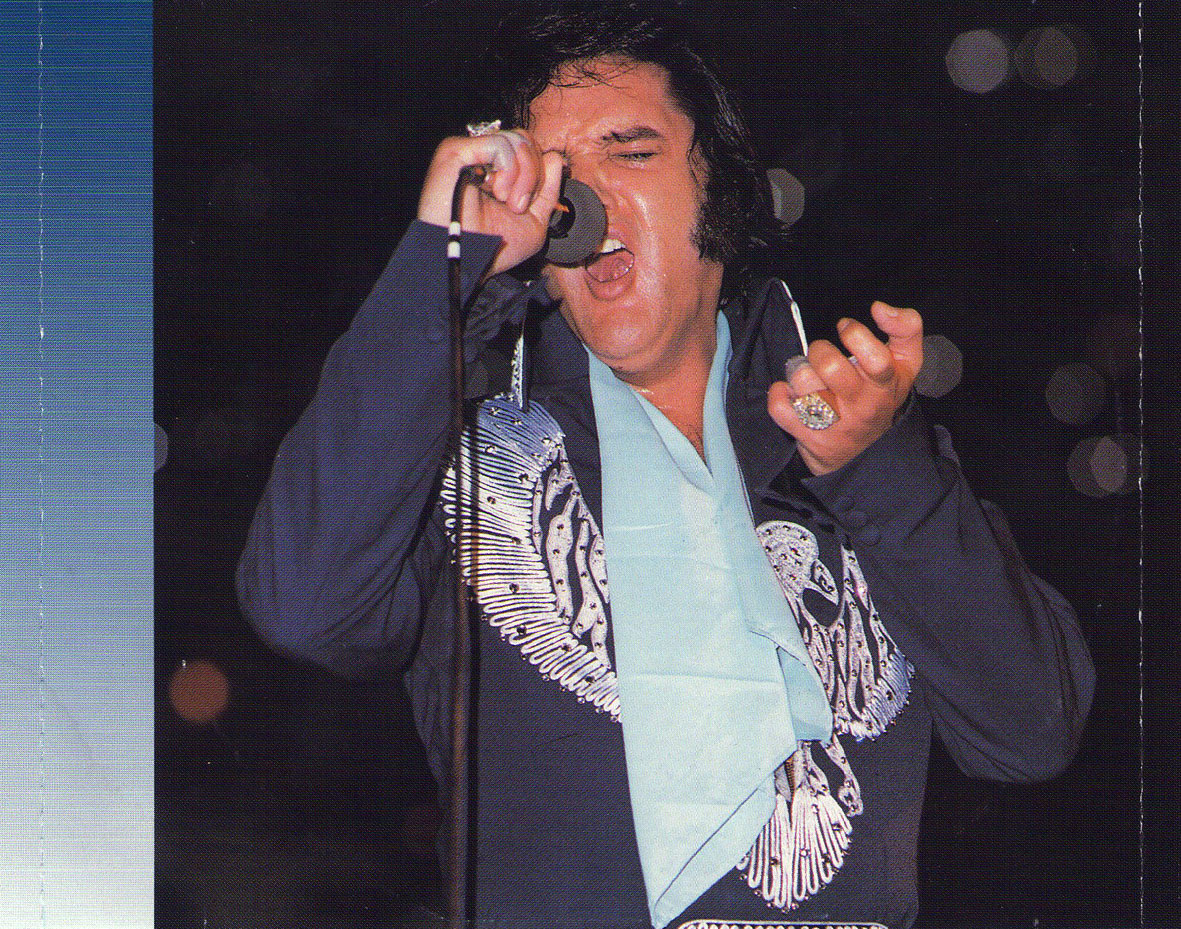
The album was a patchwork of home recordings and live performances taken from his 1977 tour. This combination revealed the duality of Elvis during his final year. There was the reclusive figure who rarely ventured beyond the walls of the Jungle Room. Then there was the powerful entertainer who still stepped onstage determined to give the audience a piece of the old fire. The inclusion of Unchained Melody recorded on the road became the emotional center of the record.
Footage from these shows often portrayed a man struggling with breath and movement. Yet once he sat at the piano a sudden shift occurred. His fingers found the keys and the voice that had shaped an era returned with overwhelming force. Strong clear and impossibly confident the vocals soared despite everything his body endured. Listeners could feel the plea for deliverance in each rising note. For a few minutes the battle between legend and reality disappeared.
Another key track Way Down brought a punch of gospel rock and became the last single released during his lifetime. Heavy bass and confident swagger defined the record. In an eerie twist the song was climbing the charts just as the news of his death broke on August 16 1977. Overnight the vibrant hit transformed into an unplanned eulogy.
Keyboardist David Briggs who had worked closely with Elvis during those years sensed the weight that surrounded him. His reflections exposed the emotional fatigue woven through every late period performance.
“No one matched him. But you could see the light fading. He was tired. Deeply tired.”
The album also became famous for its striking blue vinyl pressing. At the time such a release was unusual and immediately turned the first batch into collectible treasures. The translucent blue seemed to echo the state of Elvis himself. Colorful yet somber revealing yet clouded. The record was more than a format choice. It felt symbolic.
Listening to Moody Blue today removes the sensational headlines and focuses on the man behind them. The creak of the Jungle Room floor remains audible in certain tracks. The quick breaths before choruses are preserved. The imperfections expose the sincerity of someone fighting to keep creating. It may not be his most innovative or polished album but it stands as one of his most human. Each track was a small act of survival.
The compilation reminds listeners that talent can outlast the failing body that carries it. The jumpsuits might have grown too tight. The eyes might have dimmed. The heart might have been weighed down by pressure and illness. Yet the voice remained the anchor until the end. When the needle lifts from the blue vinyl the silence that follows is sharp yet the echoes continue.
Video