Old Interview, New Debate: Paul McCartney’s Comments About John Lennon Stir Conversation Among Beatles Fans

John Lennon

More than four decades after the death of John Lennon, discussion about the legendary musician has once again taken center stage—this time because of a resurfaced interview with his former bandmate Paul McCartney.

The clip, which has recently begun circulating widely online, shows McCartney recounting an old conversation involving Lennon and Yoko Ono. In the interview, McCartney repeated a remark he said Ono once made regarding Lennon’s sexuality. Although the conversation originally took place many years ago, the renewed attention has sparked debate among fans of The Beatles, some of whom believe the topic touches on deeply personal aspects of Lennon’s life.

For many longtime listeners, Lennon remains one of the most iconic and influential figures in modern music. His work both with The Beatles and as a solo artist helped shape generations of musicians. Because of that enduring legacy, discussions about his private life can quickly ignite passionate reactions.

The current controversy stems less from what was said in the interview and more from its sudden return to public view. Online users began sharing clips of McCartney recalling the comment, and before long, social media threads filled with debate. Some fans questioned whether repeating such a personal remark decades after Lennon’s death was appropriate, while others defended McCartney, noting that he was simply recounting a story from the past rather than introducing new speculation.

Adding another layer to the renewed attention is a moment in the interview when McCartney spoke about the days following Lennon’s death in 1980. Lennon was killed in New York City in an event that shocked the world and marked one of the most tragic moments in music history. According to McCartney’s recollection, he received a phone call from Yoko Ono shortly after the tragedy.

While McCartney did not frame the moment as controversial, his memory of that call has captured the curiosity of fans revisiting the interview today. For many listeners, it offered a rare glimpse into how the surviving Beatles processed the loss of their friend and bandmate in the immediate aftermath.

The relationship between McCartney and Lennon has long fascinated music fans. As songwriting partners in The Beatles, they created some of the most celebrated songs in popular music. Their collaboration produced classics that continue to resonate decades later, even as their personal relationship evolved over time.

In the years following the band’s breakup in 1970, both musicians occasionally spoke publicly about their friendship, creative rivalry, and disagreements. Despite periods of tension, McCartney has frequently expressed admiration for Lennon’s talent and influence.

That long and complex history is one reason why any discussion involving the two artists tends to attract intense attention. Fans often view their relationship as one of the defining creative partnerships in music history.

As the interview continues to circulate online, the debate appears less about the original conversation and more about how stories from the past are revisited in the digital age. Clips recorded decades ago can suddenly reappear and reach new audiences who may not have heard them in their original context.

For Beatles fans, the moment serves as a reminder that the lives and legacies of Lennon and McCartney remain deeply intertwined—even now. And as long as people continue to rediscover old interviews, recordings, and memories, conversations about the band that changed popular music are unlikely to fade anytime

0 Shares:
Leave a Reply

Your email address will not be published. Required fields are marked *

You May Also Like
andrea bocelli
Read More

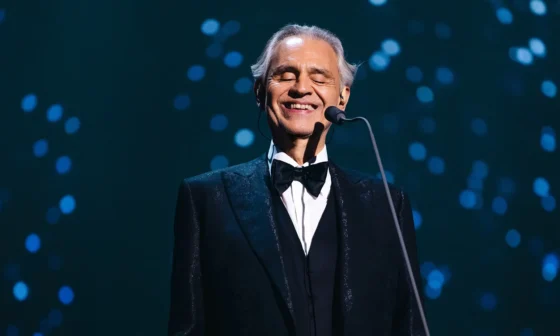
“HE CLOSED HIS EYES — AND HEARD HIS LIFE SINGING BACK TO HIM.” Last night didn’t feel like a concert. It felt like something sacred. The lights at the theater dimmed, and Andrea Bocelli sat quietly in the center of the stage. No grand introduction. No orchestra swelling. Just stillness. Then his three children walked out — calm, almost trembling — and began to sing. It wasn’t opera. It wasn’t performance. It was memory. Each note sounded like a chapter of his life being handed back to him. The years of sacrifice. The long tours. The nights he missed home. And now… the voices he once carried in his arms were carrying him. Andrea didn’t move much. He didn’t need to. His face said everything. A father listening, not as a legend — but as a man. Some songs fill a room. This one filled a lifetime. And when the final harmony faded, you could feel it — not applause, but something deeper. How often does a father get to hear his legacy sing? When Andrea Bocelli Sat Still — And His Three Children Sang the Story Back to Him The atmosphere inside the theater felt unusually intimate that evening. There was no dramatic entrance, no elaborate stage effect designed to command attention. Instead, Andrea Bocelli walked calmly to center stage and took a seat. The crowd greeted him warmly, but something in the air suggested this night would unfold differently. Moments later, his three children stepped into the soft glow of the stage lights. The audience recognized them instantly — not as guests, but as family. Matteo Bocelli, known for his smooth classical-pop crossover style. Amos Bocelli, the quiet musician who often prefers the piano to the spotlight. And young Virginia Bocelli, whose bright voice has already carried remarkable poise for her age. What followed wasn’t a technical showcase. It wasn’t a headline-grabbing spectacle. It was something far more personal. They began to sing — not to impress, but to reflect. The harmonies were gentle. The pacing unhurried. Andrea Bocelli remained seated throughout, hands folded, listening with a stillness that spoke louder than applause. For decades, Andrea Bocelli has been the voice that filled arenas across the world. His renditions of “Con Te Partirò” and sacred arias have defined countless emotional moments for millions. But that night, the direction of the music shifted. The voice that once carried stories now received them. Each child brought something distinct. Matteo’s tone carried maturity and quiet strength. Amos’s musical presence added grounding and depth. Virginia’s voice, clear and unguarded, added innocence that softened the room. Together, they didn’t just perform — they told a story that felt like it belonged to the family before it belonged to the audience. Observers later described Andrea Bocelli’s expression as composed but deeply moved. Not dramatic. Not theatrical. Just present. A father listening to echoes of years gone by — the sacrifices, the discipline, the faith that shaped both career and home life. There was no need for elaborate staging. The weight of the moment carried itself. The applause at the end felt secondary to the silence that came just before it — the kind of silence that happens when people understand they’ve witnessed something rare. Some performances entertain. Others linger. This one felt less like a concert and more like a passing of something invisible — not an ending, but a continuation. A reminder that legacy isn’t always built in stadiums. Sometimes, it’s built in living rooms, at dinner tables, in quiet encouragement behind the scenes. And on this night, Andrea Bocelli didn’t need to sing to be heard.

When Andrea Bocelli Sat Still — And His Three Children Sang the Story Back to Him The atmosphere…