The Night Music Became Family: Kennedy Center Honors Paul McCartney
On a December night, the Kennedy Center glowed not just with light, but with a gentle warmth that felt like a shared embrace. It was not merely an awards ceremony; it had become a cathedral of collective memory. The nation, through its elected leaders and cultural figures, had convened not to honor a rockstar, but to thank a chronicler—the man whose melodies had woven themselves into the very fabric of American life: its weddings, its protests, its triumphs, and its heartbreaks.
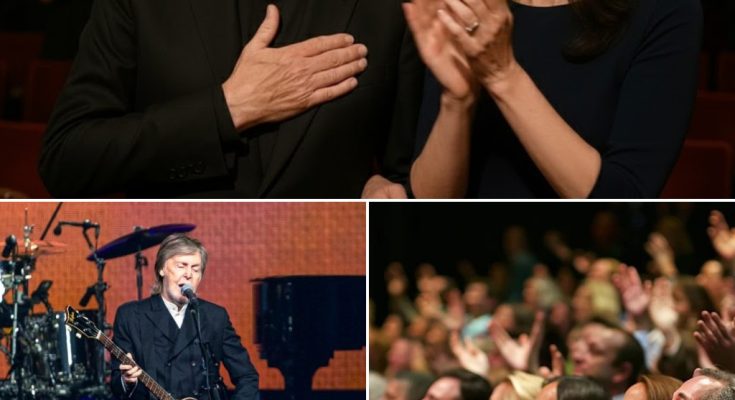
When Paul McCartney, 83, walked into the hall, the transformation was immediate. The myth—the Knight, the Legend, the Last Beatle—dissolved into something more profound. He was, in that moment, simply a **father** and **grandfather**. He walked with his family, his hand occasionally resting on a loved one’s shoulder, his gaze not at the adoring crowd but at the faces of his children and grandchildren, sharing the moment with them. This was not his stage; it was their shared history.
The tributes that night spanned generations. A soul legend sang “Let It Be” with a gospel reverence that felt like a prayer. A young pop ingenue delivered a tender, piano-driven “Blackbird” that connected the Civil Rights-era hope to a new struggle. A hip-hop icon sampled “Yesterday” into a spoken-word piece about legacy. Rock heroes, country stars, and Broadway voices each took a thread from McCartney’s tapestry and showed how it was now woven into theirs.
Each performance was a testament to a simple, staggering truth: **Paul McCartney did not just write the soundtrack to America’s last sixty years; he provided the melodies to its family histories.** The song a couple first danced to, the lullaby sung to a newborn, the anthem of a road trip, the hymn at a funeral—his music was there, personal and indispensable.

The climax came not with a speech, but with a silence. As the final tribute faded, the entire audience—presidents and justices, artists and activists, donors and dreamers—rose as one. It was not a standing ovation; it was a **national affirmation**. A sea of people, from every walk of life and political persuasion, united in gratitude for the beauty he had insisted upon, through all of life’s chaos.
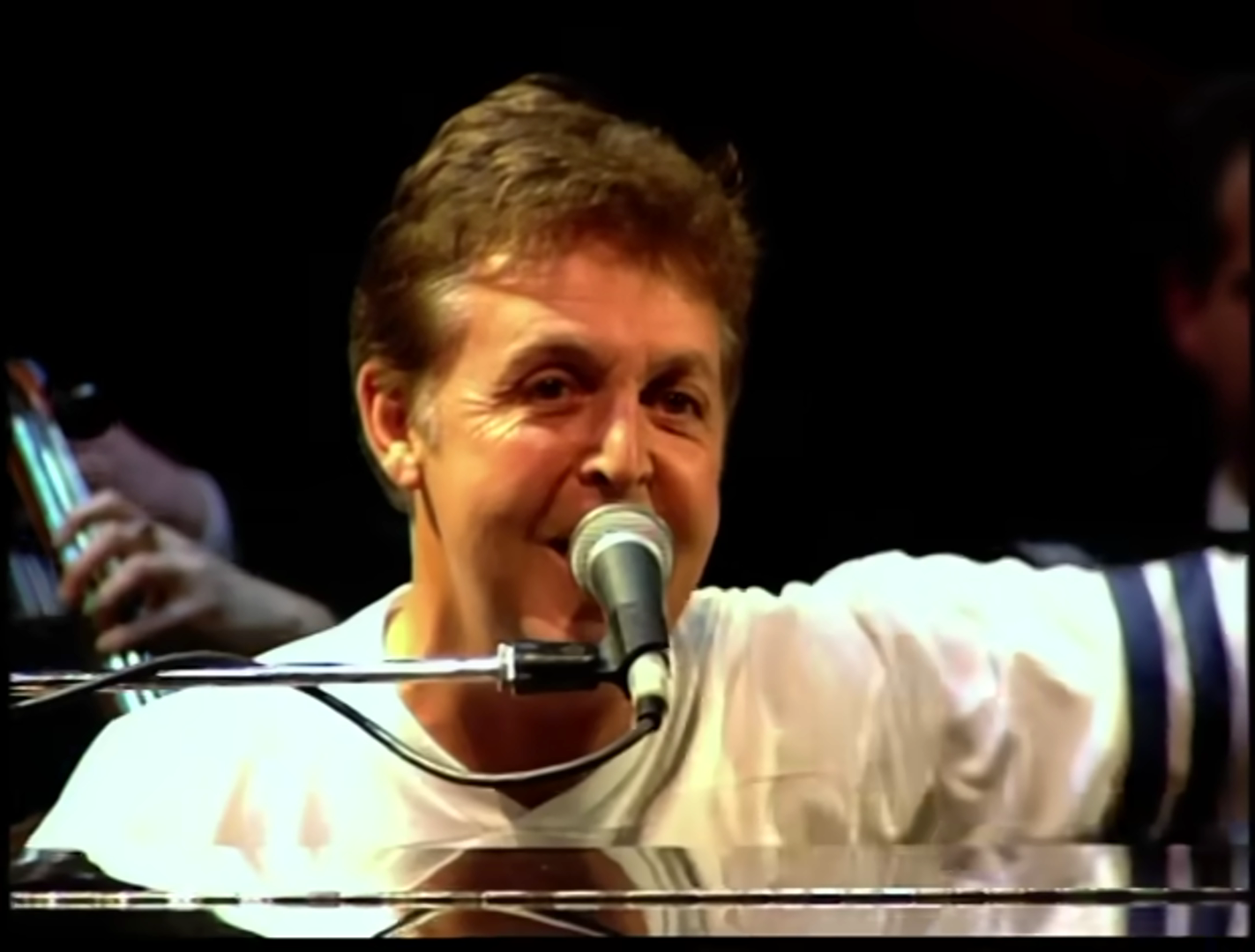
And there, seated with his family, Paul McCartney simply smiled. It was a quiet, humble, almost shy smile. But in it, one could see the full circle of a miraculous journey. He was not bowing to applause. He was witnessing the completion of a cycle. The music, born in the cramped quarters of Liverpool and Hamburg, had traveled across oceans and decades and was now being handed back to him, refined and re-loved, by the children and grandchildren of those who first heard it.
In that quiet smile was the understanding that the work was done, and that it would live on. The songs were no longer his alone. They belonged to the daughter teaching “Hey Jude” to her son, to the band in a garage covering “Helter Skelter,” to the millions for whom a McCartney melody was a bookmark in the story of their lives.
On that night, in the hallowed glow of the Kennedy Center, a lifetime of music softly completed its final transformation. It ceased to be a catalog of hits and became something far more enduring: **a legacy, passed gently from one generation’s hands to the next.