Paul Would Have Done It Better”: The Quiet Respect Behind Lennon and McCartney’s Rivalry

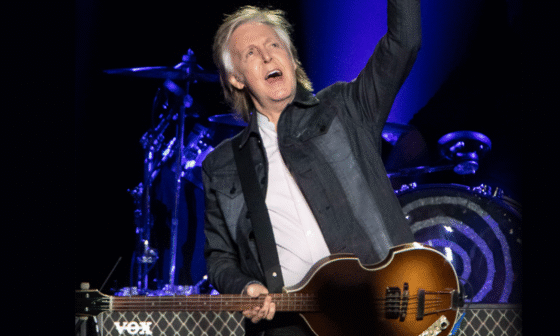
Paul McCartney

The story of The Beatles is often told through contrasts. On one side, John Lennon—direct, restless, and unapologetically raw. On the other, Paul McCartney—melodic, polished, and instinctively attuned to what makes a song linger. Together, they formed one of the most influential songwriting partnerships in modern music. Apart, they became symbols of creative tension and unresolved rivalry.

But every so often, a story surfaces that complicates that narrative.

One such moment centers around Lennon’s reaction to Elected, a glam-rock anthem by Alice Cooper. At the time, Lennon was living in New York, navigating his post-Beatles identity and immersing himself in the music scene of the early 1970s. “Elected” caught his attention—not casually, but obsessively.

According to those present, Lennon played the track repeatedly in his office, pulling people in to listen. It wasn’t unusual for him to fixate on songs he admired, but this moment carried a different weight. As the record spun again and again, it became clear that Lennon wasn’t just enjoying it—he was studying it.

Then came the comment that would linger long after the music stopped.

John Lennon and Paul McCartney perform together on a rooftop, playing guitars and singing into microphones.

As Lennon stepped out of the room, he reportedly remarked that McCartney could have sung it better.

It’s a line that lands with surprising force, especially given the context. By that point, Lennon and McCartney’s relationship had been strained by years of disagreements, both personal and professional. Publicly, their exchanges could be sharp, even dismissive. Compliments, when they came, were often indirect or buried beneath layers of irony.

And yet, this was different.

Lennon’s statement wasn’t framed as self-criticism or comparison in a competitive sense. Instead, it read as a moment of clarity—an acknowledgment of something he recognized but rarely voiced so plainly. McCartney, in Lennon’s eyes, had a particular kind of musical instinct: a blend of melodic intuition and vocal adaptability that could elevate even a gritty rock track like “Elected.”
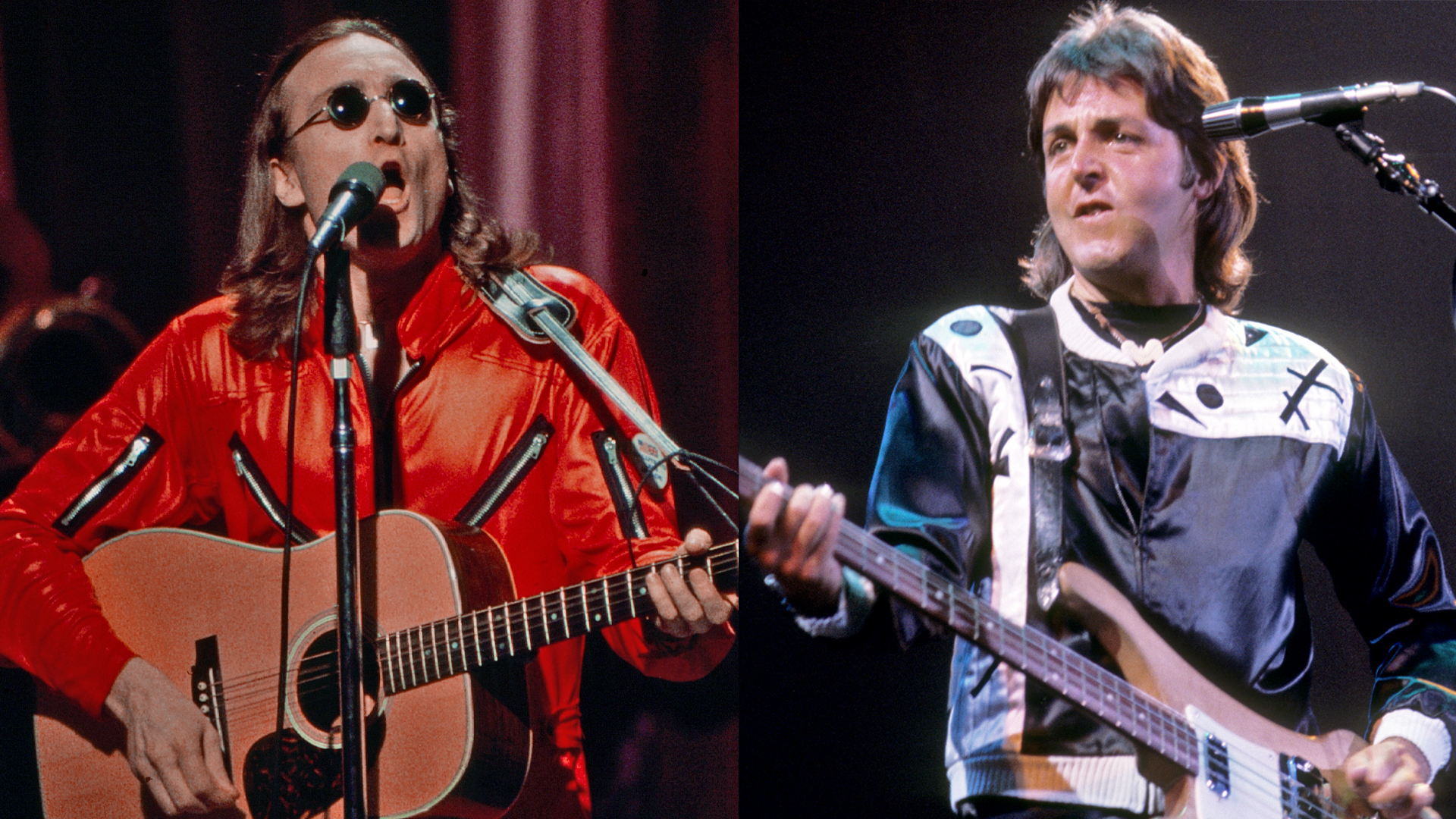
Did John Lennon think Paul McCartney wrote this song to him? | GuitarPlayer

For fans, the remark offers a glimpse into the complexity of their partnership. Lennon and McCartney weren’t simply rivals pushing against each other; they were collaborators who understood each other’s strengths at a fundamental level. Even in periods of distance, that understanding didn’t disappear.

Over time, stories like this have taken on a life of their own. Some interpretations suggest hidden meanings or hint at unrealized plans—a possible reunion, a coded message, something just out of reach. But much of that remains speculative, layered on years after the fact.

What feels more grounded—and perhaps more meaningful—is the simplicity of the moment itself.

In a quiet office, listening to someone else’s song, Lennon recognized something about his former bandmate that still resonated. Not as a competitor, but as a musician whose abilities he respected deeply.

No photo description available.

It’s easy to focus on the fractures that defined the later years of The Beatles. But moments like this remind us that beneath the headlines and disagreements, there was still a shared language—one built on years of creating something extraordinary together.

And sometimes, that language surfaced in the most unexpected ways: a passing comment, a song on repeat, and a rare, unguarded admission.

https://youtu.be/ZQAkjdrgo7M?si=KC5Y0esJ7nf4Dyqr
0 Shares:
Leave a Reply

Your email address will not be published. Required fields are marked *

You May Also Like
gewni-blake
Read More

‘THIS ONE FEELS DIFFERENT’ — BLAKE SHELTON AND GWEN STEFANI’S NEW SONG JUST DROPPED, AND THE FAN REACTION WAS IMMEDIATE AND INTENSE From the very first notes, it was clear this wasn’t meant to be background music. As Blake Shelton and Gwen Stefani blend their voices, the song unfolds slowly, deliberately — built on restrained instrumentation that leaves room for every lyric to land. The words lean into love tested by time, choosing each other again after storms, with lines that feel lived-in rather than polished. Blake’s grounded, weathered tone anchors the track, while Gwen’s voice lifts it with warmth and vulnerability, especially in the chorus where their harmonies briefly overlap and then pull apart. Fans noticed it instantly. Comments poured in within minutes, many saying the song felt “too personal” to ignore. Some praised the honesty in the lyrics, others admitted it caught them off guard emotionally — not because it was dramatic, but because it was quiet and sincere. Listeners pointed out how the performance sounded less like a duet and more like a conversation, one the couple wasn’t trying to dress up. By the final refrain, the reaction was clear: this wasn’t just a collaboration — it felt like a chapter of their story set to music, and fans felt invited into something real.

BLAKE & GWEN JUST SET THE INTERNET ON FIRE — BUT THE REAL SHOCK WAS IN THE FRONT…
Paul McCartney
Read More

“THE BRITISH INVASION DIDN’T JUST CHANGE MUSIC — IT NEARLY ERASED NEIL SEDAKA.” Before The Beatles stormed American radio in 1964, Neil Sedaka was already a hit machine. Songs like “Calendar Girl,” “Happy Birthday Sweet Sixteen,” and “Breaking Up Is Hard to Do” had made him one of pop’s most dependable stars. Then the British Invasion arrived. Almost overnight, the charts changed. Sedaka’s sound faded from radio, and for years it seemed as if one of America’s most successful songwriters had vanished from the spotlight. But he never stopped writing. Sedaka moved to London, started again in smaller venues, and kept composing while the music world raced in new directions. By the mid-1970s, the comeback was undeniable — helped in part by artists like Elton John, who helped bring his songs back to a new generation. In the end, Sedaka and Paul McCartney came to represent the same timeless craft: melody, piano, and the quiet discipline of songwriting. Sometimes the music sounds like it belongs to one era or another. But the best melodies are different. The melody sounded like it belonged to neither of them — and both of them at once.

“Scroll down to the end of the article to listen to music.” When the Sound of Pop Suddenly…
Paul McCartney
Read More

The Night Paul McCartney Didn’t Sing for Applause — How a Last-Minute Change, a Quiet Nod to First Responders, and a Spontaneous After-Midnight Finale at Madison Square Garden Turned the 12-12-12 Concert Into an Unplanned Goodbye to an Era, Leaving Those Who Were There Still Saying Years Later: “You Had to Be in the Room to Feel What Happened Next”

When the Lights Finally Came Up: Paul McCartney and the Night Music Carried New York On December 12,…
Il Volo
Read More

THEY HAD SUNG THIS SONG HUNDREDS OF TIMES. BUT NEVER FOR HER. Il Volo had performed the song across continents. Grand theaters. Royal halls. Sold-out arenas. But tonight, in a small European city, the three of them stopped halfway through the introduction. Piero glanced toward the front row. A woman in her seventies sat alone, clutching a folded program with trembling hands. Written on it, in careful ink, was a name — her husband’s. Ignazio leaned toward Gianluca and whispered something. The orchestra fell silent. “This one,” Piero said softly, “is not for applause tonight.” They sang slower. Stripped of grandeur. No flourish. No drama. Just three voices, holding a memory steady long enough for a woman to breathe through her tears. After the final note, the hall didn’t erupt. It exhaled.

THEY HAD SUNG THIS SONG HUNDREDS OF TIMES. BUT NEVER FOR HER. A Familiar Night, Until the Music…