There are certain songs that never really belong to one moment in time. Real Love is one of them—a piece of music that has carried emotion, history, and connection across decades. But in a recent performance, that connection took on a new and deeply personal meaning.
For the first time in a way that felt complete, Sean Lennon, Julian Lennon, and Dhani Harrison stood side by side, not just as artists, but as the next chapter of a story that began long before them.
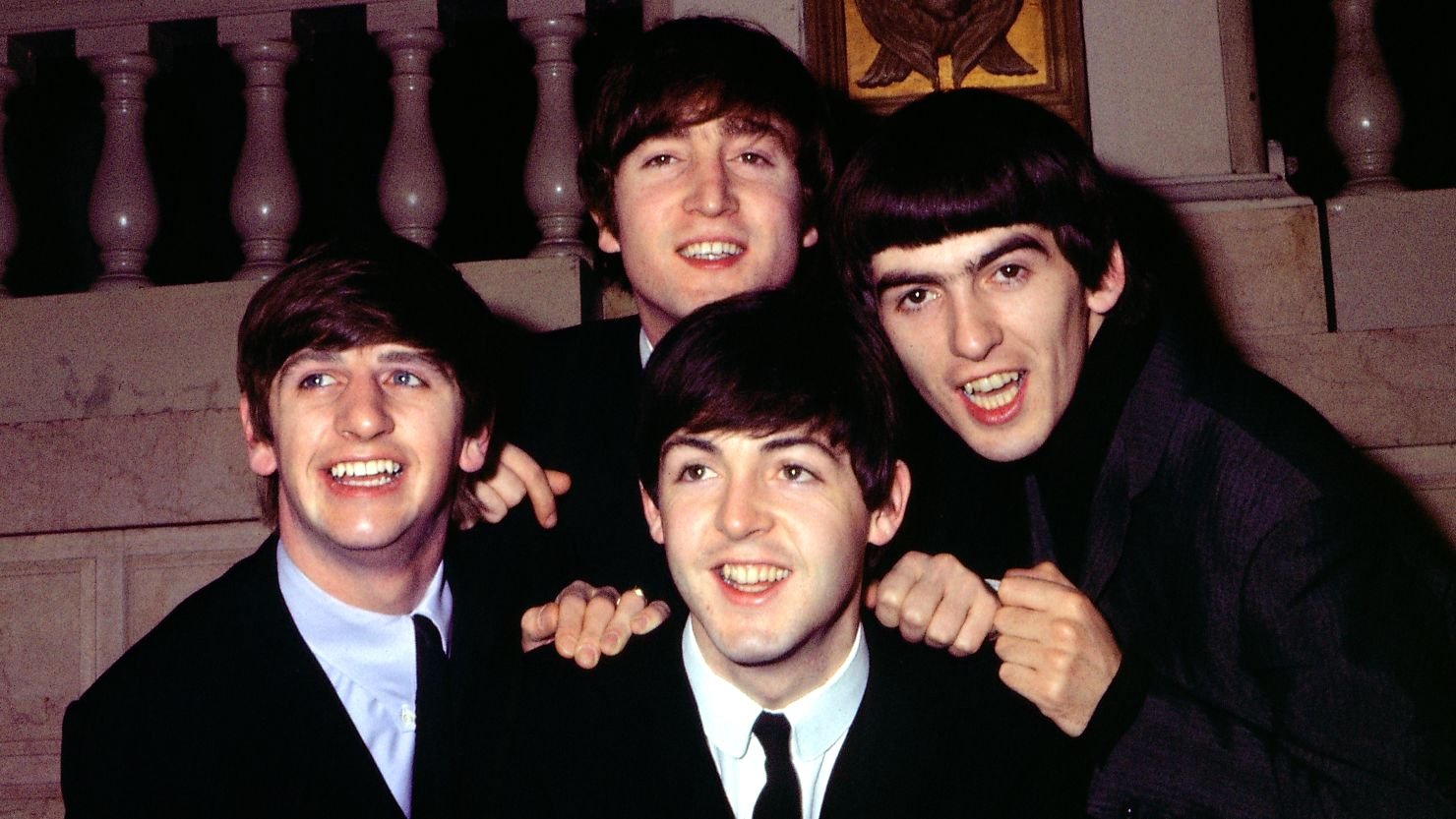
As the opening notes of “Real Love” filled the space, something shifted. It wasn’t the scale of the performance or the setting that made it powerful—it was the presence. Each of them carries a piece of a legacy tied to The Beatles, a band whose influence continues to shape music and culture in ways that are still unfolding.
But what made this moment stand out was how naturally it unfolded.
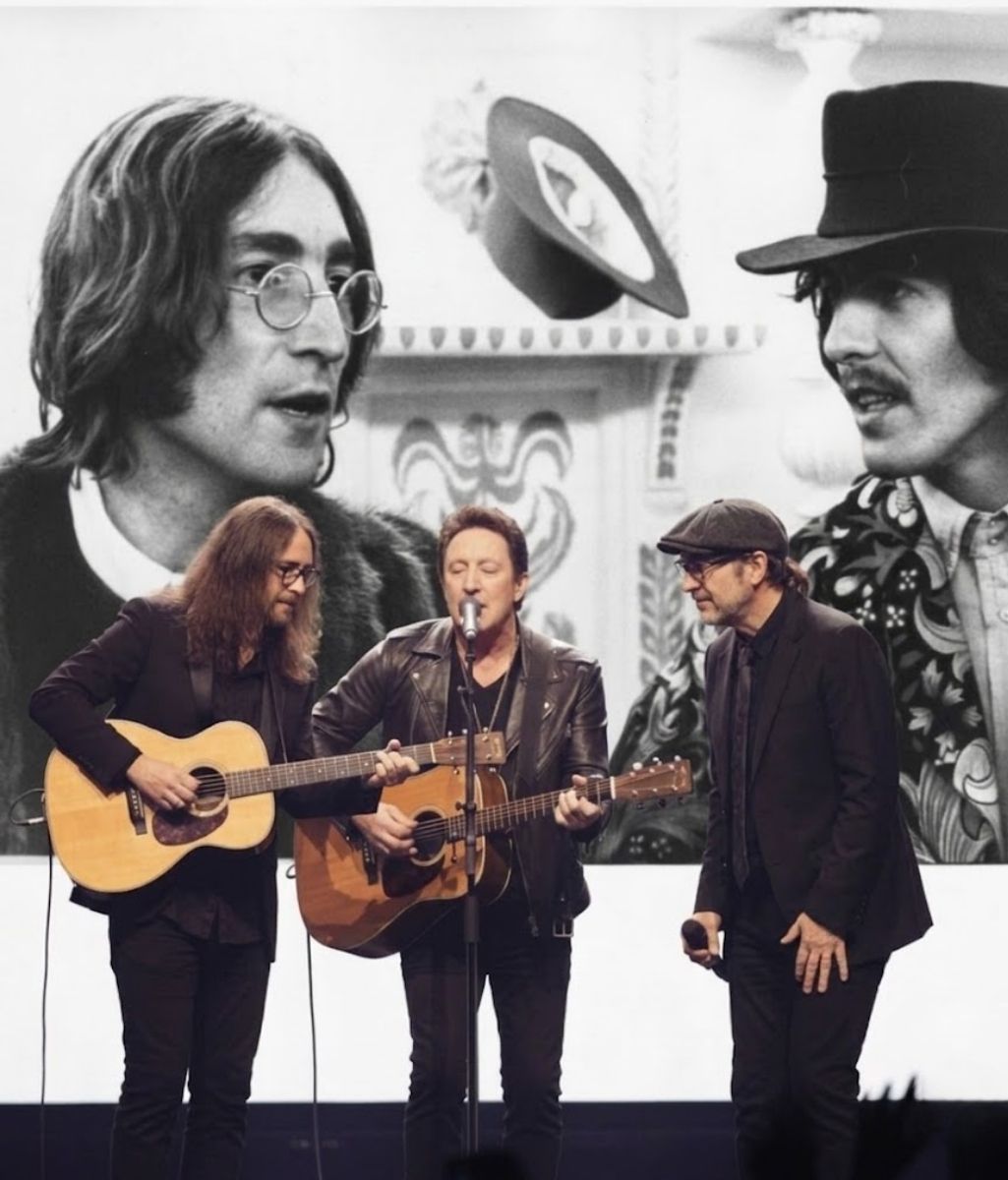
There was no attempt to imitate the past. No effort to recreate something that already holds a permanent place in history. Instead, the performance felt grounded in the present—three voices coming together, shaped by their own experiences, yet connected by something deeper.
For Sean Lennon, whose work often reflects a blend of introspection and experimentation, the song carried a quiet emotional weight. For Julian Lennon, whose relationship with his father’s legacy has been both personal and complex, the moment added another layer of meaning. And for Dhani Harrison, whose musical path has echoed both influence and individuality, it became a bridge between generations.
Together, they didn’t just perform the song—they allowed it to evolve.
Listeners described the atmosphere as almost still, as if time had briefly paused. The familiarity of the melody was there, but it felt different—less like a memory being replayed and more like something continuing forward. The harmonies carried echoes of the past, but they also carried something new: a sense of presence, of being fully in the moment.
That’s what separates this performance from simple tribute.
It wasn’t about looking back with longing. It was about recognizing that the connection forged by the music never disappeared. It simply changed form, moving from one generation to the next.
In many ways, that idea reflects what made The Beatles so enduring in the first place. Their music was never static. It evolved, adapted, and found new meaning depending on who was listening and when. This performance followed that same pattern—not by design, but by nature.
As the final notes faded, what lingered wasn’t just applause or admiration. It was a feeling—subtle, but unmistakable. A reminder that some things don’t need to be preserved to survive. They continue because they are lived, shared, and felt in new ways.
“It’s still here.”
Not just in recordings or history books, but in moments like this—where legacy becomes something alive, something present.
And for those who listened, it didn’t feel like the past returning.
It felt like it never left.