Rejected, Relentless, Unstoppable: How Paul McCartney Turned “No” Into Legacy

paul

Before the fame, before the phenomenon, before The Beatles became a name that reshaped music forever, there was uncertainty—and rejection.

It’s easy to forget now, but in those early days, success was anything but guaranteed. When the band auditioned for Decca Records in 1962, the verdict was blunt: guitar groups were on the way out. The opportunity slipped away, and with it, what many believed was their only real chance.

Group shot of the Beatles, Ringo Starr , George Harrison , Paul McCartney and John Lennon , pictured during a performance on Granada TV's Late Scene...

For most artists, that kind of rejection would have been decisive. A signal to adjust, to compromise, or to walk away entirely.

But not for Paul McCartney.

He didn’t reshape himself to fit expectations. He didn’t dilute the sound he believed in. Instead, he did something far less visible but far more important—he kept going. Writing songs. Refining melodies. Building something that didn’t yet have a place, but felt undeniable all the same.

1st JANUARY: Posed studio session of Paul McCartney from The Beatles in 1965.

That persistence led them to EMI, where producer George Martin recognized something others had missed. It wasn’t just talent—it was potential. And with that single “yes,” everything began to shift.

What followed is the kind of story that now feels almost mythic. Global success. Cultural transformation. Music that continues to define generations. But even within that success, McCartney’s journey didn’t settle into comfort.

After the Beatles disbanded, the question returned in a different form: what comes next?

Rather than rely on his past, Paul chose to build again. With Apple Corps, he explored creative independence. With Wings, he stepped back into the uncertainty of forming something new—risking comparison, criticism, and the weight of expectation.

And once again, he didn’t wait for approval.

Wings wasn’t just a continuation—it was a statement. A reminder that creativity doesn’t end with one chapter. That reinvention isn’t about abandoning the past, but expanding beyond it. Through albums, tours, and evolving sounds, McCartney proved that his success wasn’t tied to a single moment in time. It was rooted in something deeper: consistency, curiosity, and belief.

Over time, something else changed too.

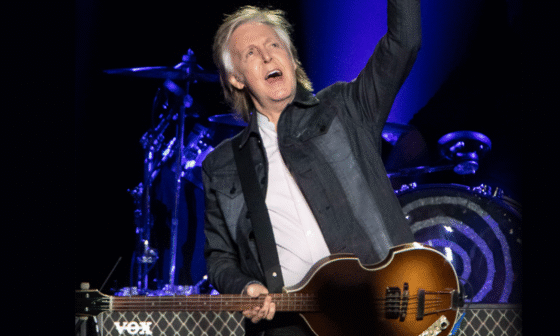
Paul McCartney performs live on stage at Paris La Defense Arena during the 'Got Back!' Tour on December 04, 2024 in Nanterre, France.

He stopped explaining.

There was no longer a need to justify decisions or respond to doubt. The music itself carried the answer. Each song, each performance, each new direction spoke louder than any defense ever could.

And that might be the most defining part of his story.

Rejection didn’t shape Paul McCartney by forcing him to adapt—it strengthened his commitment to remain exactly who he was. Where others saw limits, he saw space. Where others closed doors, he built new ones.

Today, looking back, the irony is impossible to ignore. The artist once told he wasn’t good enough helped define what “good enough” would mean for generations to come.

And it all started with a refusal to accept “no” as the final word.

0 Shares:
Leave a Reply

Your email address will not be published. Required fields are marked *

You May Also Like
Brad Arnold
Read More

SOME GOODBYES AREN’T SUNG — THEY’RE FELT After Brad Arnold’s passing, a reimagined version of “Here Without You” began quietly spreading online — told from his wife’s perspective and reshaping the song into something far more intimate than fans expected, turning what was once an anthem of longing into a deeply personal goodbye that many say is almost too emotional to hear the same way again. And there’s one subtle detail in it that people can’t seem to shake.

A deeply personal and emotional tribute has emerged in the wake of the passing of Brad Arnold, honoring not…
CLIFF Richard
Read More

Today we’re celebrating a true classic — the anniversary of “Travellin’ Light,” the song that marked a turning point for Cliff Richard and The Shadows and helped shape the sound of a brand-new era in British music. Long before stadium tours and decades of hits, this gentle, breezy track showed the world a different side of Cliff — smoother, softer, and backed by the unmistakable magic of The Shadows’ signature guitar work. It was the moment when everything clicked: Hank Marvin’s clean, melodic tone, Bruce Welch’s tight rhythm, Jet Harris’ steady bass, and Cliff’s warm voice blending into something timeless. “Travellin’ Light” didn’t just top charts — it became a milestone, proving that British artists were ready to carve out their own place in music history. For fans who remember the first spin, and new listeners discovering its charm today, the song still feels like a breath of fresh air. It’s simple, iconic, and a reminder of how early British pop found its footing and began to soar. And the surprising story behind how this song was recorded — and why it almost didn’t happen — makes this anniversary even more special

Happy Anniversary to “Travellin’ Light”: The Song That Sent Cliff Richard & The Shadows Into Music History Some…
the cure
Read More

“THIS SHOULD NOT BE POSSIBLE — AND YET HERE WE ARE.” “They’ve aged, sure,” one fan laughed in disbelief, “but close your eyes and it’s The Cure in the ’80s again,” and the moment Robert Smith began to sing, nostalgia gave way to pure shock — “Jesus… that voice hasn’t changed,” someone gasped, followed instantly by another half-joking, half-awed reaction: “This defies science. Explain it.”

“THE NIGHT A SONG ABOUT HIDING PAIN FINALLY STOOD IN THE OPEN.” When The Cure stepped onto the stage at…