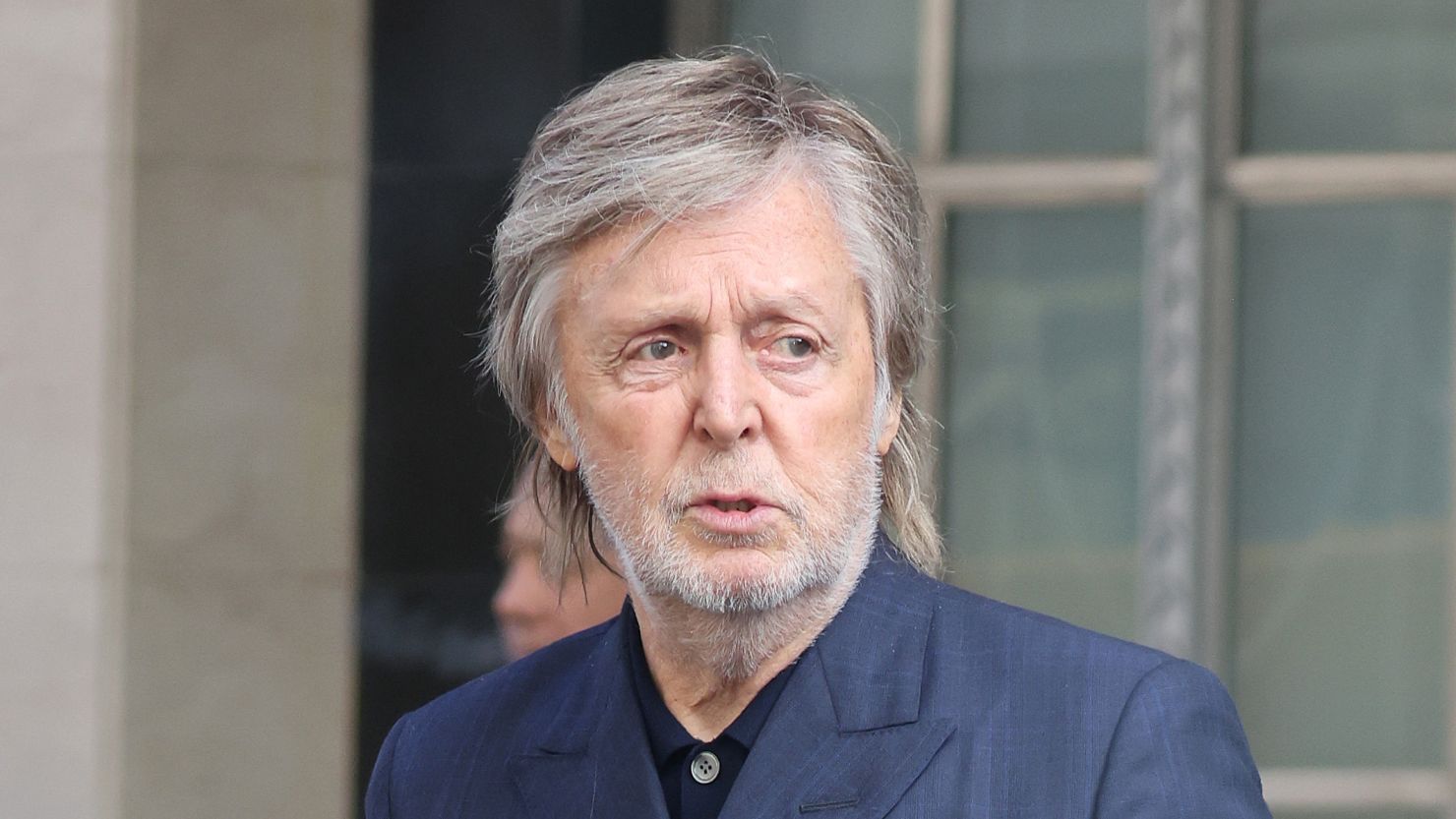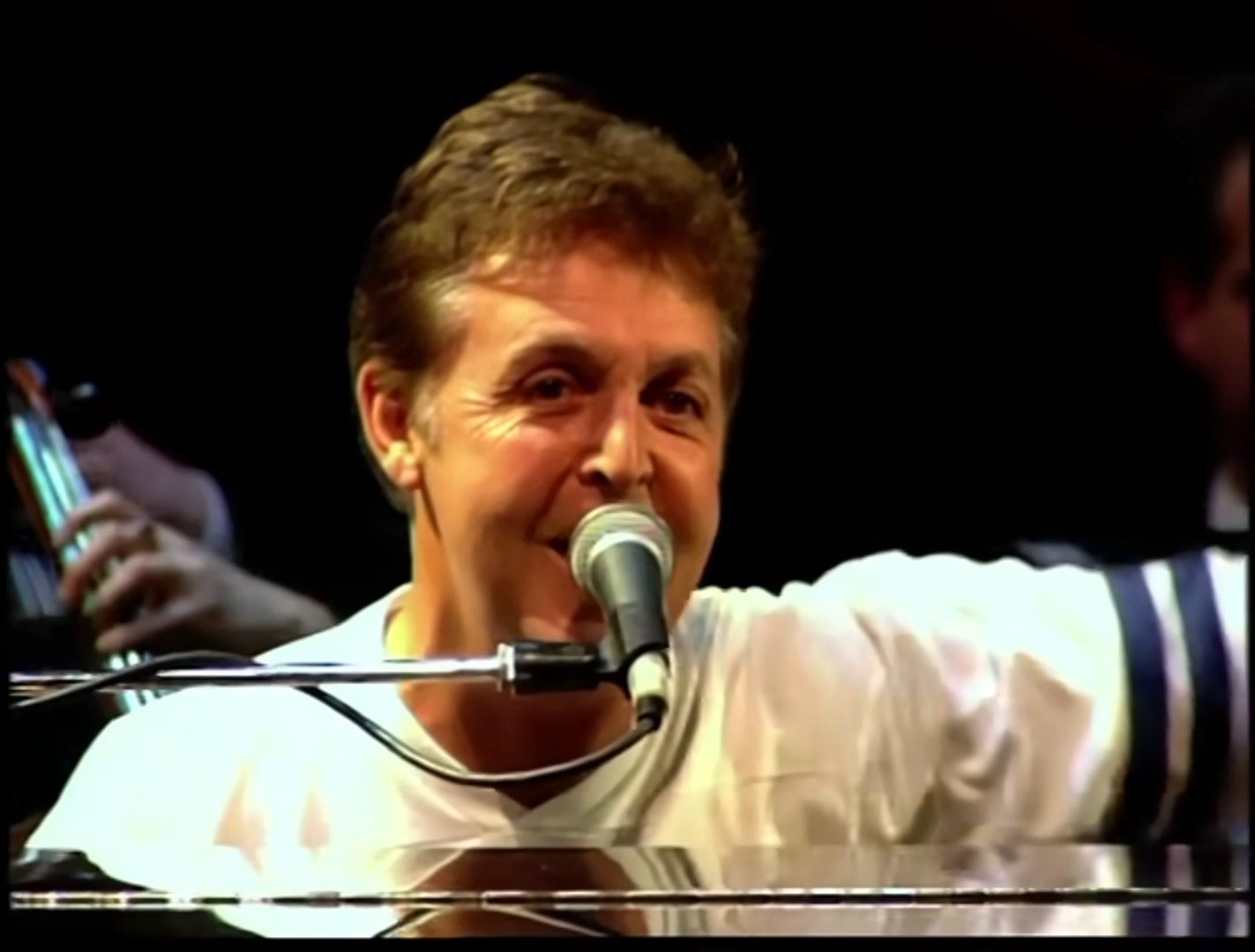
There’s a certain stillness in the image of Paul McCartney sitting on a stone wall, framed by trees and sunlight. It doesn’t feel staged. It doesn’t feel like history. It feels alive—like a quiet moment you’ve somehow stepped into, even decades later.
Captured during the early 1970s, around the time of his Ram era, the photograph reveals a different side of McCartney. Gone is the sharp-suited Beatle at the center of global hysteria. In his place is a man retreating inward, reconnecting with something simpler. The world’s biggest band, The Beatles, had just dissolved, and with it came a need to rediscover purpose—not in crowds, but in quiet.
That shift is what gives the image its lasting power.
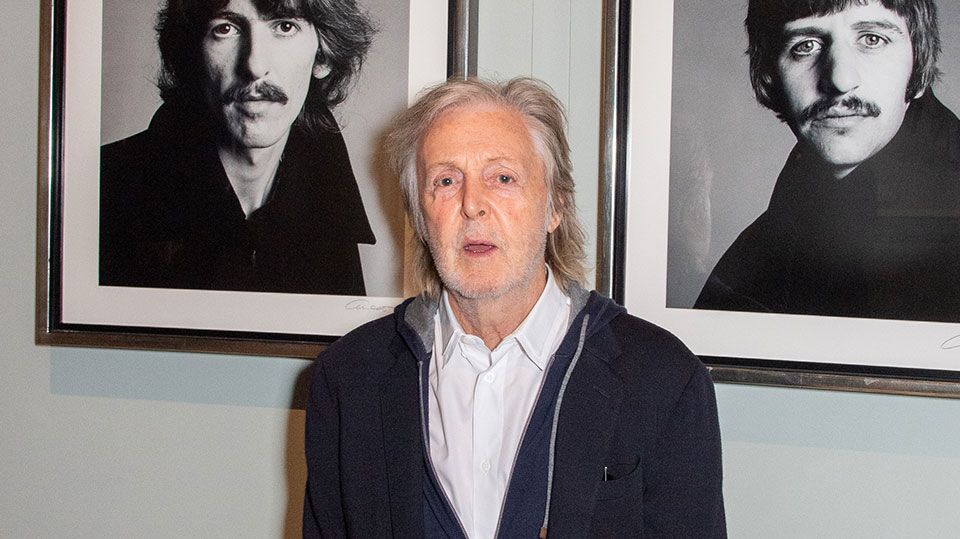
When it resurfaced in 2026, shared across platforms with a simple prompt asking if people still loved Paul McCartney, the response was immediate—and overwhelming. It wasn’t just nostalgia driving it. It was recognition. Across generations, people felt something familiar in that image: a sense of calm, of authenticity, of music that wasn’t chasing anything except truth.
For those who grew up with albums like Sgt. Pepper’s Lonely Hearts Club Band, it was a reminder of where it all began. For younger listeners discovering his work through streaming platforms and modern reinterpretations, it felt like uncovering something untouched by time. In both cases, the reaction was the same—an instinctive “yes,” repeated across comment sections and conversations alike.
But why does it still resonate?
:max_bytes(150000):strip_icc():focal(705x387:707x389)/Paul-McCartney-outside-house-St-Johns-Wood-110325-1a752a81af444340855e4dbc7f215a1e.jpg)
Part of the answer lies in McCartney’s approach to melody. His songs don’t feel constructed in the modern sense. They feel found—like something that was always there, waiting to be shaped into sound. Whether it’s a gentle acoustic line or a sweeping chorus, there’s a humanity in his music that resists fading.
In today’s landscape, where music is often optimized for speed and scale, that humanity stands out. Songs are released, consumed, and replaced at a relentless pace. Yet McCartney’s work endures because it was never built for that cycle. It was built to last—to be returned to, lived with, and understood differently over time.
That’s what the image represents in 2026. Not just a moment from the past, but a reminder of what music can be. A connection rather than a product. A feeling rather than a formula.
There’s also something symbolic about the setting itself. The garden, the stone wall, the natural light—it all suggests a kind of creative refuge. After the intensity of Beatlemania, McCartney didn’t try to replicate the noise. He stepped away from it. And in doing so, he created something equally powerful, but far more personal.
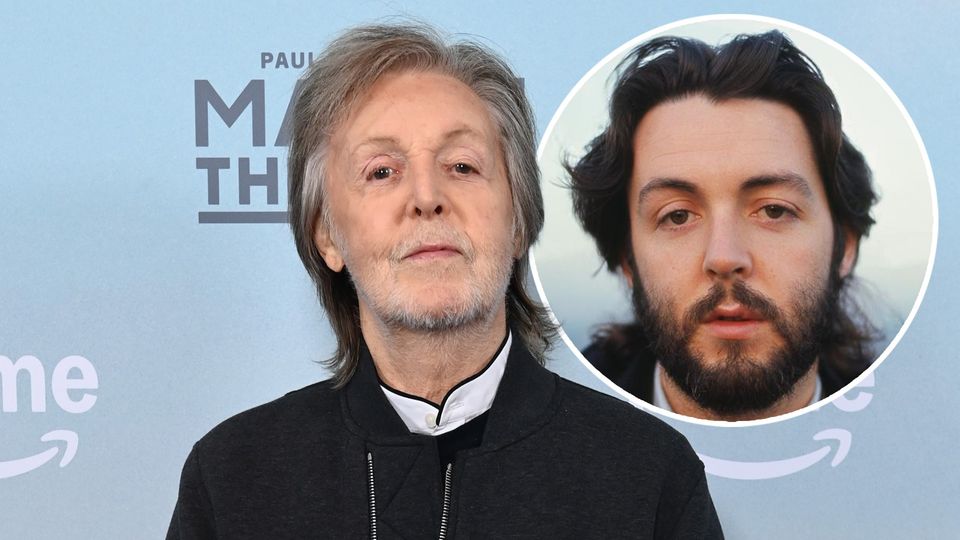
Looking at that photograph now, it’s easy to see why it sparked such a response. It offers more than nostalgia. It offers reassurance—that sincerity still matters, that melody still has meaning, and that even in a rapidly changing world, some things remain beautifully constant.
As the years pass and music continues to evolve, that image of Paul McCartney remains unchanged. A man, a moment, and a quiet promise carried through time.
The garden is still there. The melody still lingers.
And for millions of listeners in 2026, the answer is still yes.