Sophia Liano Shares Her First Reaction After The Voice Elimination — Fans Are Still Talking About Her Battle With Mia Knight

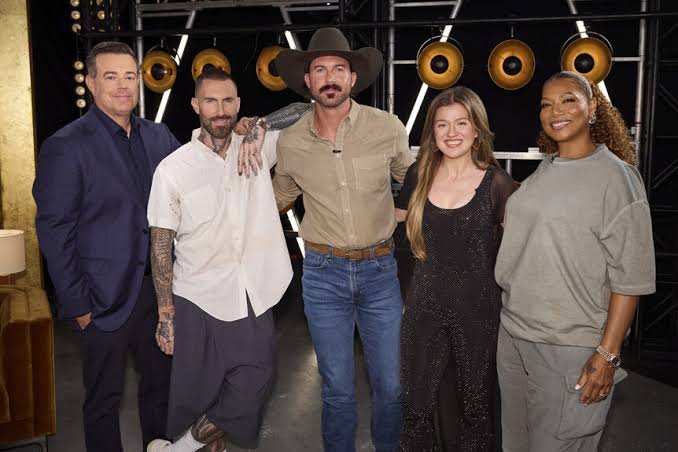
Florida singer Sophia Liano is back in the spotlight after her emotional journey on The Voice Season 30 came to an unexpected end. Her Battle Round performance with 16-year-old Mia Knight had the coaches reacting with amazement, but only one singer could move forward — and Queen Latifah ultimately chose Mia.

The Voice Season 30 Adds Queen Latifah as Coach - AOL

The elimination has sparked discussion among viewers who were impressed by both singers. Now, reports of Sophia’s post-show response are bringing fresh attention to the singer and what may come next in her musical journey.

A powerful performance of “Never Enough”

The two members of Team Queen Latifah faced off with “Never Enough” from The Greatest Showman, a demanding song that calls for strong vocals, control, and emotional delivery.

Both singers rose to the challenge, turning the Battle into a closely watched showdown. The coaches were visibly impressed, and Kelly Clarkson reportedly got out of her chair during the performance. Riley Green praised Sophia’s vocal tone while highlighting Mia’s impressive range.

For Sophia, the performance was an opportunity to showcase her voice on a national stage. Even though the result did not go her way, the attention surrounding the duet suggests that her performance left an impression.

Why Queen Latifah chose Mia Knight

The Voice Season 30 Adds Queen Latifah as Coach – AOL
Holmdel teen Mia Knight makes history on NBC's 'The Voice' - AOL

After hearing both performances, Queen Latifah had to make a difficult decision. She ultimately selected Mia, explaining that the teenager showed confidence and command of the microphone and was ready to continue in the competition.

Mia’s age also became part of the conversation. At just 16, she impressed the coaches with her vocal ability and stage presence. But Queen Latifah did not dismiss Sophia’s performance: she also praised the Florida singer for the way she showcased her talent through the song

The decision meant Sophia was eliminated because no other coach used a save to bring her onto another team. It was a tough outcome after a performance that earned praise from across the coaching panel

Sophia’s first post-elimination response

Following the episode, an online report said Sophia shared a heartfelt message expressing gratitude for the opportunity and encouraging fans to keep following her music. The report described her response as positive and focused on the experience rather than disappointment.

However, the exact wording and details of the “first jaw-dropping video” mentioned in the headline have not been independently confirmed by the sources available here. So it would be premature to claim that Sophia made a specific announcement, criticized the decision, or revealed a major surprise without seeing the original post.

What is clear is that her elimination has not ended the conversation about her performance. The duet continues to draw attention because many viewers saw two strong singers competing for a single place in the next round.

Fans are debating the result

Sophia Liana | Spotify

The result has renewed debate about how difficult Battle Round decisions can be. Queen Latifah had to choose one artist, even though both singers delivered a performance that impressed the panel. Entertainment coverage also highlighted the coaches’ reactions and their praise for the two contestants.

For Sophia, the next chapter could mean releasing new music, performing live, or continuing to build a following beyond the show. Those are possibilities, not confirmed announcements — and fans will need to look to her verified social accounts for any direct update.

One thing is certain: her The Voice journey ended with a memorable performance, and the attention surrounding her elimination has kept her name in the conversation.

 

0 Shares:
Leave a Reply

Your email address will not be published. Required fields are marked *

You May Also Like
lINDA
Read More

Linda Ronstadt – I Knew You When

Introduction When Linda Ronstadt released “I Knew You When” in 1982, she was already one of America’s most celebrated voices—a…
Ignazio Boschetto
Read More

When Silence Spoke Loudest: Ignazio Boschetto’s Quiet Moment During “Grande Amore”It was meant to be a charity concert in Rome, but for those present, it became something far more intimate—a moment that felt less like a performance and more like a memory unfolding in real time. Ignazio Boschetto took the stage that evening with the quiet confidence of someone used to standing in front of audiences. Yet this time, the focus shifted away from him. The spotlight slowly moved toward Michelle Bertolini, his wife, who stepped forward without dramatic introduction or visible tension. The choice of song was not random. “Grande Amore” is not just one of the defining pieces of Ignazio’s career—it is a song that represents a chapter of his artistic identity, one that has been performed across stages around the world. But this time, it returned in a different form, carried by the voice of someone who shares his private world. As the opening notes began, the atmosphere in the room shifted almost instantly. Conversations faded. Movement slowed. The audience seemed to collectively recognize that what they were witnessing was not a standard performance. Ignazio did not join in. Instead, he remained still. With his hands gently resting and his posture calm, he watched and listened. There was no attempt to perform alongside her, no interruption of the moment. His silence became part of the performance itself—an unspoken presence that grounded everything happening on stage. Observers in the room noted how his expression remained steady throughout. It was not detachment, but attention. A quiet acknowledgment of something deeply familiar being reshaped in front of him. Hearing a song so closely tied to his own career, performed by someone he loves, created a layer of meaning that words would likely have interrupted rather than enhanced. As the song progressed, the silence around him seemed to deepen rather than fade. In many concerts, applause or vocal reactions fill the gaps between powerful moments. Here, however, the absence of noise became the defining feature. Every note carried further because nothing competed with it. There was no need for spectacle. No exchange of gestures between performer and audience. Just a shared experience unfolding slowly, almost carefully, between two people and the music that connected them. When the final notes finally faded, the room reportedly remained quiet for a brief moment longer than expected—an instinctive pause, as if no one wanted to break the atmosphere too quickly. What stayed with many in attendance was not a dramatic gesture or a climactic reaction, but the simplicity of Ignazio’s stillness. A silence that did not feel empty, but full—of memory, meaning, and something deeply personal that could not be fully expressed through applause. In the end, it wasn’t just “Grande Amore” that was heard that night. It was what silence can sometimes say when words and music briefly meet in the same space.

It was meant to be a charity concert in Rome, but for those present, it became something far…