Still Unstoppable: Paul McCartney Turns an Intimate Stage Into a Night of Pure Magic

paul

Some artists slow down with time. Others adapt. But Paul McCartney continues to do something far rarer — he transforms every stage he steps onto into something unforgettable, no matter the size.

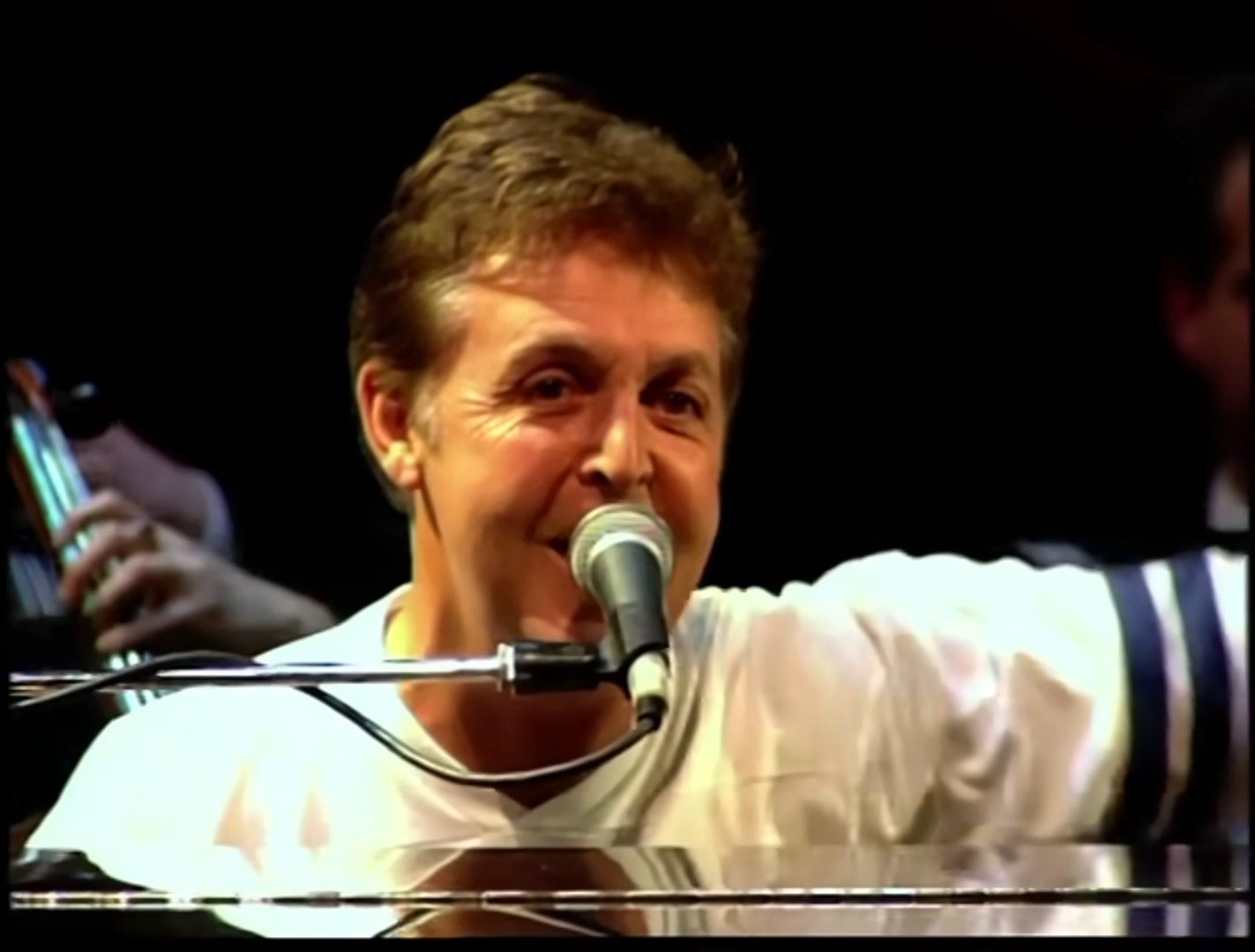
At 83, McCartney recently delivered a performance in a 1,200-seat theatre that felt anything but small. What could have been a quiet, scaled-down appearance instead became a powerful reminder of why his presence in music remains unmatched. The setting may have been intimate, but the atmosphere carried the energy of an arena.

From the moment he appeared, there was a sense that this wouldn’t be just another concert. McCartney moved easily between songs and stories, blending music with personal reflections that gave the night a uniquely human touch. For those in attendance, it wasn’t just about hearing familiar hits — it was about experiencing them in a way that felt immediate and alive.

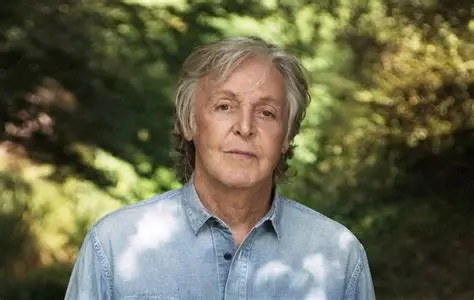
Madrid ecstasy of Paul McCartney, the blessed Beatle

His connection to the audience stood out. Rather than performing at a distance, he seemed to perform with them. Every smile, every laugh, every shared lyric added to the feeling that this was something more than a show — it was a collective moment. Fans who had followed him since his days with The Beatles sat alongside newer listeners, all equally caught up in the experience.

The setlist carried decades of music history, each song bringing its own wave of nostalgia. Yet nothing felt dated. McCartney’s delivery, still full of warmth and clarity, gave each track a renewed sense of purpose. It wasn’t about revisiting the past — it was about keeping it alive in the present.Paul McCartney sings onstage while holding his iconic Höfner violin bass.

Then came the moment that would define the night.

As the opening chords of Hey Jude filled the room, something shifted. The audience didn’t just listen — they became part of the performance. Voices rose together, filling the theatre with a chorus that blurred the line between artist and crowd. For a few minutes, it wasn’t about who was on stage and who was in the seats. It was simply about the music and the shared feeling it created.

Moments like that can’t be scripted. They happen when the right song meets the right audience at the right time. And for McCartney, it’s a reminder of a connection he has spent decades building — one that continues to grow, even now.

What makes this performance especially remarkable isn’t just his longevity, but his consistency. At an age when many have stepped away from the spotlight, McCartney continues to engage, to perform, and to connect. He doesn’t rely on spectacle or nostalgia alone. Instead, he brings authenticity — the same quality that has defined his music from the beginning.

For those lucky enough to be there, the night will likely stay with them for years. Not because it was grand or overwhelming, but because it felt real. A room full of people, a lifetime of songs, and an artist who still knows how to bring them together.

At 83, Paul McCartney isn’t just performing. He’s reminding the world why music matters — and why some voices never fade.

0 Shares:
Leave a Reply

Your email address will not be published. Required fields are marked *

You May Also Like
paul
Read More

Paul McCartney — at 83 — stood before thousands in California and brought Help! back to life for the first time in nearly four decades. A trembling, time-bending moment, as if he were calling out to John Lennon across the night sky. The song they wrote together in 1965 suddenly became a tribute — a bridge to the years when The Beatles were still four, when Lennon was still here, when nothing in music felt lost.

Sir Paul McCartney paid tribute to the late John Lennon by performing Beatles hit Help for the first time in almost four decades amid…
Loretta Lynn’s Granddaughter & Willie Nelson’s Son
Read More

THE NIGHT THE DUET DIED: Loretta Lynn’s Final Song Beside Conway Twitty Still Haunts Country Music — A Goodbye the World Never Saw Coming.Saw Coming. It happened quietly, without fanfare — a night that began like so many others for two of country music’s greatest voices, and ended as the closing chapter of one of its most beloved partnerships. When Loretta Lynn and Conway Twitty walked onstage together for the final time, no one in the crowd realized they were witnessing the end of an era — the night the duet, as the world knew it, died. The year was 1988. The place: Nashville, under the soft golden lights of a charity concert meant to celebrate country’s classic voices. Loretta and Conway had performed together hundreds of times, their chemistry effortless, their harmonies as natural as breathing. But that night, something felt different. Loretta was quiet backstage — not nervous, but reflective. Conway, too, seemed distant, pacing the hallway with a look that friends later described as “heavy, like he knew something the rest of us didn’t.” When they took the stage and the opening chords of “Louisiana Woman, Mississippi Man” filled the room, the audience erupted. For a moment, time folded back — the magic, the laughter, the playful glances that defined their duets returned as if nothing had changed. But then came their final song: a tender, stripped-down version of “Feelins’.” The crowd fell silent as they began. Loretta’s voice quivered just slightly; Conway’s baritone softened, trembling with something unsaid. Their eyes met for a moment longer than the lyrics required — two souls bound by music, by friendship, and by years of shared triumph and heartache. When the last note faded, they didn’t bow. They simply stood there — looking at each other, smiling through tears — before walking offstage hand in hand. “That was the last time,” Loretta later told a friend. “We didn’t know it, but maybe we did. It felt like goodbye.” Just months later, Conway Twitty would fall ill and pass away unexpectedly in 1993, leaving Loretta shattered and the country music world in mourning. She would go on to perform again, of course, but she never truly sang those duets again — not the way she did when Conway was beside her. In the years that followed, that final performance became legend. Fans still trade bootleg tapes and faded photographs, calling it “the night the duet died” — not because the music ended, but because something sacred was lost with it. “There’ll never be another Conway,” Loretta once said softly in an interview. “And there’ll never be another us.” Their voices — hers like sunlight through lace, his like a river’s low hum — blended in a way that no producer could recreate and no era could replace. Together, they gave the world songs of love, laughter, and longing that felt achingly real because they were real. Now, decades later, when “After the Fire Is Gone” or “Feelins’” plays on the radio, there’s a pause — a quiet ache that sweeps over anyone who remembers. Because deep down, everyone who loved them knows: that night in Nashville wasn’t just a concert. It was a farewell whispered in harmony — the sound of two legends singing their last truth. And when they walked off that stage, country music was never the same again. Video

It happened quietly, without fanfare — a night that began like so many others for two of country…
paul
Read More

It should have been just another forgettable night in the early 1980s, but Paul McCartney walked into a small pub, picked up a borrowed guitar — and quietly performed a song he had never played on any stage before, pausing between notes as if testing something unfinished, letting the room listen without knowing what it was holding, a fragile moment so unannounced and unpolished that no one realized its weight until years later, when the silence he left behind began to feel impossible to ignore

Paul McCartney Walked Into a Small Pub — And Nobody Believed It Was Really Him There was no…