The Last Conversation: Paul McCartney, John Lennon, and a Friendship That Endured

paul

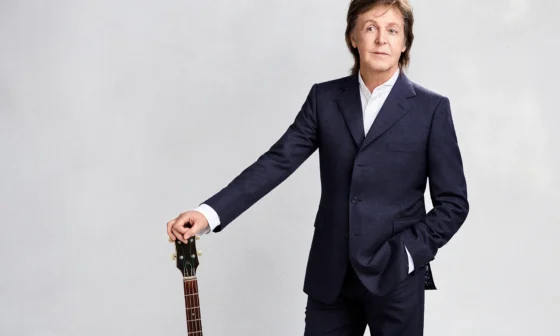
For millions of fans, the story of The Beatles is one of creativity, revolution, and timeless music. But at its heart, it is also the story of a friendship—complex, evolving, and deeply human. And for Paul McCartney, that story carries a chapter that still feels unfinished.

On December 8, 1980, the world lost John Lennon in an act of violence that stunned not just the music community, but the entire world. For McCartney, the news was almost impossible to comprehend. Over the years, he has described the moment as surreal, something that never fully settled into reality. The shock wasn’t just about losing a musical partner—it was about losing someone who had been central to his life since his youth.

Their relationship had not always been easy. After the Beatles disbanded in 1970, tensions between McCartney and Lennon became public, marked by sharp words and emotional distance. For a time, it seemed as though their bond had been overshadowed by disagreement and misunderstanding.

But like many long friendships, theirs was not defined by a single phase.

In the years before Lennon’s death, the two had begun to reconnect. The intensity of their earlier conflicts softened, replaced by something quieter and more reflective. It wasn’t a dramatic reconciliation played out in public—it was gradual, personal, and real.

At the center of this renewed connection was a simple but meaningful moment: a phone call.

McCartney has often spoken about their final conversation, describing it as warm, relaxed, and filled with the kind of ease that had once defined their friendship. There was no lingering bitterness, no unresolved argument. Instead, there was laughter, familiarity, and a sense that, despite everything, they had found their way back to each other.

That memory would become invaluable.

When Lennon died, the weight of grief could have been compounded by regret—by thoughts of things left unsaid or wounds left unhealed. But that final conversation changed everything. It gave McCartney something to hold onto, a reminder that their story had not ended in conflict, but in understanding.

It’s a quiet detail, yet it carries immense emotional significance. For McCartney, it represents closure in a situation where closure is almost impossible. It’s the difference between remembering a fractured relationship and remembering a restored one.

Fans often look for dramatic final words or hidden revelations, hoping for a single phrase that captures the depth of Lennon and McCartney’s bond. But the truth may be less about specific words and more about the feeling they shared in that moment.

A sense of peace. A sense of connection. A sense that, even after everything, the friendship remained intact.

Decades later, that bond continues to resonate—not just through the music they created together, but through the humanity of their story. It reminds us that relationships can endure conflict, that reconciliation is possible, and that sometimes, the most meaningful endings are the quiet ones.

For Paul McCartney, the loss of John Lennon will always be profound. But so, too, is the comfort of knowing that their final goodbye was not really a goodbye at all—just a conversation between two friends who, in the end, found their way back to each other.

0 Shares:
Leave a Reply

Your email address will not be published. Required fields are marked *

You May Also Like
Reba
Read More

“I… I Didn’t Know My Heart Could Stop Like That.” Reba Mcentire’s Voice Cracked As Her Chair Finished Turning, And For A Breathless Second, The Entire Studio Forgot It Was Watching The Voice. The Applause Faded. The Lights Felt Softer. And There He Stood — Rex Linn, Her Fiancé, Gripping His Guitar, Eyes Shining, Having Just Sung His Way Straight Into The One Place No Competition Could Reach. Reba Covered Her Mouth, Shaking Her Head In Disbelief. “Rex… What Are You Doing To Me?” She Whispered, Already In Tears. He Smiled Gently And Answered, “I Just Needed You To Hear Me — The Way You Always Hear Everyone Else.” What Began As A Blind Audition Dissolved Into Something Unbearably Intimate. No Strategy. No Judges’ Banter. Just A Woman Realizing The Voice She’d Fallen In Love With Was Standing In Front Of Her, Exposed And Honest, On National Television. Fans Are Calling It The Most Emotional Twist In The Show’s History — Because It Wasn’t A Performance Meant To Win.

Reba McEntire‘s sitcom Happy’s Place films not too far from where The Voice’s studio sits, so it makes sense that her…
Bruce
Read More

Immediately after Charlie Kirk passed away, Bruce Springsteen stepped forward, pledging to cover all living and educational expenses for Kirk’s two children. This act not only helped ease the burden on Kirk’s family during this time of grief, but also stirred social media, as countless people expressed their admiration for Bruce Springsteen’s compassion in this tearful moment…

Bruce Springsteen’s Heartfelt Gesture: Covering Living and Educational Expenses for Charlie Kirk’s Children In an act of compassion…
toby-keith
Read More

THEY TOLD HIM TO SIT DOWN AND SHUT UP. HE STOOD UP AND SANG LOUDER. He wasn’t your typical polished Nashville star with a perfect smile. He was a former oil rig worker. A semi-pro football player. A man who knew the smell of crude oil and the taste of dust better than he knew a red carpet. When the towers fell on 9/11, while the rest of the world was in shock, Toby Keith got angry. He poured that rage onto paper in 20 minutes. He wrote a battle cry, not a lullaby. But the “gatekeepers” hated it. They called it too violent. Too aggressive. A famous news anchor even banned him from a national 4th of July special because his lyrics were “too strong” for polite society. They wanted him to tone it down. They wanted him to apologize for his anger. Toby looked them dead in the eye and said: “No.” He didn’t write it for the critics in their ivory towers. He wrote it for his father, a veteran who lost an eye serving his country. He wrote it for the boys and girls shipping out to foreign sands. When he unleashed “Courtesy of the Red, White and Blue,” it didn’t just top the charts—it exploded. It became the anthem of a wounded nation. The more the industry tried to silence him, the louder the people sang along. He spent his career being the “Big Dog Daddy,” the man who refused to back down. In a world of carefully curated public images, he was a sledgehammer of truth. He played for the troops in the most dangerous war zones when others were too scared to go. He left this world too soon, but he left us with one final lesson: Never apologize for who you are, and never, ever apologize for loving your country.

THEY TOLD HIM TO SIT DOWN AND SHUT UP. HE STOOD UP AND SANG LOUDER. He never looked…