Introduction
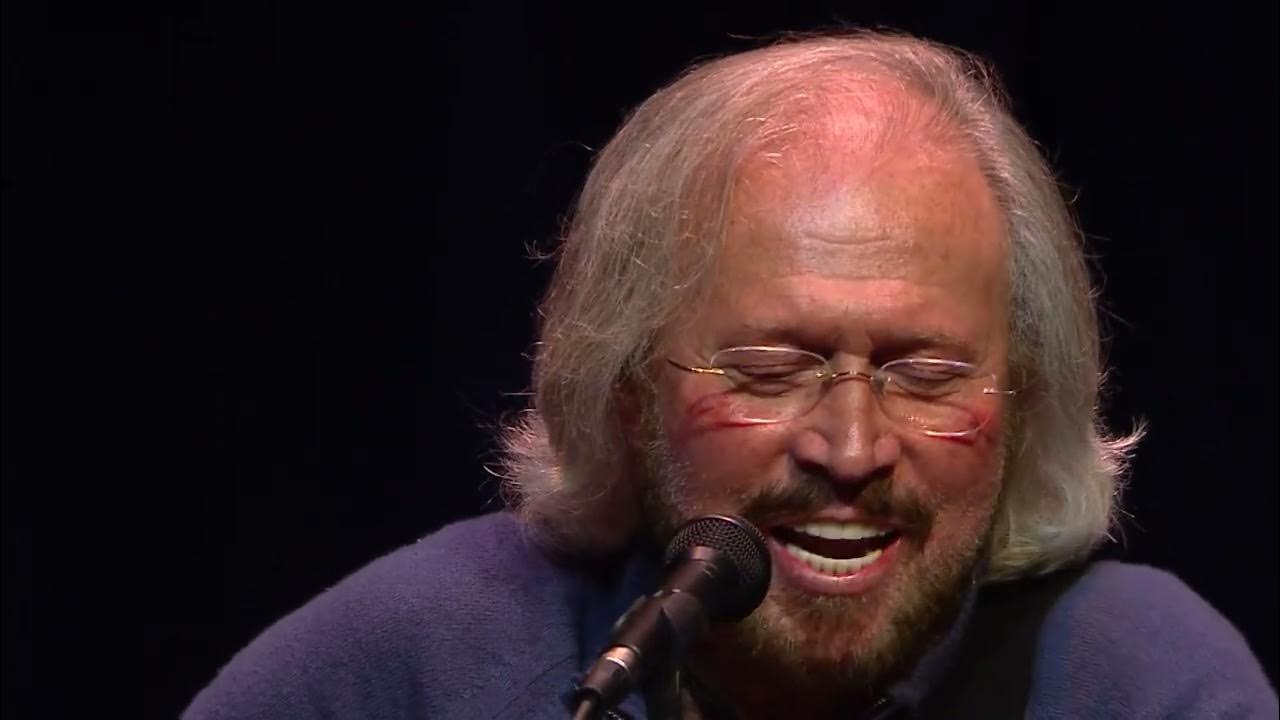
The silence left behind by the Bee Gees is not the gentle quiet of nostalgia. It is heavy, unsettling, and absolute. For decades, the voices of three brothers moved as one, shaping a sound that became inseparable from modern pop history. When that harmony was broken by loss, what remained was not simply the absence of music, but the absence of identity. In that void stood Barry Gibb, the last surviving brother, carrying both the legacy and the weight of survival.
After the deaths of Andy Gibb in 1988, Maurice Gibb in 2003, and Robin Gibb in 2012, Barry Gibb faced a future that once seemed unimaginable. The music that defined his life had always been shared. Without his brothers, even the act of singing became uncertain. For years, he retreated from the studio, unsure whether his voice still belonged in a world without theirs.
“I didn’t know if I could go on,” Barry Gibb said during the period leading up to the album’s release. “For a long time, I didn’t want to. I missed them too much.”
That period of paralysis is essential to understanding In the Now, his first solo album in more than three decades. The record is not a comeback in the traditional sense. It is not driven by charts, trends, or reinvention. Instead, it functions as an act of emotional survival, a way of confronting the silence left by a brotherhood that once defined everything. At the center of this journey lies End of the Rainbow, a song that serves as both a conclusion and a confession.
The Bee Gees were never simply a band. They were a unit bound by instinctive harmony that no technology could replicate. Their voices did not blend by arrangement alone but by blood and shared history. When Robin died, Barry admitted that something fundamental inside him stopped. Music no longer felt inevitable. It felt fragile.
Family played a crucial role in breaking that silence. Barry’s sons, Stephen Gibb and Ashley Gibb, encouraged him to return to songwriting. They did not attempt to replace what was lost. Instead, they helped create space for something new, a dialogue between past and present that acknowledged grief without surrendering to it.
End of the Rainbow opens with a vulnerability rarely heard in Barry Gibb’s catalog. The falsetto that once soared above disco anthems is absent. In its place is a weathered baritone, restrained and intimate. The voice carries age, memory, and acceptance. It does not perform. It speaks.
The lyrics unfold like a linear autobiography, tracing humble beginnings, unimaginable success, and irreversible loss. When Gibb sings about walking slowly and not looking back in anger, it feels less like advice and more like a personal reckoning. The song addresses survivor’s guilt directly, acknowledging the pain of continuing after those closest to you are gone.
The emotional core of the song arrives with two simple words that carry decades of shared history.
Goodbye my friends.
These words are not directed at an audience. They are meant for Maurice and Robin. In that moment, the listener becomes a witness to a private farewell. The song recognizes that part of Barry Gibb ended with his brothers, yet it refuses to collapse into despair.
Musically, the track is understated. The production avoids the lush layering often associated with the Bee Gees’ later work. Acoustic guitar and restrained accompaniment allow the vocal to remain exposed. The melody drifts, searching rather than resolving, mirroring the emotional state of its narrator.
As the lyrics move toward acceptance, time begins to blur. Past, present, and future coexist. The song suggests a peace that does not erase grief but exists alongside it. When Gibb sings that the end of the rainbow has arrived, it is not a declaration of defeat. It is an acknowledgment that the chase is over.
End of the Rainbow functions as the emotional anchor of In the Now. While much of the album presents a veteran artist engaging confidently with contemporary sounds, the closing track gently shuts the door. It signals an end to striving and competition. What remains is love, memory, and gratitude.
Critics and longtime listeners have recognized the song as a rare example of aging with dignity in popular music. At a time when youth is often treated as currency, Barry Gibb stands openly in his later years, his voice unpolished but honest. The power lies not in technical perfection, but in truth.
“It’s about accepting that happiness can be ordinary,” Gibb reflected when discussing the album’s themes. “It’s about honoring them by living.”
When the final notes fade, the silence that follows feels different from the one that came before. It is no longer empty. It carries presence. Through the voice of the last brother, the harmony of the Bee Gees continues to resonate, not as performance, but as memory.
Barry Gibb is no longer searching for the rainbow. He has chosen to stand beneath it, acknowledging the storm, grateful for having survived it, and willing to sing one last farewell for the brothers who shaped his life.
Video