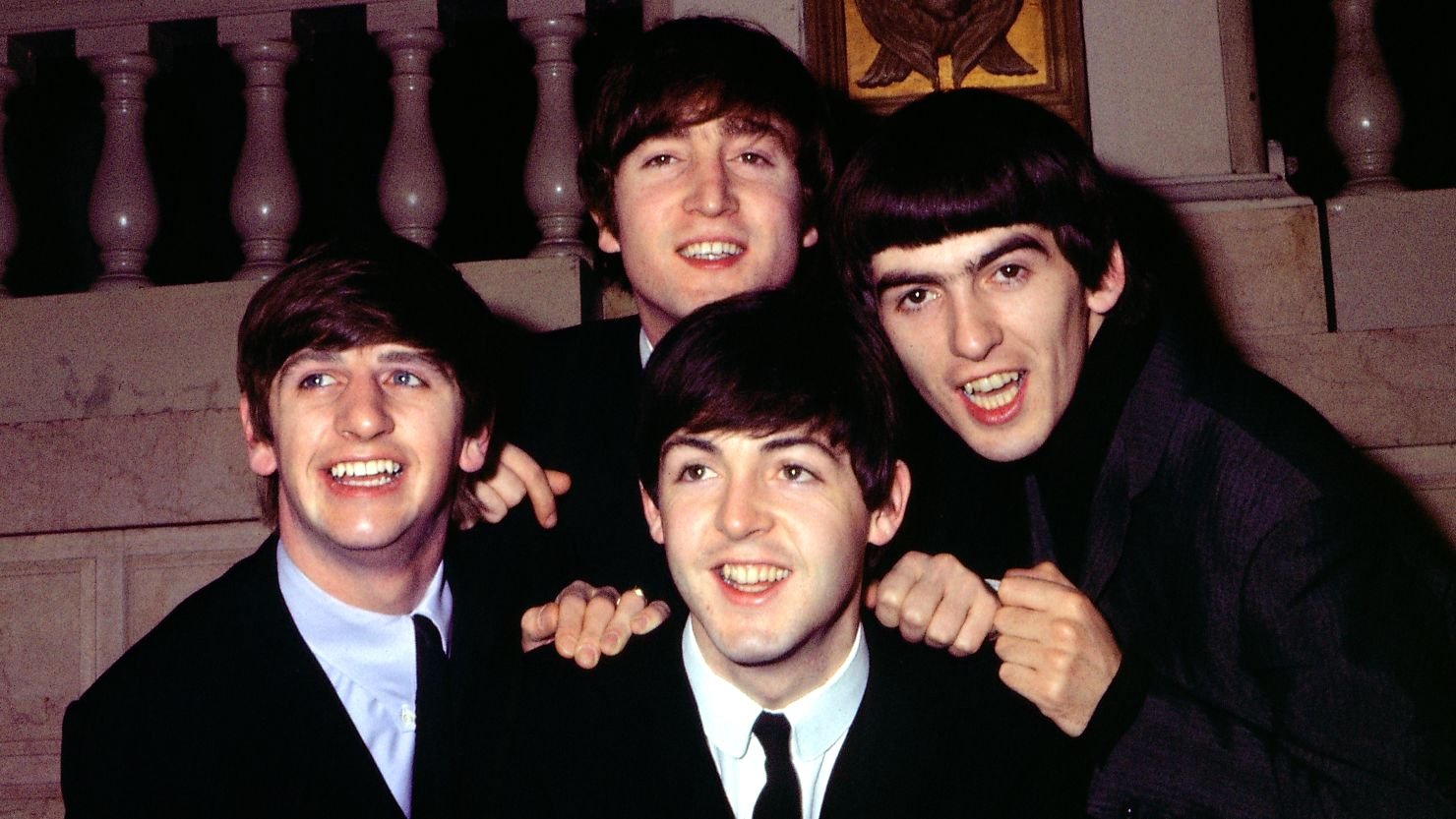
It was February 9, 1964 — a night that would forever change the landscape of popular music. Across the United States, 73 million Americans stopped what they were doing, glued to their television sets, as four young men from Liverpool stepped onto the stage of The Ed Sullivan Show.
The atmosphere inside the studio was electric, yet nothing could compare to the energy radiating into living rooms across the nation. Teenagers screamed until their voices cracked, parents watched in a mixture of amazement and disbelief, and even casual viewers couldn’t ignore the sense that they were witnessing history unfold.

As The Beatles launched into “All My Loving” and followed it with the now-legendary “I Want to Hold Your Hand,” it became immediately apparent that this was not just another performance. Something fundamental had shifted. Music was no longer simply entertainment — it had become a cultural force that could unite generations, challenge norms, and spark a worldwide phenomenon.
The reaction was unprecedented. Newspapers reported lines forming outside record stores, radio stations struggling to keep up with requests, and entire cities buzzing with the news that a British band had captured the heart of America overnight. For a generation of young people, The Beatles embodied freedom, joy, and possibility; for parents, they were a glimpse of a new, rapidly changing world.
That single night launched an era known as Beatlemania, a movement that would influence fashion, language, film, and attitudes, in addition to redefining the sound of popular music. The Ed Sullivan performance was more than a debut — it was the moment America recognized the transformative power of art, and the beginning of a musical revolution that would echo for decades.

Even today, the February 9 broadcast is remembered not only as a television event but as a cultural milestone. It serves as a reminder that some moments — when timing, talent, and charisma align perfectly — can transcend the ordinary and leave an indelible mark on history.
The screams, the awe, and the sense of collective wonder may have faded, but the legacy of that night continues to resonate. For millions, it wasn’t just the music they fell in love with — it was the feeling that the world itself had changed, forever.