During a surprise performance in New Jersey, the musician condemned the deployment of federal agents in American cities and remembered the woman killed in Minneapolis
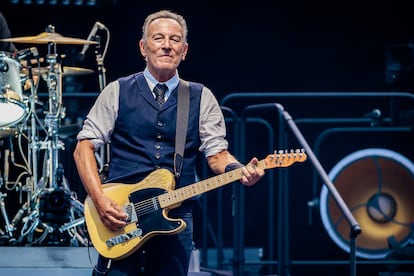
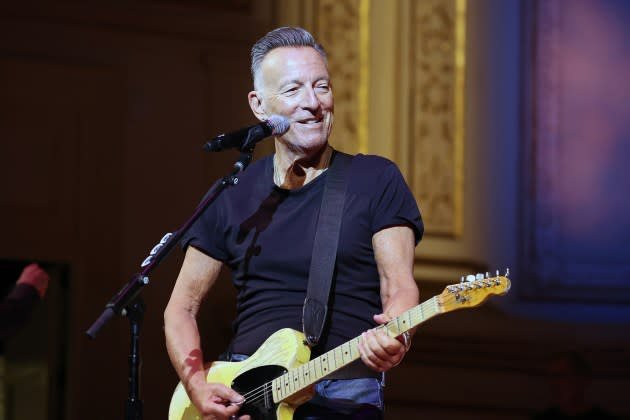
Bruce Springsteen once again turned the stage into a platform for political protest. In an unexpected appearance during the Light of Day Winterfest charity festival, held over the weekend in Red Bank, New Jersey, the American musician criticized Donald Trump’s administration and the deployment of Immigration and Customs Enforcement (ICE) agents in various cities across the country. During his performance, he dedicated the song The Promised Land to Renee Good, the 37-year-old American citizen and mother of three who died after being shot by an ICE agent in Minneapolis in early January.
Before performing the song — originally included on his 1978 album Darkness on the Edge of Town — Springsteen explained that the song was written as a tribute to the American dream: to a country that is “beautiful, but flawed,” and to what it could still become. “We are living through incredibly critical times,” he told the audience gathered at the Count Basie Center for the Arts. According to the musician, the values and ideals that have defined the United States for the past 250 years are being tested “as it has never been in modern times.”
Springsteen called for opposition to the use of heavily armed federal forces in American cities. He condemned what he described as “Gestapo tactics” against citizens and denounced the fact that people are being killed for exercising their right to protest. In that context, he quoted Minneapolis Mayor Jacob Frey and sent a direct message: ICE should “get the fuck out” of the city.
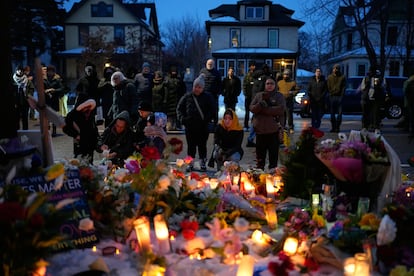
The musician then dedicated The Promised Land to “the memory of mother of three and American citizen Renee Good.” His words drew loud applause from the nearly 1,500 people attending the concert, an annual event to raise money for research into Parkinson’s and other neurodegenerative diseases, which has raised more than $7.5 million over three decades.
Good’s death occurred on January 7 in Minneapolis during an ICE operation. According to the Trump administration’s version of events, the woman attempted to ram the agents with her vehicle and the officer acted in self-defense. The agent who fired the shot, Jonathan Ross, was standing in front of the car when he opened fire. However, local authorities have questioned this version of events. Mayor Frey publicly stated that it was a reckless use of federal power that ended with one person dead, and accused the government of trying to manipulate the story.
The case has sparked massive protests in different parts of the country and has become a symbol of growing opposition to ICE. Various polls show widespread rejection of the agency’s operations, especially due to allegations of abuse against peaceful protesters and raids that have even affected U.S. citizens.